


The Ecclesiastical Province of Manila has launched a digital platform to make it easier for Catholics to request and manage Church records, as local Churches in the Philippines increasingly use technology to improve pastoral services.
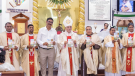
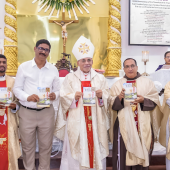
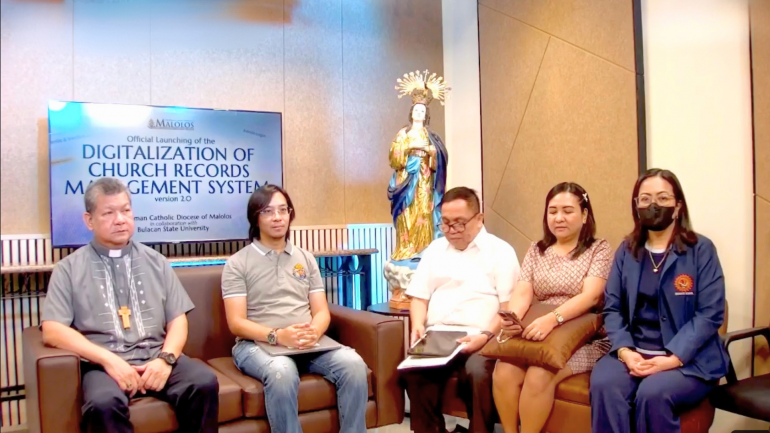
The Ecclesiastical Province of Manila comprises the Archdiocese of Manila and nine suffragan dioceses. The new Diocesan Catholic Record Management System (DCRM) Version 2.0 was formally turned over on August 7 at the Diocese of Malolos, which spearheaded its development in partnership with Bulacan State University.
The platform allows Catholics to request Church records, including certificates related to baptism, confirmation, and marriage, from their respective parishes. Requests can be made online and paid electronically, with documents delivered to the applicant's indicated address.
Malolos Bishop Dennis Villarojo said the initiative aims to make the process of obtaining Church records easier and more accessible for the faithful.
"We are helping our people by lifting a finger and making the processing of their Church records much easier," Bishop Villarojo said. He added that the initiative responds to the changing needs of the Church and supports the call to synodality by helping Catholics access the sacraments more easily.
The system also allows users to request corrections to inaccurate entries in their Church records.
For parish secretaries and diocesan chancellor personnel, a separate platform provides access to Church records within their respective ecclesiastical territories.
Security measures have been incorporated into the system, including full database encryption and one-time PIN (OTP) requirements for administrator access.
Dr. Digna Evale, dean of the College of Information and Communications Technology at Bulacan State University, said the project seeks to reduce delays that can sometimes discourage people from completing sacramental processes.
"We are expediting a process that typically takes a lot of time, to the point that the faithful do not want to receive the sacraments anymore," she said.
Dr. Jaime Palombarit, who led the development team, said the project is also about preserving the Church's historical and sacramental records.
"We honor not only a system, but a shared commitment to preserving the sacred record of the people: baptisms, confirmations, marriages, and countless histories of grace for generations to come," he said.
Dr. Rosemarie Bautista, director of the university's Extension Service Office, said the initiative demonstrates how technology can be used to serve communities while reducing administrative demands.
"Innovation is not just measured by the technology we build, but by the lives we are able to serve," she said.
The DCRM Version 2.0 will initially be implemented in the Diocese of Malolos before being introduced in the other dioceses of the Ecclesiastical Province of Manila.
The initiative reflects a broader effort by Catholic communities to use digital technology not only for evangelization and communication but also to make essential Church services more accessible to the faithful.
Radio Veritas Asia (RVA), a media platform of the Catholic Church, aims to share Christ. RVA started in 1969 as a continental Catholic radio station to serve Asian countries in their respective local language, thus earning the tag “the Voice of Asian Christianity.” Responding to the emerging context, RVA embraced media platforms to connect with the global Asian audience via its 21 language websites and various social media platforms.
Latest News