More than 100 Indonesian Catholic Children Join Parish Planting Program Led by Jesuit Center

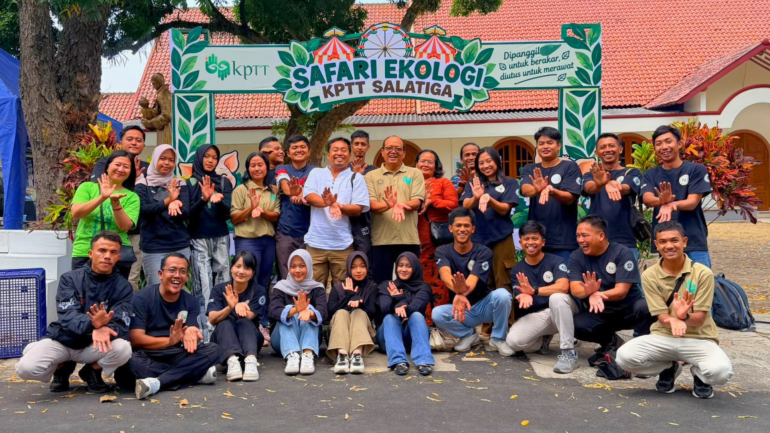
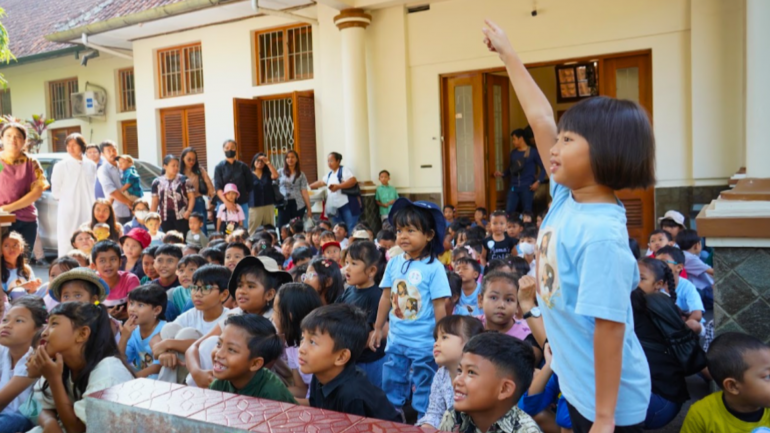
More than 100 Catholic children took part in a planting activity at a parish in Central Java, Indonesia, as a Jesuit agricultural training center brought ecological education directly to the Catholic community.
The children from Children’s Faith Formation (PIA), including students from Kanisius Elementary School, participated in the Ecological Safari organized by the Taman Tani Agricultural Training Center (KPTT) at Girisonta Parish in Semarang on September 20.
KPTT, based in Salatiga, a city in Central Java, is an agricultural and livestock training institution and one of the works of the Society of Jesus in Indonesia. The Ecological Safari was organized as part of KPTT’s 61st anniversary celebrations under the theme “Called to Take Root, Sent to Care.”
During the parish program, the children were introduced to different planting media and types of plants before getting their hands into the soil. They planted eggplants, chili peppers and various types of mustard greens.
After planting, the children were allowed to take their plants home and continue caring for them.
“The children can take the plants home. That is where the connection happens,” said KPTT Director Br. Antonius Dieng Karnedi, SJ, commonly known as Br. Dieng.
For KPTT, the planting activity is intended not only to teach children basic agricultural skills but also to give them direct experience with nature.
“If people never interact with nature, it is difficult to talk about caring for the environment,” Br. Dieng said.
The Ecological Safari also included activities for parents and other adults. An urban farming workshop introduced participants to ways of growing food in limited spaces around their homes.
Participants learned about planting in polybags and recycled containers, raised beds, vertical gardens, hydroponic systems and indoor farming. Composting and the use of organic waste were also included.
The workshop highlighted the connection between agriculture, environmental conditions, healthy food and food security. KPTT hopes such activities will encourage parishioners to explore practical ways of producing food and caring for the environment in their own communities.
One method presented was hugelkultur, an agricultural approach originating in Germany that uses layers of wood, branches and leaves beneath compost, fertilizer and topsoil to create raised planting beds.

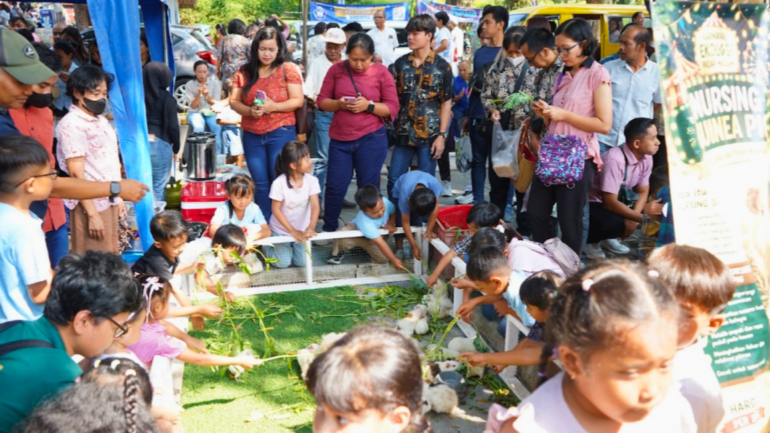


KPTT also incorporates livestock into some of its ecological activities. Children may interact with and feed small animals, including guinea pigs and piglets, providing another direct encounter with living creatures.
Br. Dieng said KPTT is bringing its agricultural and environmental experience to parishes because not everyone has the opportunity to travel to the center in Salatiga.
“KPTT wants to go out and serve others by promoting environmental awareness to more people, especially parish communities,” he said.
The Ecological Safari also connects environmental education with Catholic faith. At Girisonta, Mass was celebrated as part of the program, with participants invited to reflect on ecological responsibility through the spirituality of Laudato Si’ and the pastoral direction of the Archdiocese of Semarang.
The Girisonta program was the second Ecological Safari organized by KPTT. The first was held at Semarang Indah Parish.
The initiative will continue at Bongsari Parish in Semarang on October 3–4 and at Gedangan Parish on October 18. KPTT plans further activities at other parishes and hopes eventually to bring the program to schools.
The center adapts the Ecological Safari to the needs and circumstances of each parish. At Girisonta, the activities ran from about 7 a.m. to noon.
For KPTT, the program is intended to extend beyond its 61st anniversary by bringing practical ecological education closer to Catholic families and helping children and adults reconnect everyday life with agriculture, food and care for the environment.
Radio Veritas Asia (RVA), a media platform of the Catholic Church, aims to share Christ. RVA started in 1969 as a continental Catholic radio station to serve Asian countries in their respective local language, thus earning the tag “the Voice of Asian Christianity.” Responding to the emerging context, RVA embraced media platforms to connect with the global Asian audience via its 21 language websites and various social media platforms.
Latest News