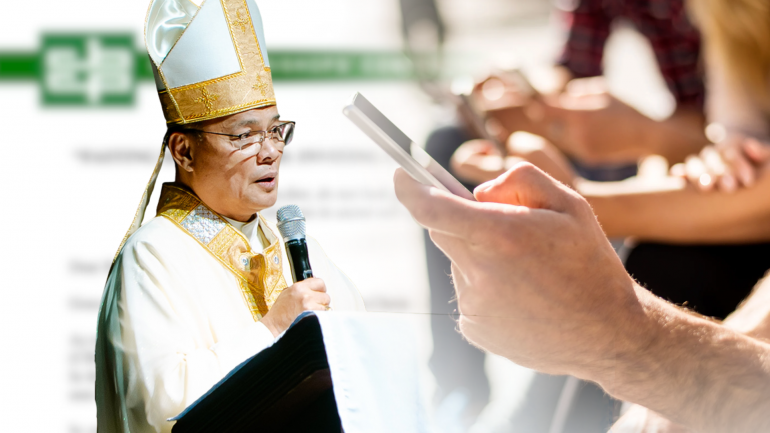
The Catholic Bishops’ Conference of the Philippines (CBCP) is encouraging the faithful to undertake “Digital Media Fasting” as a meaningful spiritual practice for Lent 2026, urging Catholics to detach from excessive technology use and rediscover prayer, silence, and authentic relationships.
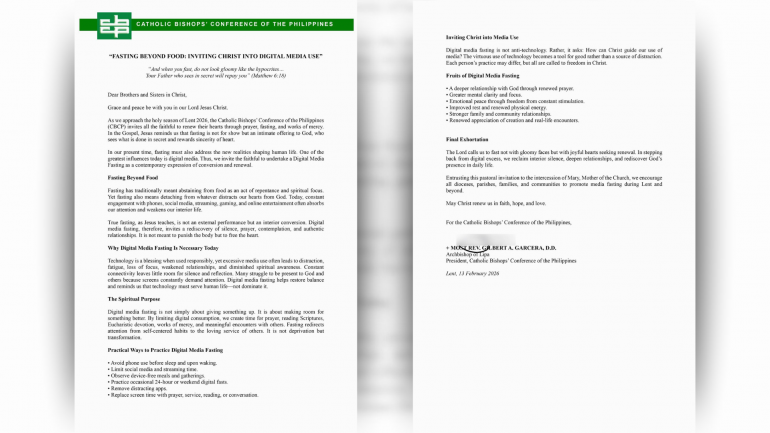
In its Lenten pastoral statement, signed by CBCP President Archbishop Gilbert A. Garcera, the bishops grounded the initiative in the Gospel call to sincere fasting, quoting Matthew 6:18: “And when you fast, do not look gloomy like the hypocrites… Your Father who sees in secret will repay you.”
Addressing the faithful, the bishops stated that Lent remains a sacred time for inner renewal. “This holy season of Lent 2026, the Catholic Bishops’ Conference of the Philippines invites all the faithful to renew their hearts through prayer, fasting, and works of mercy,” the statement read.
The bishops emphasized that fasting is not meant for public display but for authentic conversion. “In the Gospel, Jesus reminds us that fasting is not for show but an intimate offering to God, who sees what is done in secret and rewards sincerity of heart,” they said.
Responding to modern realities
Recognizing the profound impact of digital technology on daily life, the CBCP said Lenten practices must also speak to contemporary challenges. “In our present time, fasting must also address the new realities shaping human life. One of the greatest influences today is digital media,” the bishops said. “Thus, we invite the faithful to undertake a Digital Media Fasting as a contemporary expression of conversion and renewal.”
While fasting has long been associated with abstaining from food, the statement explained that its deeper meaning involves detachment from anything that distracts from God. They noted that constant exposure to phones, social media, streaming services, gaming, and online entertainment often weakens one’s interior life. “Today, constant engagement with phones, social media, streaming, gaming, and online entertainment often absorbs our attention and weakens our interior life,” the bishops said in the statement.
Restoring balance and silence
The CBCP clarified that digital media fasting is not a rejection of technology but a call to responsible use. According to the pastoral letter, “technology is a blessing when used responsibly, yet excessive media use often leads to distraction, fatigue, loss of focus, weakened relationships, and diminished spiritual awareness.” They warned that constant connectivity leaves little space for reflection.
Digital fasting, they said, “helps restore balance and reminds us that technology must serve human life, not dominate it.” The pastoral message stressed that fasting is ultimately about creating space for God and others. It is not simply about giving something up but making room for somethings that are better and far more important.
They encouraged the faithful to redirect time spent online toward spiritual and relational growth. By limiting digital consumption, the people can have more time for prayer, reading Scriptures, Eucharistic devotion, works of mercy, and meaningful encounters.
The bishops also emphasized that fasting leads to transformation rather than deprivation. It can redirect the attention from self-centered habits to the loving service for others. “It is not deprivation but transformation.”
Practical ways to observe
To help Catholics live out the practice, the CBCP proposed concrete steps, including avoiding phone use before sleep and upon waking, limiting social media and streaming time, observing device-free meals, practicing occasional 24hour digital fasts, removing distracting apps, and replacing screen time with prayer, service, reading, or conversation.
The bishops also emphasized discernment in media use, clarifying that the pastoral letter on digital media fasting is not anti-technology. Rather, it asks, “how can Christ guide our use of media?”
According to the bishops, digital fasting can bear both spiritual and human fruits, including a deeper relationship with God, greater mental clarity and focus, emotional peace, improved rest, renewed physical energy, and stronger family and community relationships.
The bishops further called on dioceses, parishes, and families to promote and sustain the initiative throughout the Lenten season and beyond. The appeal comes as the Philippines remains one of the world’s top social media-using countries, where Filipinos spend significant hours online each day.
In response to this digital reality, the Church in the country has continued to strengthen its online pastoral presence by providing reflections, prayers, catechetical materials, and soul-nourishing content across various media platforms. These efforts aim to guide the faithful toward responsible media use while helping them remain rooted in prayer and spiritual reflection, especially during the Lenten journey.