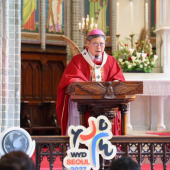



The Archbishop of Seoul said one of the main goals of the upcoming World Youth Day 2027 in South Korea will be to address the growing problem of isolation among young people in an increasingly competitive world.
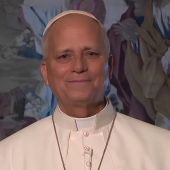
“During the 2027 World Youth Day, Seoul will be a place where young people can experience that they are not alone, because the Church invites them to walk together,” said Archbishop Peter Chung Soon-taick.
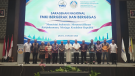
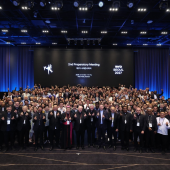
The prelate spoke at an international conference in Rome on March 5, where preparations for World Youth Day 2027 were discussed with around 250 youth pastoral leaders and officials from bishops’ conferences around the world.
“This event will be a time for young people to encounter the Pope and God, as well as other youth from around the world,” Archbishop Chung said. “I hope it will become a journey of faith through which they can discover a new direction in life.”
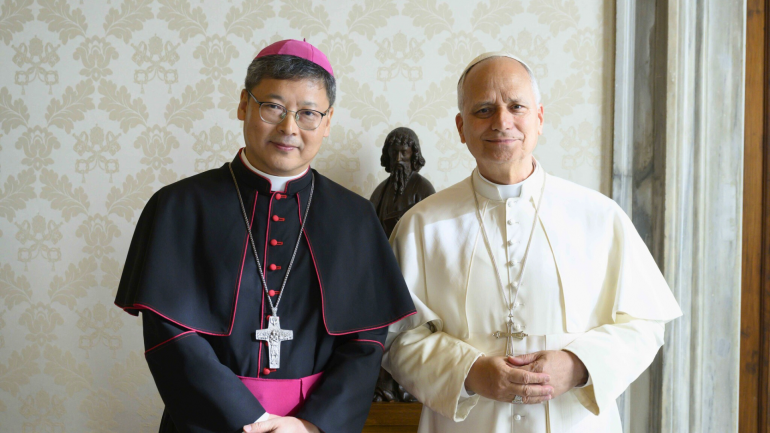
Earlier that day, the archbishop had a private audience with Pope Leo XIV, during which he provided updates on preparations for the global Catholic youth gathering.
According to Archbishop Chung, the Holy Father expressed satisfaction with the progress of the preparations, which the archbishop described as centered on encounter, pastoral care, pilgrimage, and mission.
He added that Pope Leo also expressed his eagerness to visit South Korea and meet young people from across the world during the event.
World Youth Day 2027 will take place in Seoul, South Korea, from August 3 to 8. As part of the promotional campaign and information outreach, the organizing committee has launched an official website available in six languages.
Meanwhile, the World Youth Day symbols, the Holy Cross and the icon of Salus Populi Romani, are currently on a pilgrimage across South Korea after visiting eight countries in Asia in 2025.
Radio Veritas Asia (RVA), a media platform of the Catholic Church, aims to share Christ. RVA started in 1969 as a continental Catholic radio station to serve Asian countries in their respective local language, thus earning the tag “the Voice of Asian Christianity.” Responding to the emerging context, RVA embraced media platforms to connect with the global Asian audience via its 21 language websites and various social media platforms.
Latest News