

Philippine Religious Leaders Urged to Resolve Rivalries Through Dialogue and Solidarity

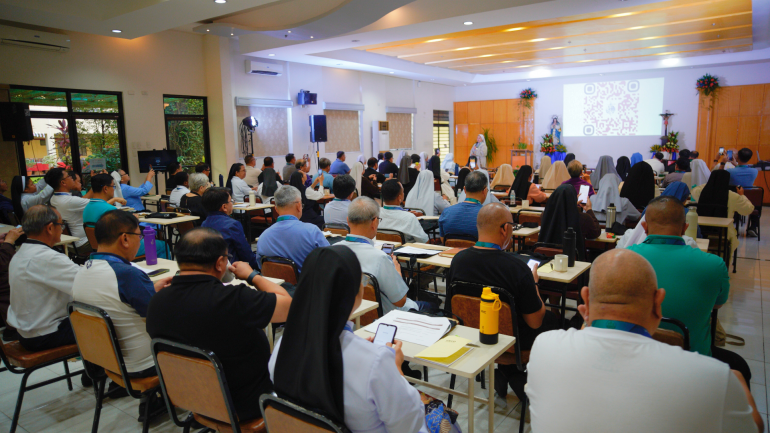
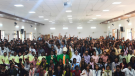
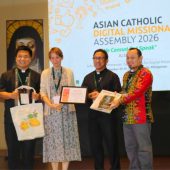
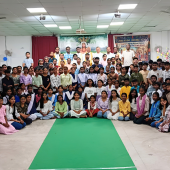
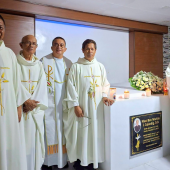
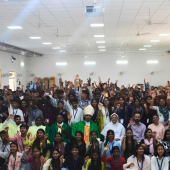
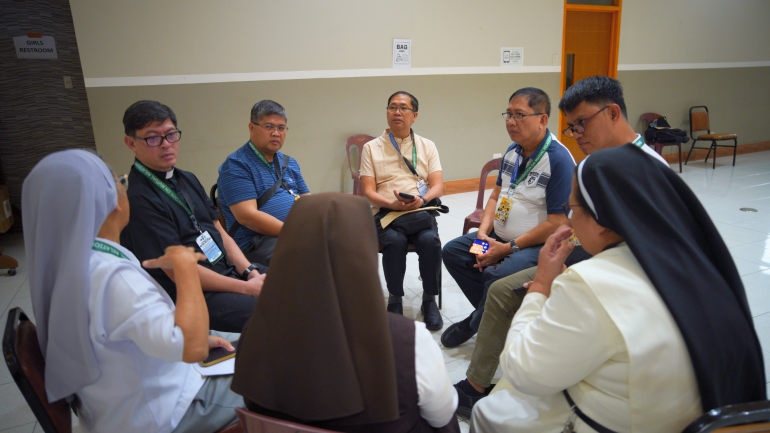
Bishops, diocesan clergy, and consecrated persons gathered in the Philippine capital from October 20 to 22 for the Convention on Mutual Relations 2026, which called on Church leaders to strengthen communion, address internal tensions, and work together as witnesses of peace in a divided and increasingly digital world.
Held at Manresa Retreat House in Quezon City, the convention was organized under the theme, “One Mission, One Humanity: Clergy and Consecrated Persons as Prophetic Witnesses of Peace in a Wounded and Digital World.”
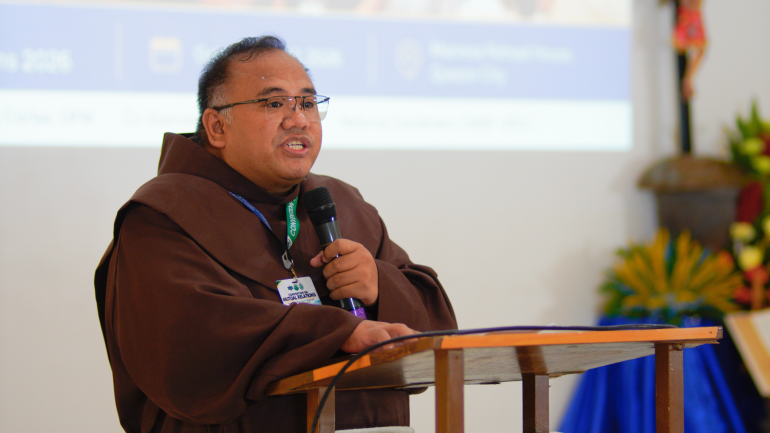
Fr. Angelito Andig Cortez, OFM, co-executive secretary of the Conference of Major Superiors of the Philippines, challenged participants to demonstrate communion through their relationships, collaboration, and service rather than treating it as an institutional ideal.
“The Church’s credibility is not measured only by the beauty of its liturgy. It is also measured by the humanity of its relationships,” Fr. Cortez said in his keynote address.
He stressed that genuine communion requires Church leaders to confront disagreements honestly and overcome rivalries between dioceses and religious congregations.
“Communion is the decision to face tension truthfully, fairly, and fraternally, because the people we serve deserve better than our unresolved rivalries,” he said.
Fr. Cortez also urged participants to defend human dignity, choose dialogue over hostility, and prioritize the common good over institutional interests.
“Our people need a Church whose many hands act as one body. Communion that never becomes solidarity remains unfinished,” he said.
Bishop Elias L. Ayuban Jr., CMF, chairman of the Catholic Bishops’ Conference of the Philippines (CBCP) Episcopal Commission on Mutual Relations, highlighted the spiritual foundation of the Church’s mission, calling on participants to remain prepared to serve God and others.
Reflecting on the Gospel imagery of burning lamps and girded loins, Bishop Ayuban explained that readiness for the Lord involves active service, not merely waiting for a future encounter with him.
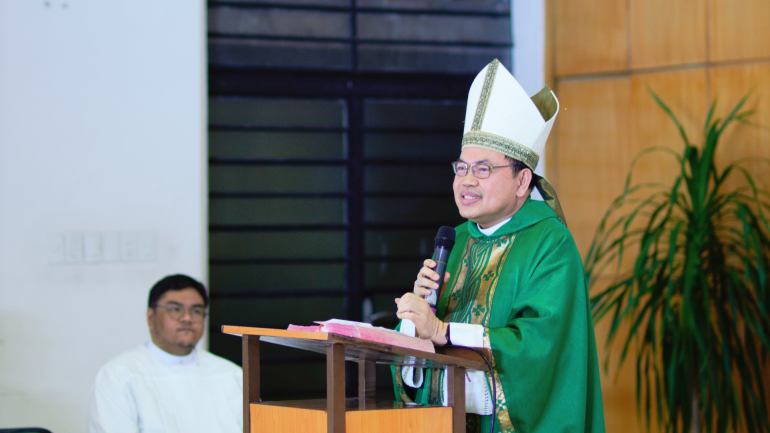
“Girding the loins means being ready to serve,” he said.
The bishop also recalled the death of Redemptorist priest Fr. Patricio Sanchez Molinari in Ecuador, who died after a large crucifix fell on him while he was celebrating Mass. The incident followed a homily in which the priest had reflected on life's fragility and the uncertainty of when a person would encounter Jesus face to face.
Bishop Ayuban used the incident to underline the importance of spiritual preparedness and faithful service.
“The same is true with keeping the lamps burning, friends. This is about the way we prepare for that final encounter with the Lord, whether the Second Coming or the end of our life on earth,” he said.
The two speakers offered complementary perspectives on the convention’s theme, linking stronger relationships within the Church with a shared responsibility to serve humanity.
Fr. Cortez emphasized that the Church’s diverse ministries and charisms should strengthen its common mission rather than become sources of competition.
“One Mission is not a slogan. It is a responsibility entrusted to us by Christ. One Humanity is not an abstraction. It is the face of every person whose dignity we are called to defend,” he said.
The convention called on bishops, priests, and consecrated persons to translate communion into concrete solidarity, making their shared mission visible through dialogue, mutual accountability, and service to people whose dignity is threatened in a wounded world.
Radio Veritas Asia (RVA), a media platform of the Catholic Church, aims to share Christ. RVA started in 1969 as a continental Catholic radio station to serve Asian countries in their respective local language, thus earning the tag “the Voice of Asian Christianity.” Responding to the emerging context, RVA embraced media platforms to connect with the global Asian audience via its 21 language websites and various social media platforms.
Latest News