

Philippines: At 40, EDSA Anniversary Seeks to Renew Spirit of Unity and Civic Responsibility

Forty years after the 1986 People Power Revolution, Philippine Church leaders say the anniversary is not only about recalling a peaceful uprising but also about shaping how a new generation understands its meaning.
At a Feb. 16 press conference at the EDSA Shrine — formally known as the National Shrine of Mary, Queen of Peace — organizers outlined activities to mark the revolution’s 40th year.
The observance will begin with the bringing of the image of the Virgin Mary to schools located along Epifanio de los Santos Avenue (EDSA), a gesture meant to connect students with the site where thousands once gathered in prayer and protest.
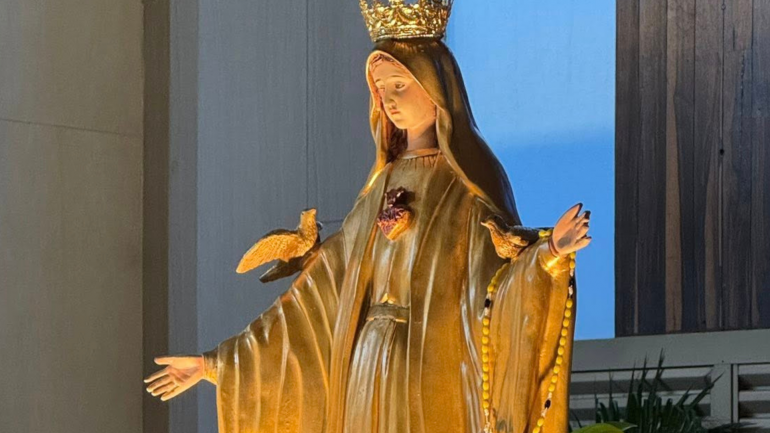
The shrine stands near the stretch of road where civilians formed human barricades in February 1986, responding to an appeal from the late Jaime Cardinal Sin.
Radio Veritas Asia aired Cardinal Sin’s call urging Filipinos to gather in prayer along EDSA. The transmissions were later sustained through Church-linked broadcast networks after the main transmitter was disabled.
The broadcasts helped mobilize civilians who converged on the highway in what became known worldwide as a largely nonviolent uprising.
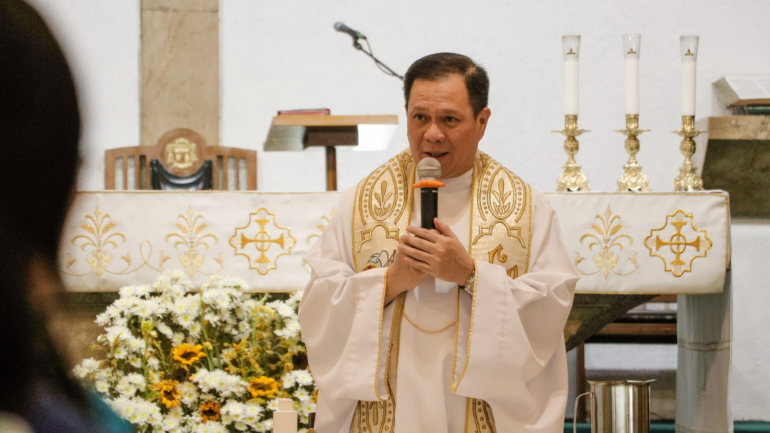
Fr. Jerome Secillano, rector of the shrine, said the 40th anniversary activities aim to have a “social impact,” particularly among the youth, many of whom, he noted, are no longer familiar with the events of that historic week.
“Our objective is to reminisce,” he said, describing EDSA as the first “non-bloodied People Power,” and to help young Filipinos appreciate the values of democracy, freedom, unity and peace.
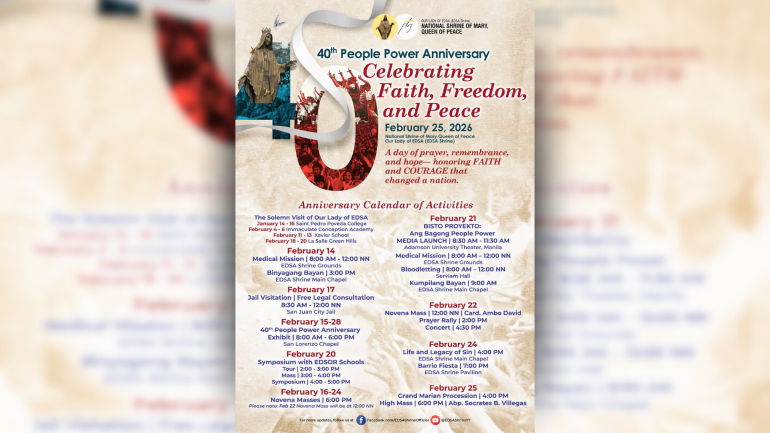
Secillano also emphasized what Church leaders have long described as the role of faith and divine providence in the uprising.
Citing Cardinal Sin, he said the events at EDSA were understood not only as the result of collective civic action but also as shaped by spiritual conviction and Marian devotion.
“We invite people to reflect on the spirit of unity, prayer and nonviolent action that defined the EDSA revolution,” he said.
Fr. Robert Reyes, an activist known as “The Running Priest,” meanwhile framed the anniversary as more than a historical commemoration.
“We are the people’s power,” he said, underscoring that the strength of the nation ultimately resides in its citizens.
Fr. Reyes encouraged Filipinos to look beyond political allegiances and remain attentive to issues such as corruption and political dynasties.
While expressing appreciation for efforts to address corruption, he added that the country’s future cannot depend on the government alone.
“When government disappoints, the people must unite,” Fr. Reyes said.
Organizers say that the 40th anniversary commemoration is intended not only to honor a defining moment in Philippine history, but also to renew the civic virtues and shared responsibility that sustained it.