



Philippines: Calapan Vicariate Strengthens Prison Ministry, Promotes Restorative Justice

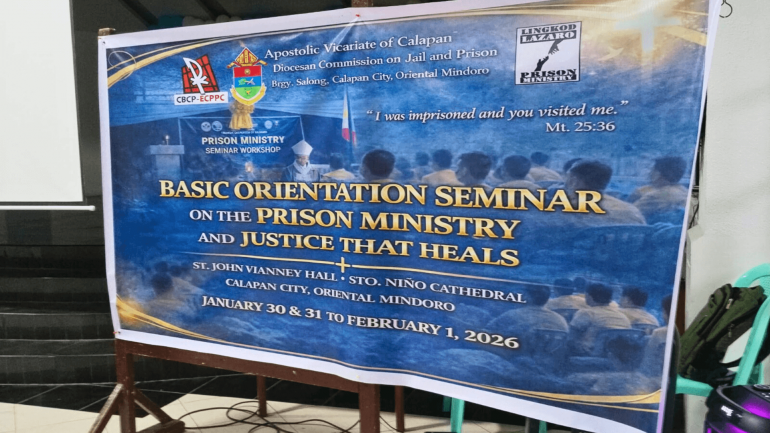
Seeking to transform the lives of those behind bars, Church leaders and lay volunteers in the Apostolic Vicariate of Calapan, Oriental Mindoro, Philippines, convened for a three-day seminar aimed at institutionalizing prison ministry, promoting restorative justice, and upholding the dignity of the human person.
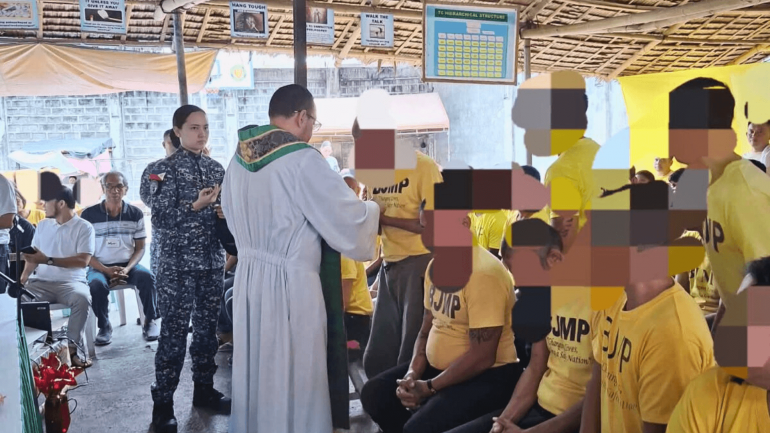
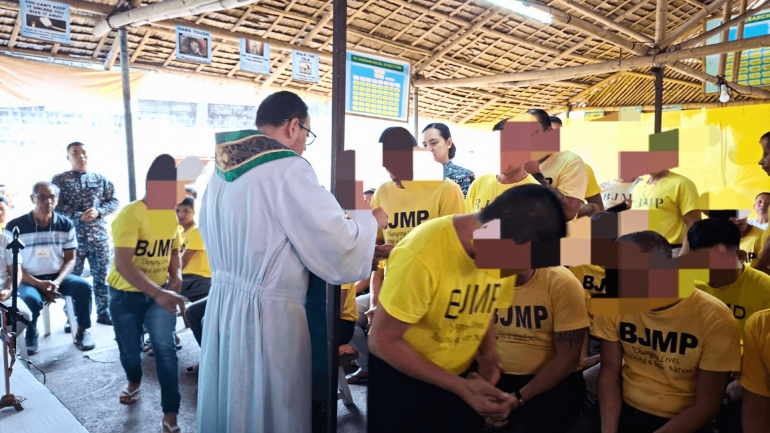
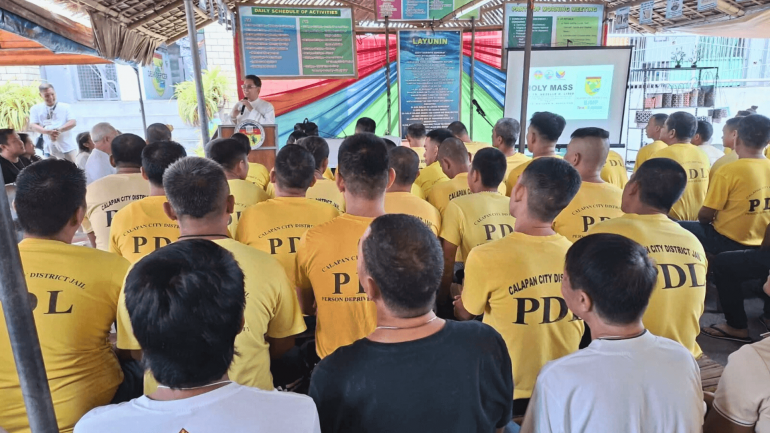
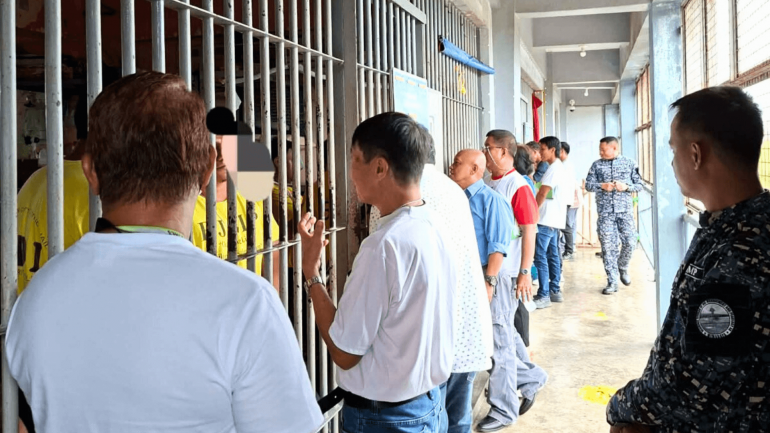
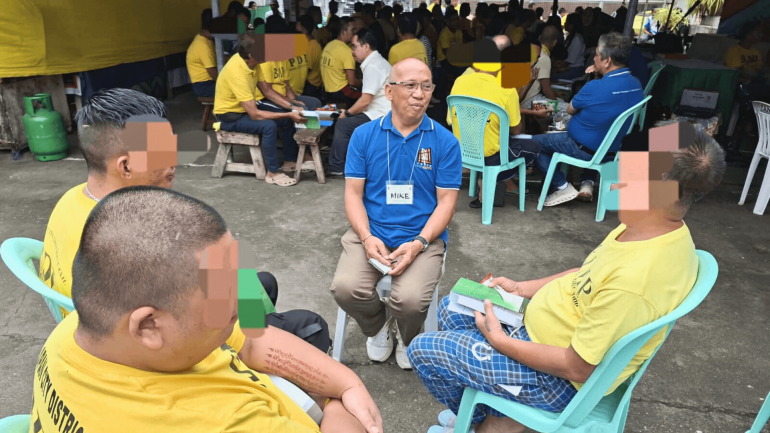
The seminar, titled “Integrated Pastoral Program for the Rehabilitation of the Correctional Community and Challenge to Volunteerism,” was held from January 30 to February 1, 2026. It formed part of the Vicariate’s continuing advocacy for restorative justice and culminated in a pastoral visit, Holy Mass, and encounter with Persons Deprived of Liberty (PDLs) at the Calapan City District Jail.
The program sought to bridge gaps between the criminal justice system and faith-based initiatives that foster healing, accountability, and reintegration into society.
Alarming realities behind bars
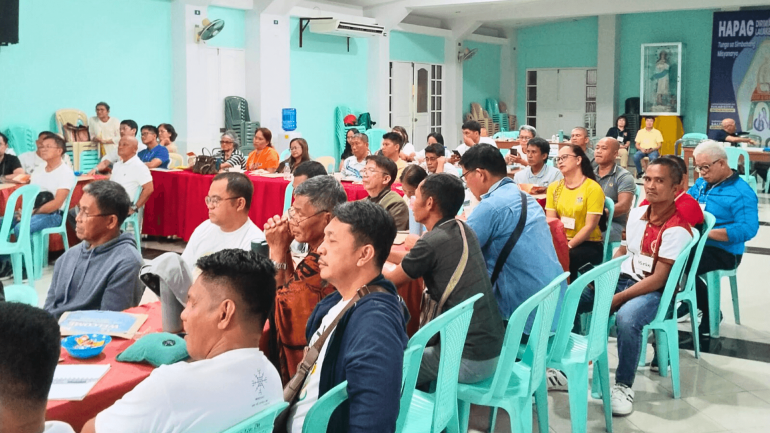
Participants were confronted with the harsh realities faced by PDLs nationwide, including severe jail congestion and prolonged detention without sentencing.
Mina Cabugao Ballesteros, chairperson of the Parish Social Ministry of Christ the King Parish, said the presentations left a deep impact on the volunteers.
“Yesterday, we were 55 participants. We are called Volunteers in Prison (VIP),” Ballesteros said. “We were shown the heartbreaking conditions of prisoners in various detention facilities. In some jails, congestion reaches up to 300 percent.”
She also raised concerns over the daily food allowance for PDLs, which recently increased from ₱70 to ₱100. “The concern is that this increase could simply add to corruption if the funds do not actually reach the PDLs,” she said.
“Because of these miserable conditions, instead of being rehabilitated, their situation worsens,” Ballesteros added, noting that about 80 percent of detainees nationwide remain unsentenced. “They truly need care and compassion.”
At the same time, she shared a more hopeful observation from the Calapan City District Jail. “The situation here is relatively okay,” she said. “The inmates themselves said they are treated well. I personally saw that the place is clean and has a positive atmosphere.”
Key components of the initiative
The seminar centered on three major components:
-
Mission – A three-day intensive formation on the pillars of the criminal justice system, prison ministry, and restorative justice
-
Outreach – A Holy Mass and face-to-face encounter with PDLs at the Calapan City District Jail on February 1
-
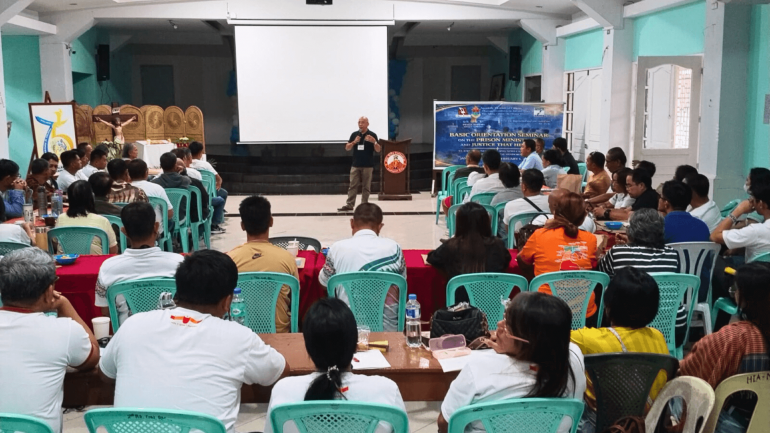
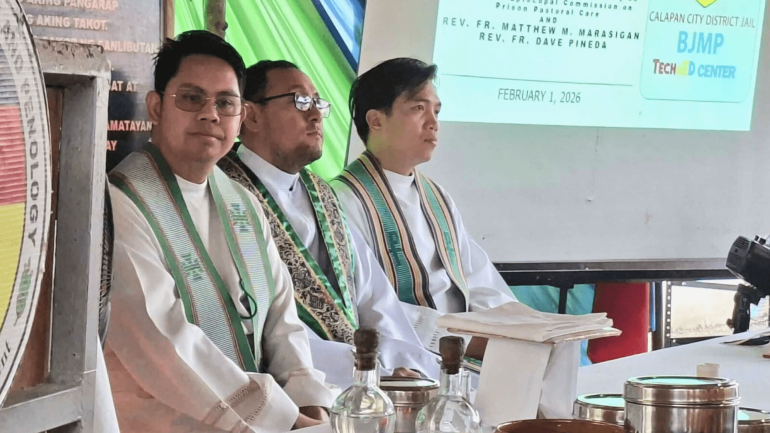
Leadership – Formation sessions led by Fr. Matthew M. Marasigan, director of the Diocesan Commission on Jail and Prison in Oriental Mindoro, with support from Fr. Nezelle O. Lirio, executive secretary of the Catholic Bishops’ Conference of the Philippines’ Episcopal Commission for Prison Pastoral Care (CBCP–ECPPC), and Mr. Gerry Bernabe, executive assistant of the same commission
Restorative justice: a shift in paradigm
Bernabe led discussions on restorative justice, emphasizing the need to move away from purely punitive approaches toward a justice system that seeks healing for both victims and offenders.
He noted that various Church-based initiatives have emerged to attend to the welfare of prisoners and deepen awareness of justice as a path toward restoration. He also reminded volunteers that prison ministry demands perseverance and compassion, stressing that “volunteer work for PDLs is not for the faint of heart.”
Personal sharing by Art and Dolly Pangilinan further highlighted the far-reaching impact of incarceration—not only on detainees but also on their families and communities.
Strengthening pastoral care and hope
Merlito Bonquin, program director of the Sto. Niño Cathedral Lingap Center, said the seminar was timely and essential in strengthening local prison ministry.
“The seminar is very useful for us,” Bonquin said, noting that it equips volunteers to respond more effectively to the needs of PDLs beyond material assistance.
The program concluded at the Sto. Niño Cathedral before participants proceeded to the jail facility, which has been adopting a Therapeutic Community (TC) approach. This model integrates prayer, discipline, and values formation, focusing on holistic healing—spiritual, emotional, intellectual, and vocational—to encourage personal transformation and reduce recidivism.
Church leaders noted that the approach closely aligns with the Church’s vision of integral human development.
Fr. Matthew Marasigan underscored the heart of the Church’s prison mission. “They may have committed mistakes, but they are people who can still change and become good persons,” he said. He added that hope is essential in preparing PDLs for life outside detention.
A call to sustained and holistic service
During the synthesis, Volunteers in Prison were reminded that service to PDLs must be constant, consistent, and holistic. Organizers stressed the need for a competent structure with full-time staff, supported by well-equipped volunteers—some trained as paralegals and others with specialized skills to address the complex needs of detainees.
They also emphasized sustainability through leadership formation, regular coordination with the CBCP–ECPPC, and collaboration with community partners such as lawyers, dentists, psychologists, and other professionals, with the strong support of parish priests.
“Blessed in every situation”
The pastoral visit on February 1 was highlighted by a Holy Mass presided over by Fr. Nezelle Lirio, who reflected on the Gospel message of being “blessed” (mapalad) in every situation.
He emphasized that regardless of one’s circumstances—whether poor or well-off, free or imprisoned—God’s blessing and grace remain present.
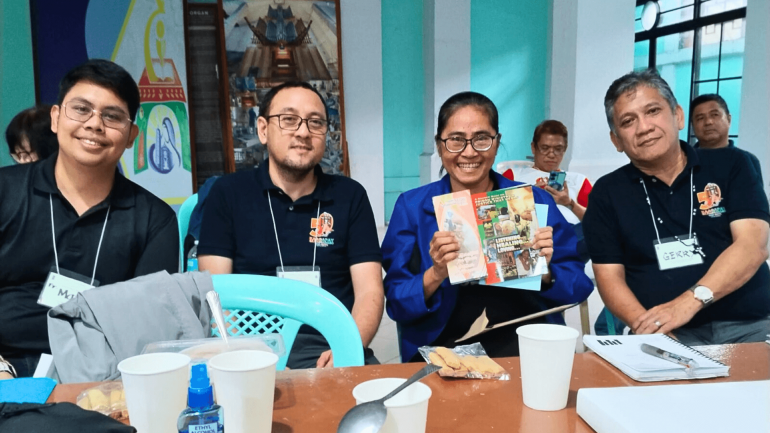
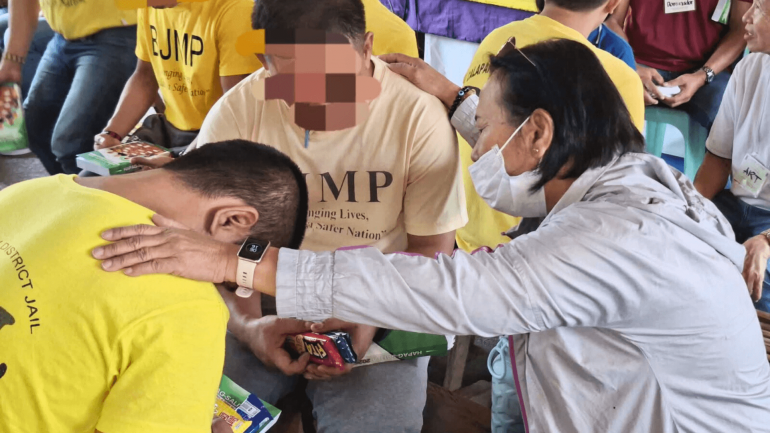
Complementing the pastoral outreach, Ma. Yvette Macaruyo shared that alongside the CBCP–ECPPC Inter-Action Workshop for PDLs, the Kabataan ng Hapag distributed copies of Hapag Salita, a publication containing daily Gospel readings and reflections.
Kabataan ng Hapag operates under the Commission on Youth, headed by Fr. John Dave Pineda. The publication aims to deepen faith, renew hope, and remind PDLs that despite their situation, they remain deeply loved by God.
Organizers expressed hope that the initiative would inspire more Catholics to engage in prison service and to recognize PDLs not as forgotten offenders, but as brothers and sisters capable of healing, conversion, and hope.
Let us know how you feel!
Comments



- Reply
Permalink