Philippines: Church-run Mangyan School Keeps Indigenous Identity at Heart of Education

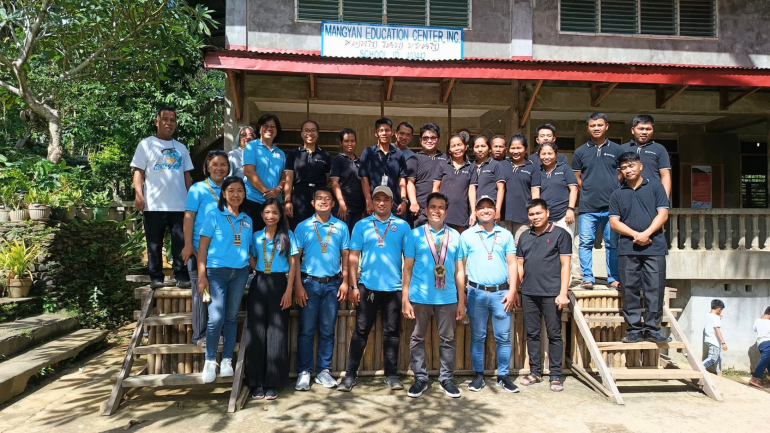
For some Mangyan children in the mountain communities of southern Oriental Mindoro, going to school once meant walking for hours before reaching a classroom.
Students of the Mangyan Education Center Inc. (MEC) in Bait-Panaytayan, Mansalay, were reported to have walked as long as five hours to attend school.
Nearly four decades later, those journeys remain part of the school’s history and of a mission that began with a Divine Word missionary and continues today under the administration of the Roman Catholic Diocese of Calapan.
MEC’s story reflects how the Church’s educational mission in Indigenous communities can create opportunities for young people while respecting and strengthening their cultural identity.
Mansalay is a municipality in Oriental Mindoro, a province in the central Philippines. It is home to several Mangyan communities, an umbrella term for the Indigenous peoples of Mindoro.
A missionary response to a community need
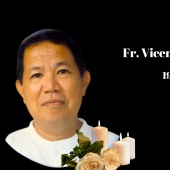
MEC was established in 1987 by Divine Word missionary Fr. Ewald Dinter, SVD, when secondary education remained largely inaccessible to many Mangyan young people in Mansalay and neighboring Bulalacao.
For families living in remote upland communities, distance, poverty and the lack of nearby secondary schools often prevented children from continuing their education.
The school was established as a response to that situation.
In its early years, tuition was free. Families and communities helped sustain the school by contributing what they could, including rice, chicken, fruits and vegetables.
Education became a shared undertaking between the school and the community.
The classroom became a place where formal education could meet Indigenous identity.
A Church connection that continues
Over the years, MEC has produced hundreds of Mangyan graduates who have become professionals, educators and community workers. Some have returned to serve their own communities.
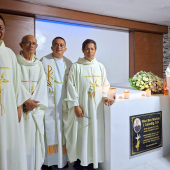
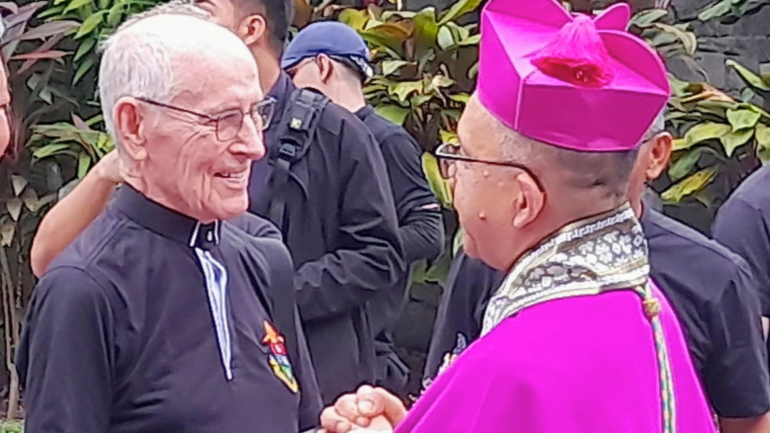
Among them is Fr. Gabayno Calinog Oybad, a Hanunoo Mangyan and the school’s first Indigenous priest, who now serves as its school director.
His journey reflects an important dimension of MEC’s mission. An Indigenous child can receive an education, pursue a profession and eventually return to serve the community from which he came.
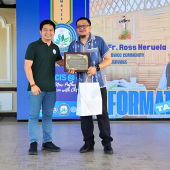
MEC became a member of the Mindoro Association of Catholic and Indigenous People Schools (MACIS) in 2022 and is now under the administration of the Roman Catholic Diocese of Calapan.
Indigenous teachers in Indigenous classrooms
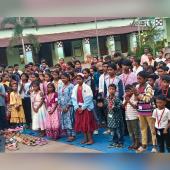
Today, all MEC students are Indigenous peoples, while the school has 13 licensed Indigenous teachers who have chosen to serve in the community.
For these educators, teaching goes beyond lesson plans, examinations and grades.
They know the students’ cultural background and understand the challenges faced by families living in remote communities. Their presence helps students navigate formal education while remaining connected to their heritage.
The teachers also serve as role models.
They show students that being Mangyan and pursuing education are not opposing paths. A young person can become a teacher, professional or community leader while remaining connected to the people and culture that shaped them.
Education rooted in culture
The school’s location in Panaytayan is significant because the community is closely associated with Hanunoo Mangyan culture, including the preservation of ambahan poetry and the traditional Mangyan writing system.
Here, culture is not simply something discussed in a textbook. It is part of the community’s living heritage.
This gives MEC a particular responsibility to ensure that education strengthens rather than erases Indigenous identity.
For Indigenous children, learning to read, write and engage with the wider world can go hand in hand with knowing their history, language, traditions and community.
Education can therefore serve as both a bridge to wider opportunities and a means of remaining connected to home.
Mission expressed through service
For MEC, the Church’s involvement is rooted in a history of responding to a concrete community need.
Fr. Dinter established the school when distance and poverty were keeping many Mangyan children from secondary education. Decades later, the Diocese of Calapan continues to administer the institution while Indigenous teachers and leaders remain central to its work.
The mission is expressed through the ordinary work of teachers who show up each day, teach, encourage and accompany their students.
Its legacy can be seen not only in diplomas but also in generations of Mangyan young people who have discovered that education does not require them to abandon their roots.
It can be seen in graduates who return to serve their communities and in Indigenous teachers who now help the next generation navigate both their cultural heritage and the wider world.
After 39 years, the footsteps that once carried Mangyan children for hours to reach a classroom have become part of a larger journey, one in which education, Church service and Indigenous identity continue to meet.
For MEC, moving forward does not mean leaving home behind.
Radio Veritas Asia (RVA), a media platform of the Catholic Church, aims to share Christ. RVA started in 1969 as a continental Catholic radio station to serve Asian countries in their respective local language, thus earning the tag “the Voice of Asian Christianity.” Responding to the emerging context, RVA embraced media platforms to connect with the global Asian audience via its 21 language websites and various social media platforms.
Latest News