

Philippine Catholic and Indigenous Schools Urged to Put Christ at the Center of Education


Catholic and Indigenous schools in Oriental Mindoro, an island province south of Metro Manila, must become missionary communities that accompany students, protect Indigenous identity and respond to social inequalities, a Catholic missionary priest said during a school association’s fourth anniversary celebration on October 10.
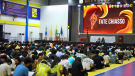
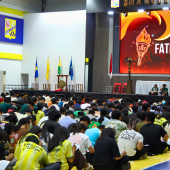
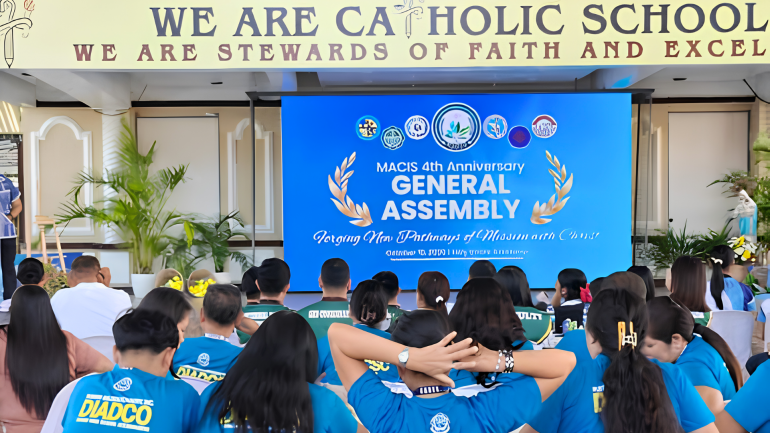
Fr. Ross Heruela, SVD, delivered the message at Holy Infant Academy in Calapan City during the fourth founding anniversary of the Mindoro Association of Catholic and Indigenous Schools (MACIS), held under the theme “MACIS @ 4: Forging New Pathways of Mission with Christ.”
“Catholic schools do not merely teach about Christ. They become missionary communities when they journey with Christ, recognize the realities of their learners, and serve the Church and society with compassion, justice, and hope,” Fr. Heruela said.
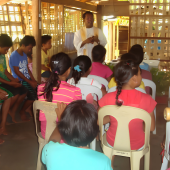
The gathering brought together school administrators, teachers, staff members, students and parents from diocesan schools in Oriental Mindoro, Divine Word College of Calapan, and Indigenous education institutions serving the Mangyan peoples, including the Mangyan Education Center for Hanunuo learners, TUGDAAN for the Alangan community and PAMINHIAN for the Iraya.
MACIS provides a platform for Catholic and Indigenous schools to share educational practices and strengthen their response to the needs of students and local communities.
Fr. Heruela said poverty, family separation caused by employment and migration, and the pressures of digital environments affect students’ well-being and education. He urged schools to look beyond academic performance and create environments where students feel respected, included and supported.
Fr. Heruela outlined several priorities for strengthening the schools’ missionary identity. He called for a shift from treating mission as a set of religious activities to making it part of the entire school community’s life, including administrative decisions, classroom relationships and engagement with families.
He also urged educators to move from instruction to accompaniment by listening to students’ concerns, helping them navigate personal and family difficulties, and recognizing their abilities and potential.
The priest also called on schools to connect charitable assistance with efforts to address the causes of poverty and inequality, enabling students to contribute to the common good.
Fr. Heruela emphasized the importance of respecting Indigenous cultures and traditions while fostering dialogue between those traditions and the Christian faith.
Education that respects these identities can help young people appreciate their heritage while gaining the skills and confidence to participate in wider society.
The priest urged schools to recognize Indigenous peoples not merely as recipients of educational assistance but as holders of knowledge, culture and rights.
Fr. Heruela also addressed the growing use of artificial intelligence in education, cautioning against students relying on AI tools at the expense of independent thinking and learning.
He encouraged educators to explore AI-supported instruction while ensuring that technology remains a learning aid rather than a substitute for critical thinking, creativity and human relationships.
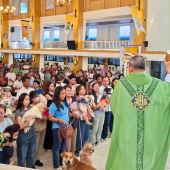
The October 10 program included a formation talk, a general assembly, a review of accomplishments, team-building activities and a Holy Mass, alongside organizational discussions involving the association’s officers and member schools
Radio Veritas Asia (RVA), a media platform of the Catholic Church, aims to share Christ. RVA started in 1969 as a continental Catholic radio station to serve Asian countries in their respective local language, thus earning the tag “the Voice of Asian Christianity.” Responding to the emerging context, RVA embraced media platforms to connect with the global Asian audience via its 21 language websites and various social media platforms.
Latest News