

Philippines: Mangyan Artisans Urge Protection of Indigenous Designs and Ancestral Lands


Mangyan artisans and educators have called for stronger protection of Indigenous crafts, traditional knowledge and ancestral lands as climate-related disasters and the loss of natural materials threaten cultural traditions and livelihoods in Mindoro, an island south of the Philippine capital, Manila.
The appeal was raised during the 4th Agkatipon Pagkaruwan Mangyan: Indigenous Peoples’ Summit 2026, held October 22 at the Divine Word College of Calapan (DWCC) in Calapan City, Oriental Mindoro. The gathering brought together nearly 1,500 participants to mark National Indigenous Peoples Month under the theme “Indigenous Art and Handicrafts: Heritage to Be Passed On.”
Emmanuel T. Guarde, an educator and advocate for the Alangan Mangyan community, said traditional crafts should not be treated as standardized commercial products but recognized as expressions of Indigenous identity and knowledge.
He highlighted the tabed, a multipurpose woven item, as an example of practical knowledge rooted in the Mangyan people’s relationship with their land. Guarde also encouraged young Mangyan people to take pride in their heritage and continue their communities’ traditions.
The summit also raised concerns about cultural appropriation, particularly the unauthorized commercial copying of Indigenous designs without the consent of the communities that created them or proper acknowledgment of their origins.
During a panel discussion, Pino Aranzado, representing the Iraya Mangyan community, explained how traditional basket designs draw inspiration from the natural world, including mountains, leaves, flowers, the sun and wildlife.
He said income from handicraft sales helps rural families meet daily needs and support their children’s education. However, severe typhoons and declining supplies of natural raw materials are making their work increasingly difficult.
To help conserve resources, artisans have adopted rotational gathering practices in forest areas, allowing materials to regenerate before they are collected again.


Melinda F. Angeles, an educator representing the Tadyawan Mangyan community, emphasized the role of women in passing traditional skills, including mat and textile weaving, to younger generations. She called for stronger government and community support as climate-related disasters damage ancestral lands and agricultural livelihoods.
Fr. Ross Heruela, SVD, director of DWCC’s Community Extension Services Office, highlighted the importance of cultural understanding in community engagement.
“No Divinista can immerse themselves in the community without knowledge and understanding of the Mangyan community,” he said, referring to members of the Divine Word College community.
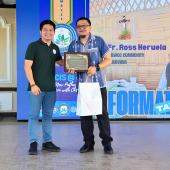
As part of the initiative to support Indigenous livelihoods, DWCC President Fr. Ramilo V. Mapaye, SVD, and Mangyan elder Binata Padiwan led the blessing and opening of BUNGA, a campus-based store designed to display and sell authentic Mangyan crafts and connect artisans with wider markets.
Organizers said the annual summit seeks to deepen public respect for Indigenous peoples, strengthen solidarity with their communities and encourage collective action to protect the cultural heritage and natural environment on which their traditions depend.
Radio Veritas Asia (RVA), a media platform of the Catholic Church, aims to share Christ. RVA started in 1969 as a continental Catholic radio station to serve Asian countries in their respective local language, thus earning the tag “the Voice of Asian Christianity.” Responding to the emerging context, RVA embraced media platforms to connect with the global Asian audience via its 21 language websites and various social media platforms.
Latest News