Philippines: Religious Conference Urges Action for Peace amid Rising Costs, Inequality

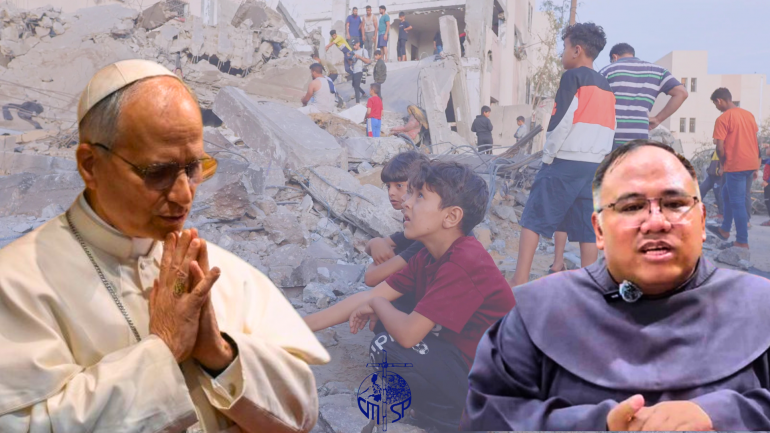
The Conference of Major Superiors in the Philippines–Justice, Peace, and Integrity of Creation Commission (CMSP-JPICC) and its mission partners on April 11 called on the faithful to move beyond prayer and take concrete action for peace, linking the observance to growing poverty, rising costs, and environmental degradation.
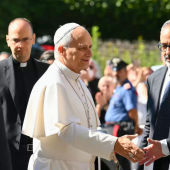
The statement was issued in response to the International Day of Prayer for Peace called by Pope Leo XIV.
“We respond not merely with prayer, but with conversion, courage, and concrete action,” the group said.
In a message via Messenger, Fr. Angel Cortes, CMSP, co-executive secretary and JPICC national coordinator, said prayer must lead to “decisions, policies, and lifestyles that truly ease the burden of the poor.”
He said the Church is being called to simplify its way of life, strengthen sustainable programs such as livelihood and food security initiatives, and use its moral voice on issues like unjust pricing and labor conditions.
For government and economic leaders, Fr. Cortes urged “urgent and transparent measures” to address rising costs, along with stronger social protection, accountability, and long-term solutions such as renewable energy and food security.
“Neutrality is complicity; silence is betrayal,” the statement read.
Fr. Cortes clarified that this does not mean partisanship, but a moral stance rooted in the Gospel.
“The Gospel itself is never neutral in the face of injustice,” he said.
Acknowledging the risks of speaking out, Fr. Cortes said consecrated life “has always carried this risk” and is called “not to safety, but to fidelity.”
He added that religious leaders are not meant to be partisan, but “to stand with the poor, speak for justice, and help shape a society where peace is possible.”
The group also called for accountability from those in power, urging that governance and economic systems serve the common good.
It further linked social injustice with environmental degradation, echoing the call that “the cry of the poor and the cry of the earth are one.”
Beyond its critique, the group committed to a more engaged form of religious life.
“We will speak when silence is easier, act when comfort tempts us to withdraw, and walk where suffering is most real,” it said.
Quoting the pope, the statement stressed that prayer must lead to action: “We cannot ask God for peace while remaining indifferent to injustice.”
It added that the credibility of the Church depends on its closeness to the poor.
“Only a Church that stands with the poor can speak with truth; and only a Church that dares to act can become a credible sign of peace,” the statement said.
Radio Veritas Asia (RVA), a media platform of the Catholic Church, aims to share Christ. RVA started in 1969 as a continental Catholic radio station to serve Asian countries in their respective local language, thus earning the tag “the Voice of Asian Christianity.” Responding to the emerging context, RVA embraced media platforms to connect with the global Asian audience via its 21 language websites and various social media platforms.
Latest News