Philippines: Self-Help Groups in Calapan Vicariate Emphasize Faith-Based Community Action


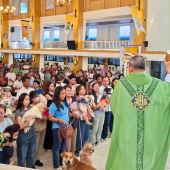
Self-Help Groups (SHeGs) of the Apostolic Vicariate of Calapan gathered for their third General Assembly on March 21, 2026, at Good Shepherd Academy in Victoria, Oriental Mindoro, Philippines, drawing participants from across the vicariate.
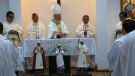
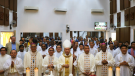
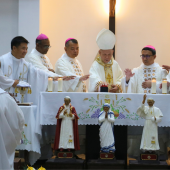
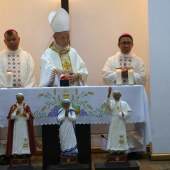
Organized by the Diocesan Social Action Center (DSAC), the assembly carried the theme, “SHeG: Rising Together in the Breadth of Love and Service.” The event opened with a Eucharistic celebration presided over by Moises M. Cuevas, who emphasized that lasting social change must be rooted in a deep relationship with Christ and expressed through service.
SHeG, initially launched in 2016 under the leadership of Edgar Fabic, has evolved from a livelihood initiative into a faith-based movement promoting dignity, self-reliance, and solidarity, particularly among women in marginalized communities.
Leonor Gamilla, who served as SHeG coordinator until 2021, said the program was designed to foster holistic empowerment. “It focuses on economic, social, and political dimensions, including leadership development and financial management, while also nurturing spiritual growth,” she said.
Sr. Mary Clare Balila, who has served as program director since 2022, noted that SHeG has continued to expand. “It is becoming more holistic, now including ecological, cultural, and gender dimensions, and is increasingly integrated into the life of Basic Ecclesial Communities,” she said.
Participants shared experiences, best practices, and grassroots initiatives that have helped improve family livelihoods and strengthen community ties.
In his report, DSAC director Edwin Gariguez highlighted the program’s growth. A total of 89 SHeGs are now active across Oriental Mindoro, with 51 located in the municipality of Gloria. Collectively, the groups have generated about ₱4.2 million in savings and facilitated ₱12.1 million in loans.
The assembly also marked the launch of the BEC–SHeG Formation Module, which aligns SHeG with the broader vision of Basic Ecclesial Communities (BECs). The module focuses on three core dimensions, faith, community, and mission, and aims to deepen members’ spiritual life while strengthening communal bonds and encouraging active service.


“With its emphasis on sharing the Word of God, unity, and mutual service, SHeG reflects the essential pillars of BEC,” Sr. Balila said.
The formation program includes ten guided topics designed to build communities that are both organized and spiritually engaged, where faith is lived through concrete acts of service.
Representatives from Caritas Philippines underscored the broader significance of the initiative. Rachliez May “Sweet” Cruz-Racho encouraged participants to reflect on their identity and mission within the community, stressing that SHeG is not only about livelihood but also about rediscovering dignity and purpose.
A solidarity message from Karen Teresa C. Baldos, president of the Council of the Laity of the Apostolic Vicariate of Calapan, highlighted the important role of laypeople in sustaining and expanding the movement.
The assembly also featured testimonies from a child member, a woman beneficiary, a community facilitator, and an Indigenous Peoples representative, illustrating the program’s impact on income, confidence, relationships, and hope.
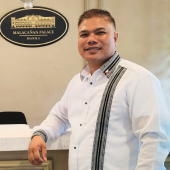
Local government officials expressed support for the initiative. Victoria Mayor Teresita M. Ong reaffirmed her commitment to community empowerment, while Municipal Planning and Development Office representative Caroline G. Manuel emphasized the value of collaboration between the Church and the government in promoting inclusive development.
Product booths showcased goods produced by SHeG members, reflecting not only economic activity but also cooperation, trust, and shared faith within communities.
Organizers said the gathering reaffirmed that SHeG is more than a program, describing it as an ongoing journey toward building vibrant Christian communities grounded in prayer, shared responsibility, and service to the poor.
Radio Veritas Asia (RVA), a media platform of the Catholic Church, aims to share Christ. RVA started in 1969 as a continental Catholic radio station to serve Asian countries in their respective local language, thus earning the tag “the Voice of Asian Christianity.” Responding to the emerging context, RVA embraced media platforms to connect with the global Asian audience via its 21 language websites and various social media platforms.
Latest News