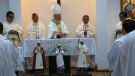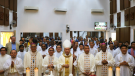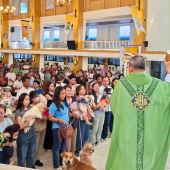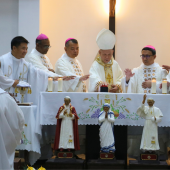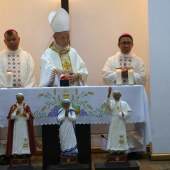
In a decisive step from advocacy to action, the Diocese of Calapan in the Philippine province Oriental Mindoro has formalized solar power contracts for seven parishes, signaling what Church leaders describe as a “concrete beginning” of the island’s transition to clean and reliable energy.
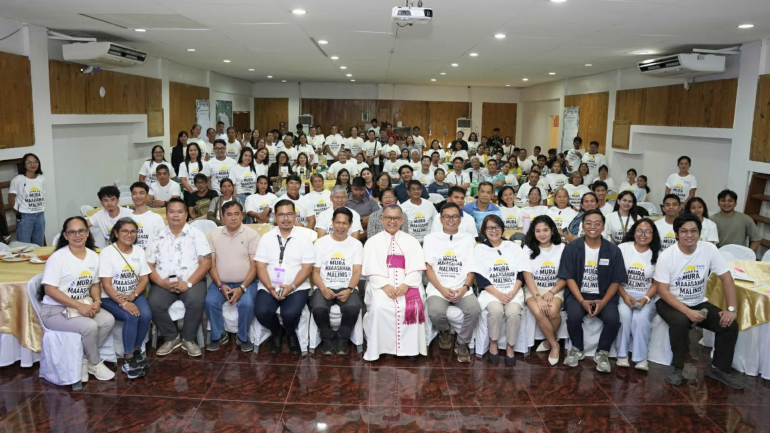
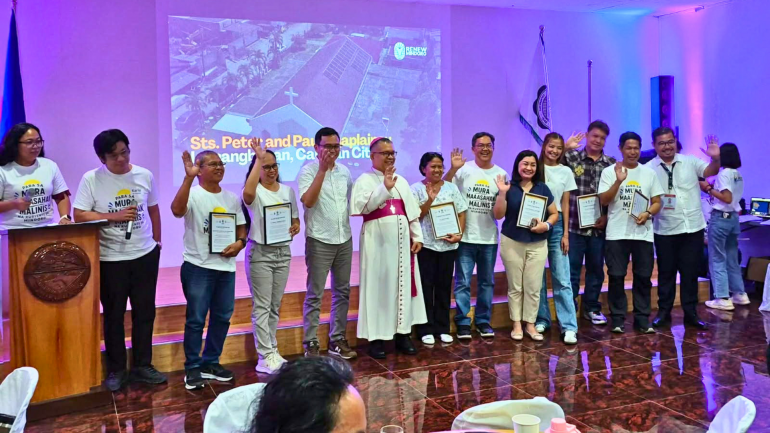
The contracts, covering a combined capacity of 200 kilowatt-peak (kWp), were awarded on April 30 during the REnew Mindoro Investments Summit at Divine Word College of Calapan (DWCC).
Notably, the entire capacity was funded through parish-led efforts in just five months.
The gathering brought together more than 150 participants from Church, government, business, civil society, financing institutions, and local communities, including Bishop Moises Magpantay Cuevas of Calapan.
For years, the Church in Mindoro has spoken about ecological justice and energy access. This time, it signed contracts.
Seven parish communities entered into agreements with renewable energy providers, translating months of fundraising, planning, and community organizing into operational solar projects.
Once installed, the systems are expected to generate up to 1,000 kilowatt-hours of clean electricity daily, enough to significantly cut electricity costs and reduce dependence on diesel-powered grids.
Delivering the keynote address, Fr. Edwin Gariguez, Social Action Director of Calapan diocese, drew a poignant contrast between the province’s festive spirit and its energy realities, as Mindoro simultaneously celebrates the “Pandang Gitab” (Festival of Lights).
“Tonight, Mindoro celebrates light. But for many of our people, light remains uncertain,” Fr. Gariguez said.
He challenged stakeholders to rethink the island’s narrative, not as energy-poor, but as energy-rich yet underutilized.
“We are not energy poor; we have yet to unlock how our natural resources can generate affordable, reliable, and clean electricity for every Mindoreño,” he added.
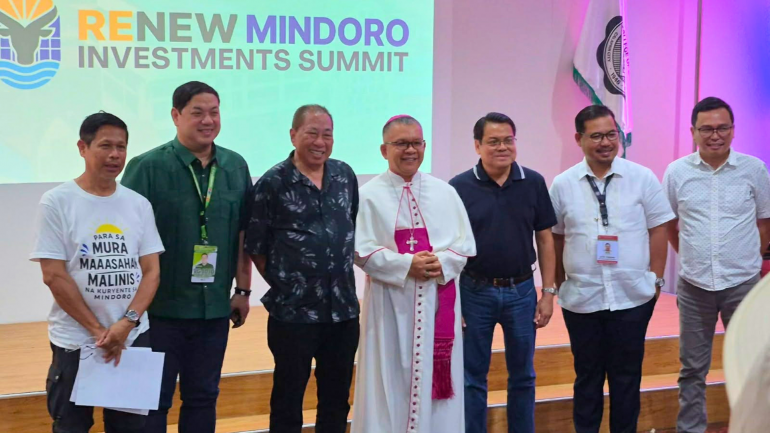
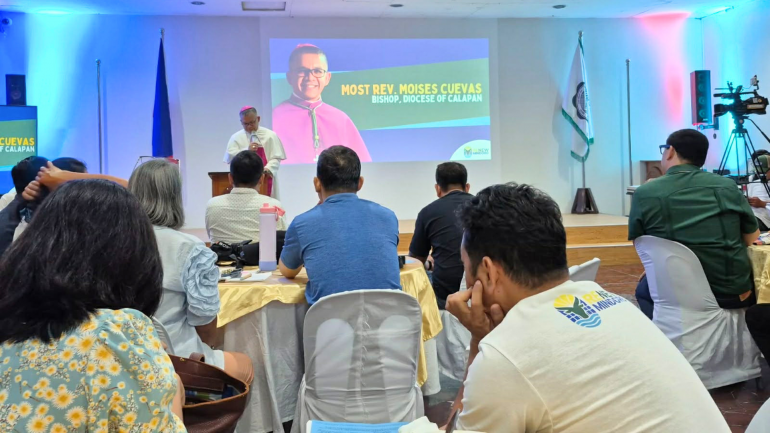
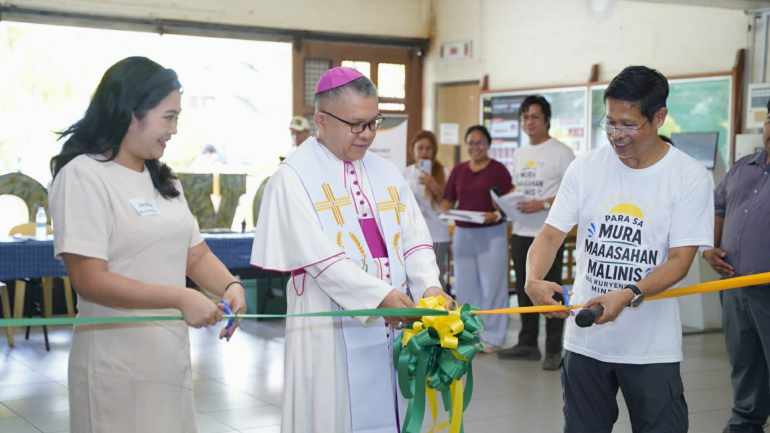
The summit drew strong backing from political and Church leaders, signaling growing institutional alignment behind the energy transition.
Speaking at the summit, Bishop Cuevas framed renewable energy not just as an economic venture but as a moral responsibility rooted in care for the “common home.” He stressed that profit should not come at the expense of environmental protection, urging a broader view that prioritizes the preservation of vulnerable communities and ecosystems.
Provincial officials and legislators pledged support through policy measures such as tax incentives, expanded solar programs at the barangay level, and net metering systems that would allow households to feed excess energy back into the grid.
Meanwhile, CEED Executive Director Gerry Arances challenged both government and private sector actors to match the commitment already demonstrated by parish communities.
“This is not just an investment of money, but an investment in our future,” he said.
The momentum continues beyond the one-day gathering.
A renewable energy fair—featuring technology demonstrations, consultations, and financing options—runs in Calapan through May 3, while town-level caravans are planned to bring the campaign to communities across the island.
Radio Veritas Asia (RVA), a media platform of the Catholic Church, aims to share Christ. RVA started in 1969 as a continental Catholic radio station to serve Asian countries in their respective local language, thus earning the tag “the Voice of Asian Christianity.” Responding to the emerging context, RVA embraced media platforms to connect with the global Asian audience via its 21 language websites and various social media platforms.
Latest News