


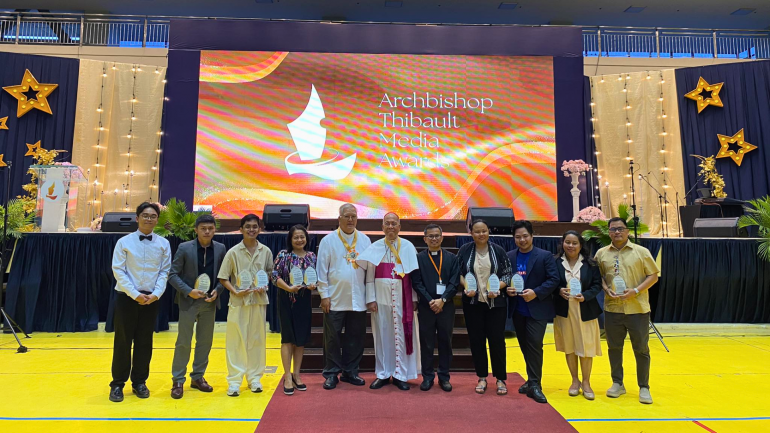
Catholic communicators and journalists in Davao, southern Philippines, were encouraged to become “bearers of hope” and champions of human dignity as the Archbishop Thibault Media Awards (ATMA) recognized media practitioners whose work promotes truth, compassion, and the common good.
The awarding ceremony was held on May 16 at the Bapa Benny Tudtud Auditorium of Ateneo de Davao University in Davao City.
Formerly known as the Davao Catholic Mass Media Awards, the recognition program was renamed in honor of Archbishop Clovis Thibault, PME, the first Archbishop of Davao, as part of the Archdiocese of Davao’s 75th Diamond Jubilee celebrations.
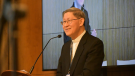
Dr. Lunar Fayloga, theology professor at Ateneo de Davao University and one of the organizers of ATMA, said the awards were established not merely to challenge sensationalism in media but to affirm journalists and communicators who continue to tell stories that inspire hope.
“If there is one thing that we would like to address, it is really to affirm people and encourage them to become bearers of the good news,” Fayloga told RVA.
He stressed that journalism should not stop at exposing problems but should also inspire solutions and encourage communities facing social challenges.
One of the distinctive features of the awards is its categories, rooted in Catholic social teaching and Church documents.
Recognitions included the Laudato Si’ Award for environmental reporting, the Fratelli Tutti Award for peace and fraternity, the Familiaris Consortio Award for family-centered reporting, the Mulieris Dignitatem Award for stories highlighting women, and the Populorum Progressio Award for integral human development.
Other categories honored reporting on workers’ dignity, migration, evangelization, photojournalism, and human dignity.
Fayloga noted that many journalists may already be practicing values promoted by the Church without realizing it.
“When you report stories that promote human dignity and the welfare of people, you are already in sync with the mind of the Church,” he said.
Nova Mae Macam emerged as one of the major awardees after receiving the Archbishop Clovis Thibault Media Award for her report, “South Cotabato farmers future-proofing rice in an uncertain climate.” She also received the Laudato Si’ Award.
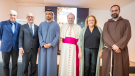
Special recognitions were presented to Bishop Guillermo Afable of Digos Diocese and Archbishop Romulo G. Valles of the Archdiocese of Davao.
Fayloga also encouraged parish-based social communication volunteers to continue finding creative and meaningful ways to proclaim the Gospel in today’s digital culture.
“We would like to offer an alternative voice,” he said. “Church communicators should not be content with simply sounding religious. We are invited to become more creative and more effective in communicating hope to people today.”
Reflecting on the responsibility of communicators, Fayloga emphasized that truthful reporting should strengthen unity and hope.
“Media practitioners have a role to play in bringing hope through their reporting,” he said, adding that journalism should not only present facts but also inspire people and strengthen communities rather than deepen divisions.
“Truth must always be told in love,” Fayloga said.
Radio Veritas Asia (RVA), a media platform of the Catholic Church, aims to share Christ. RVA started in 1969 as a continental Catholic radio station to serve Asian countries in their respective local language, thus earning the tag “the Voice of Asian Christianity.” Responding to the emerging context, RVA embraced media platforms to connect with the global Asian audience via its 21 language websites and various social media platforms.
Latest News