Philippine Church Questions Permits Covering 218,000 Trees Linked to Mining Projects

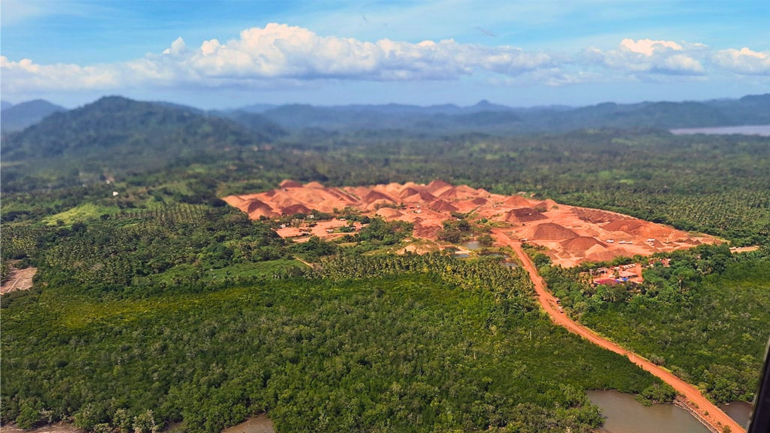
The Apostolic Vicariate of Puerto Princesa in western Philippines has called for a review of permits covering at least 218,854 trees linked to mining projects in Palawan, warning of the environmental and moral consequences of large-scale forest loss in the province.
The Apostolic Vicariate of Puerto Princesa is located in the western Philippines on the island province of Palawan, one of the country's largest and most ecologically significant islands.
In a pastoral letter dated June 12, Apostolic Vicar Bishop Socrates Mesiona urged government agencies to scrutinize Special Tree Cutting and Earth-Balling Permits (STCEP) issued for mining-related projects and to ensure greater transparency in their approval and implementation.
Citing publicly available documents, Bishop Mesiona said permits had been issued covering no fewer than 218,854 trees in areas including Aborlan, Brooke's Point and Bataraza.
“Whatever the exact number of trees that may ultimately be cut, the moral question remains: Does our use of natural resources show respect for the Creator and for our fellow human beings, including those who will come after us?" Bishop Mesiona said.
The pastoral letter described Palawan as more than a natural treasure, calling it a gift entrusted by God to human stewardship.
“Palawan is not merely a symbol of beauty; it is a sign of God's goodness and a responsibility entrusted to our care," he said.
Drawing from Pope Francis' encyclical Laudato Si', Bishop Mesiona stressed that environmental protection is inseparable from genuine human development and the common good. He warned against viewing forests merely as resources for economic use, emphasizing their role in sustaining life and ecological balance.
The bishop also challenged authorities to increase transparency regarding tree-cutting permits and to ensure that affected communities are heard.
Among the measures proposed in the letter are a review of existing permits, full disclosure of permit details and covered areas, and an assessment of whether approved projects comply with existing mining restrictions in the province.
Bishop Mesiona noted that the destruction of forests affects not only ecosystems but also future generations. Quoting Scripture, he reminded the faithful: "Do not destroy its trees by putting an axe to them.”
Palawan, often described as the country's last ecological frontier, has long been at the center of debates over mining, conservation and sustainable development. Through the pastoral letter, the Church framed the protection of forests not only as an environmental concern but also as a matter of faith, justice and responsibility to future generations.
Radio Veritas Asia (RVA), a media platform of the Catholic Church, aims to share Christ. RVA started in 1969 as a continental Catholic radio station to serve Asian countries in their respective local language, thus earning the tag “the Voice of Asian Christianity.” Responding to the emerging context, RVA embraced media platforms to connect with the global Asian audience via its 21 language websites and various social media platforms.
Latest News