

Pakistan Church Prioritizes Youth Education and Employment, Archbishop Joseph Arshad Says

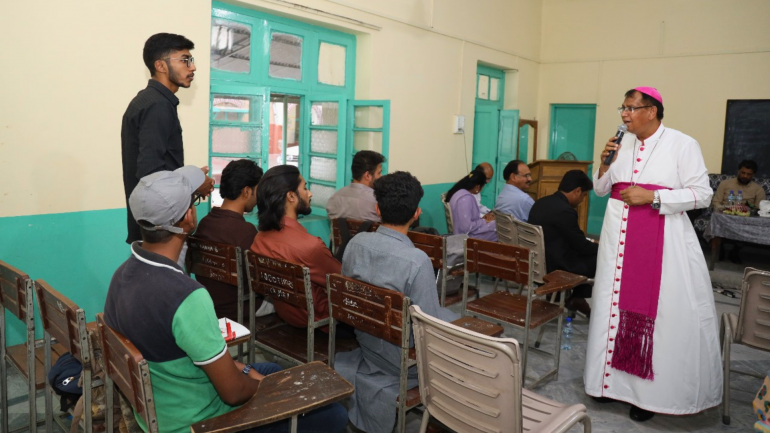
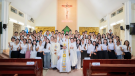
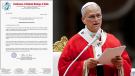
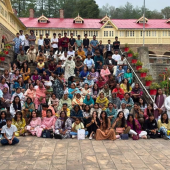
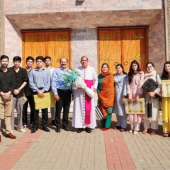
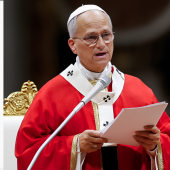
Young people must be at the center of the Church’s mission in Pakistan because they represent the majority of both the country’s population and the Christian community, according to Archbishop Joseph Arshad following the Pakistani bishops’ recent ad limina visit to Rome.
“In Pakistan we must focus on young people,” Archbishop Arshad said. “They represent about 60 percent of the population and also nearly 60 percent of the Christian community. But almost 80 percent of them are illiterate. This is a serious educational challenge.”
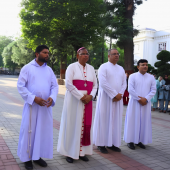
Archbishop Arshad leads the Archdiocese of Islamabad-Rawalpindi, which covers a vast territory that includes the national capital region of Islamabad, neighboring Rawalpindi, parts of Punjab province, Kashmir, and extends toward areas bordering Afghanistan.
Reflecting on his pastoral experience, first in Faisalabad, an industrial city in eastern Pakistan, and later in Islamabad, Archbishop Arshad said direct engagement with young Catholics revealed urgent concerns related to education, employment, career guidance, faith formation, and sports opportunities.
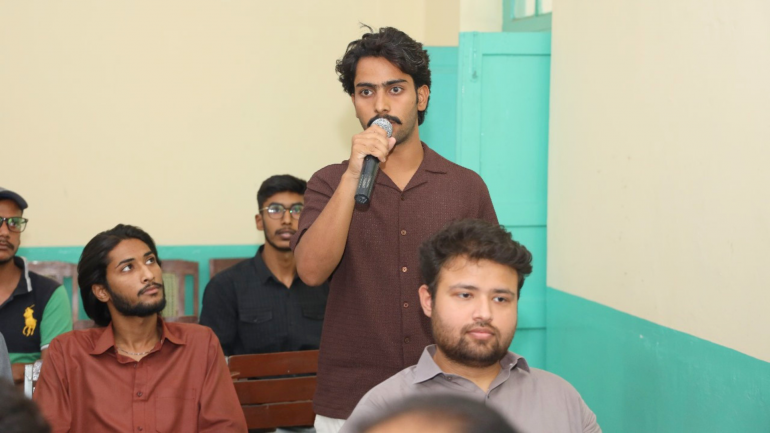
“By interacting with young people, they began expressing their needs, especially regarding education and career guidance, Bible courses, and sports initiatives,” he said.
The archdiocese has responded by expanding educational initiatives aimed at helping young Catholics pursue higher studies and improve employment prospects.
“Young people need education and employment. These are fundamental for our community, which faces poverty and marginalization,” Archbishop Arshad said.
Among the initiatives introduced are Central Superior Services (CSS) preparatory courses. CSS examinations are competitive state examinations that open access to Pakistan’s civil services and government administration.
“In Islamabad we have been offering these courses for about five years with encouraging results,” he said.
The archdiocese has also opened a college in Rawalpindi to support university students coming from distant areas across the large diocesan territory.
The archbishop said vocational training remains another priority, particularly for young people unable to pursue higher education.
“For those who cannot access university education, professional skills development is equally important,” he said.
Archbishop Arshad also emphasized the need for stronger formation of priests, religious, and lay Catholics while encouraging broader lay participation in Church life.
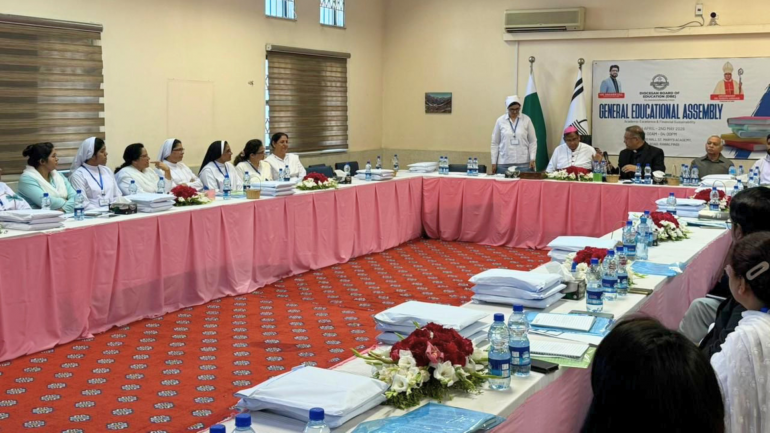
“Our goal is to become an active and faithful community capable of sharing the Good News,” he said.
Christians in Pakistan remain a small minority community and often face economic hardship and social discrimination, Archbishop Arshad noted. He pointed to concerns including false blasphemy accusations and cases involving abduction and forced conversion affecting Christian and other minority communities.
“We oppose any mentality that denies equal dignity to all people,” he said, emphasizing constitutional protections and human dignity.
Despite ongoing challenges, Archbishop Arshad expressed confidence in the future of the Church in Pakistan.
“The people are strong in faith and do not lose hope,” he said.
Reflecting on the bishops’ ad limina visit, he said meeting the Pope strengthened their sense of belonging to the universal Church.
“We are a small and young community that needs support,” Archbishop Arshad said. “We hope the Holy Father may one day visit Pakistan and strengthen our faith and hope.”
Radio Veritas Asia (RVA), a media platform of the Catholic Church, aims to share Christ. RVA started in 1969 as a continental Catholic radio station to serve Asian countries in their respective local language, thus earning the tag “the Voice of Asian Christianity.” Responding to the emerging context, RVA embraced media platforms to connect with the global Asian audience via its 21 language websites and various social media platforms.
Latest News