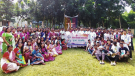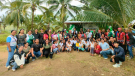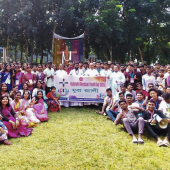



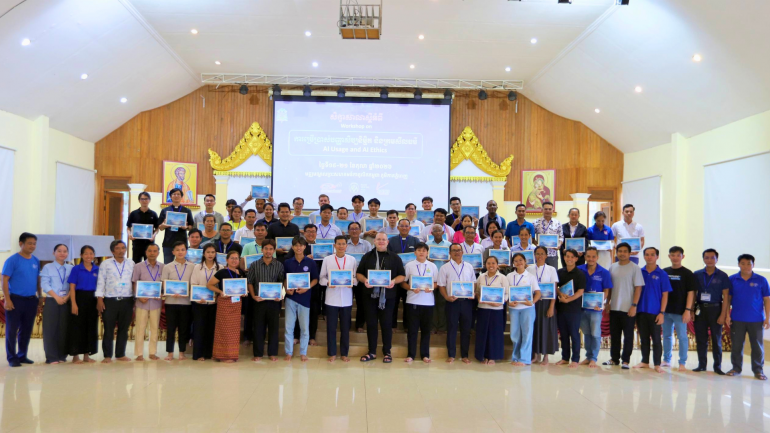
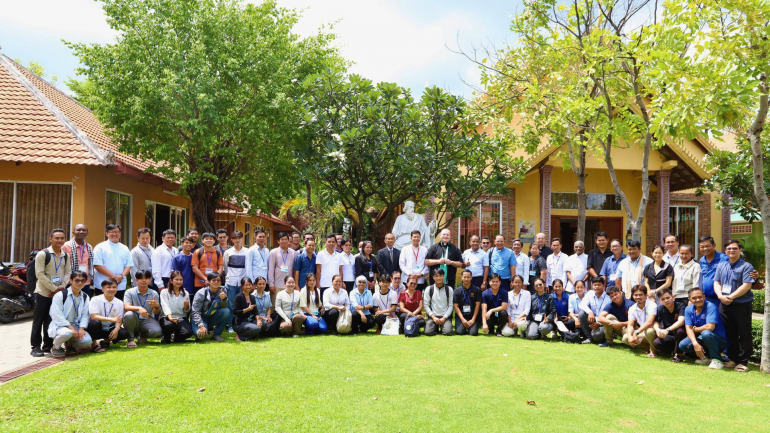
About 70 Catholic clergy, religious, and laypeople gathered in Cambodia’s capital from October 19 to 21 for a workshop on artificial intelligence (AI), with Church leaders urging participants to use emerging technologies for evangelization and education without compromising human dignity and authentic relationships.
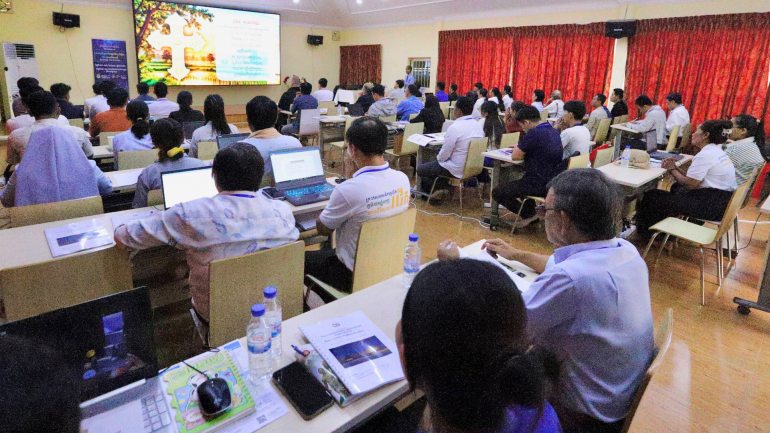
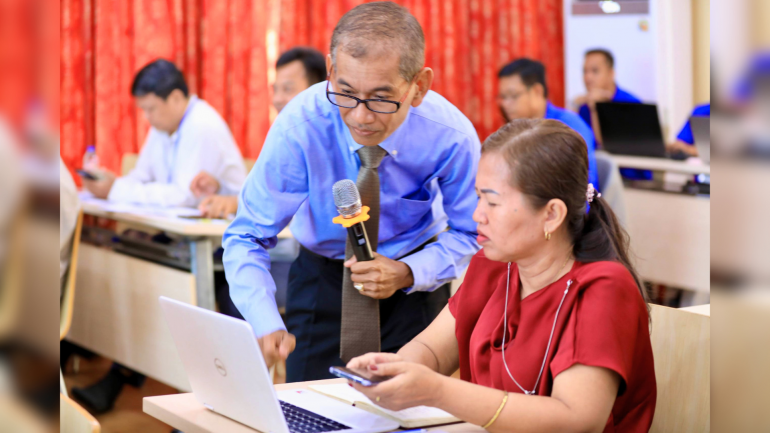
Organized by the Cambodian Catholic National Office for Social Communications, the three-day workshop was held at the Pastoral Center of the Apostolic Vicariate of Phnom Penh in Sangkat Khok Kleang, Sen Sok District. It combined practical training in generative AI tools with discussions on Catholic ethical principles and the risks of excessive dependence on technology.
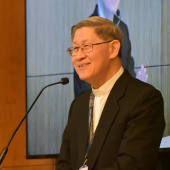
Bishop Olivier Schmitthaeusler, Apostolic Vicar of Phnom Penh, supported the initiative and addressed participants during the opening ceremony. Bishop Pierre Suon Hangly, coadjutor of the apostolic vicariate, also attended, alongside priests, religious brothers and sisters, and lay participants.
Bishop Schmitthaeusler recalled Pope Leo XIV’s message on the responsible use of AI and emphasized that technology must remain at the service of people.
“We must preserve the dignity of life. We must make technology serve us, not make us serve technology, so do not let AI become the master and lead us at its will,” he said.
He cautioned that, despite the possibilities offered by AI, human beings must remain central, warning that technology can draw people into virtual environments and expose them to dangers such as fake news.
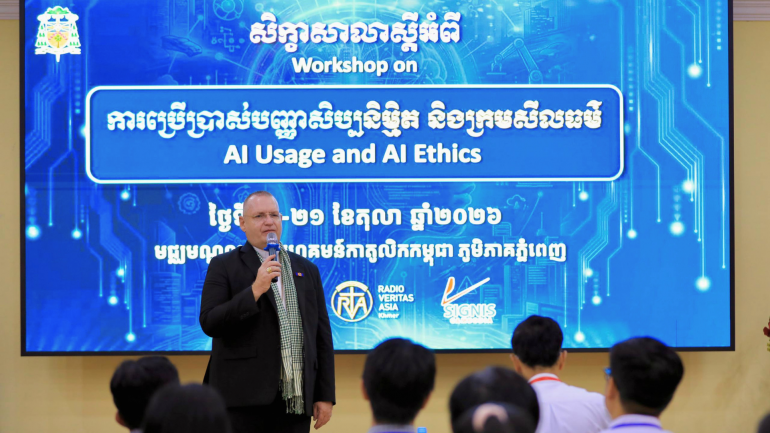
Mr. Hin Sopheap, co-founder of DG Academy and a workshop speaker, said AI skills could support personal development, careers, families, and social progress.
Fr. Un Son said the technology could help the Church adapt to changing times and strengthen its educational and evangelization efforts, particularly among young people.
Participants explored AI tools including ChatGPT, Gemini, Claude, Canva, and DeepSeek. Poun Sreypob, a participant from Siem Reap Province in northwestern Cambodia, said she intended to apply the knowledge responsibly and avoid using it to harm others.
Sok Rotana, a computer teacher from Takeo Province in southern Cambodia, said he planned to share what he learned with his students while ensuring they continued to rely on their own thinking and judgment rather than depending entirely on AI.
Mr. Leng Hong, an assistant at Traeng Trayueng Catholic Church, warned that excessive reliance on technology could weaken human communication and relationships. He encouraged people to speak with those around them rather than allow digital tools to displace love, understanding, and personal connection.
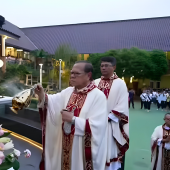
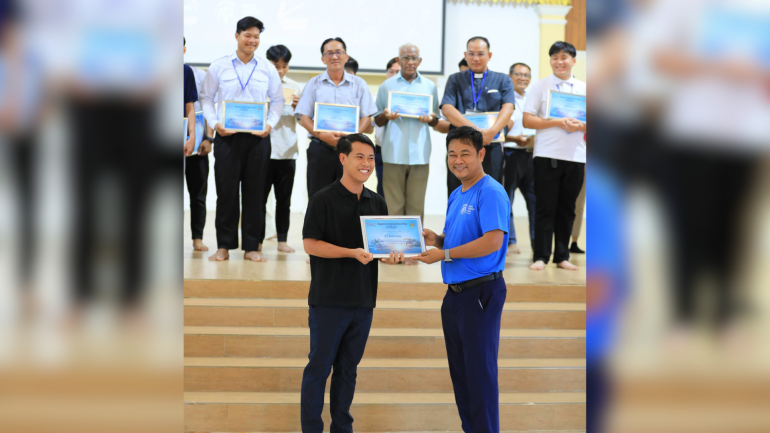
The workshop concluded with certificates presented to all 70 trainees, followed by a closing Mass presided over by Bishop Hangly.
In his homily, Bishop Hangly encouraged participants to use new technology to proclaim the Good News while remaining guided by Christian faith and moral discernment.
“We must use it in accordance with the faith that Jesus guides us to love, and in accordance with the Holy Spirit who guides us to distinguish good from evil,” he said, urging participants to prioritize the common good.
Radio Veritas Asia (RVA), a media platform of the Catholic Church, aims to share Christ. RVA started in 1969 as a continental Catholic radio station to serve Asian countries in their respective local language, thus earning the tag “the Voice of Asian Christianity.” Responding to the emerging context, RVA embraced media platforms to connect with the global Asian audience via its 21 language websites and various social media platforms.
Latest News