

Singapore Hackathon Brings 80 Catholics Together to Develop Digital Solutions for Church

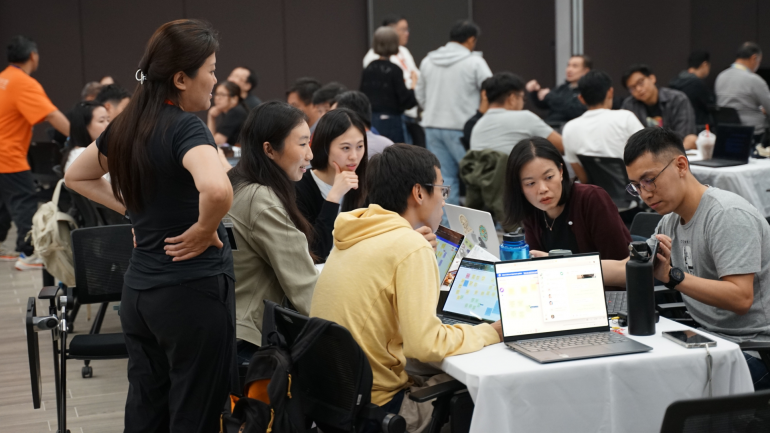
About 80 Catholics aged 17 to 61 took part in Singapore’s first Catholic hackathon, FIAT, from October 9 to 11, developing digital solutions to address pastoral needs identified by four archdiocesan organizations.
Organized by the Archdiocese of Singapore’s Digital Church Office (DCO), the three-day event brought together 14 teams to work on challenges presented by the Archdiocesan Commission for Catholic Schools, Catholic Foundation, Office for Catechesis, and Office for the New Evangelization.
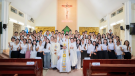
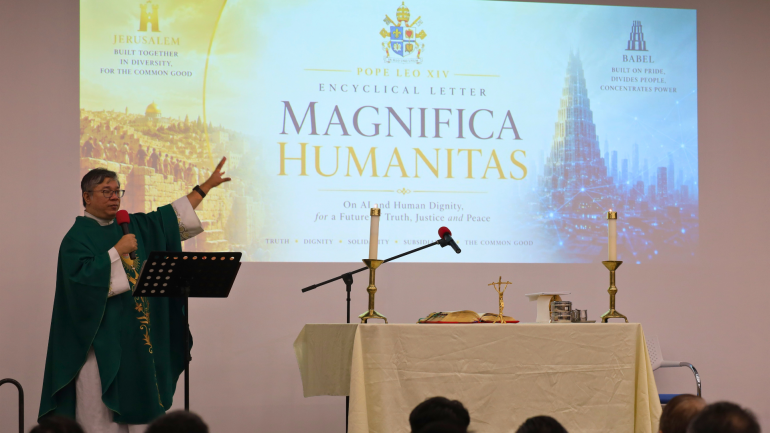
At a Mass on October 11, Fr. Terence Kesavan, spiritual director of the Archdiocesan Information Technology Office, urged participants to continue using their skills to serve the Church beyond the hackathon.
Recalling how Pope St. John XXIII convened the Second Vatican Council in 1962 in response to the need for the Church to engage with a changing world, Fr. Kesavan drew parallels with the Church’s response to emerging technologies.
He noted that the COVID-19 pandemic accelerated the adoption of digital tools, including online Masses and catechesis, despite earlier resistance.
Referring to Pope Leo XIV’s encyclical Magnifica Humanitas, which addresses artificial intelligence and its ethical implications, Fr. Kesavan encouraged Catholics to use technology responsibly while safeguarding human dignity.
“It is not the medium that is the problem; it is the content,” he said.
Acknowledging that many priests may be unfamiliar with emerging technologies, he encouraged lay Catholics to share their professional expertise and collaborate with clergy to meet the Church’s pastoral needs.
“You are the Church,” he told participants. “You are the ones that I hope will bring about this change.”
One project developed during the hackathon was ECHO, a proposed gamified platform designed to help new catechists through structured onboarding and mentorship.
George Lai of Blessed Sacrament Church, a member of the ECHO team who serves in his parish choir and youth ministry, said the experience deepened his understanding of the Church’s pastoral needs.
He said ministries needed to move beyond maintaining existing activities toward evangelization and outreach.
His main takeaway was greater confidence in using his skills to support the Church.
“It is to carry within us the confidence that we have a gift of using technology,” Lai said, adding that Catholics could contribute to the Church through talents beyond technology, whether in significant or small ways.
Joel Jonas Tan, head of the Digital Church Office, said the hackathon aimed to involve Catholics more directly in addressing pastoral challenges by drawing on the professional knowledge and experience of the laity.
Archdiocese plans wider digitalization
Beyond the hackathon, the DCO is pursuing a broader digitalization plan that includes a proposed centralized system for Singapore’s parishes and archdiocesan organizations, with a common digital identity for Catholics.
Tan compared the proposed identity to Singapore’s SingPass, a digital identity system used to access government services. He envisioned a platform that could eventually allow Catholics to access Church services and sacramental records through a common system.
The proposal could simplify administrative processes involving baptismal and confirmation records, marriage-related documentation, and catechetical registration. It could also help the Archdiocese better understand parishioners’ needs and plan pastoral programs.
Fr. Kesavan stressed, however, that digital innovation should support rather than replace the personal relationships at the heart of Church ministry.
Technology cannot take the place of prayer, priestly ministry, or personal accompaniment, he said, but can help the Church carry out its mission more effectively.
The name FIAT recalls Mary’s willingness to say yes to God’s call. In his closing remarks, Tan challenged participants to make their own commitment extend beyond presenting their projects.
He urged them to take personal responsibility for developing their ideas rather than leaving the next steps entirely to parishes or Church organizations.
Invoking Isaiah’s response to God’s call, participants were encouraged to embrace the words: “Here I am, Lord. Send me.”
Radio Veritas Asia (RVA), a media platform of the Catholic Church, aims to share Christ. RVA started in 1969 as a continental Catholic radio station to serve Asian countries in their respective local language, thus earning the tag “the Voice of Asian Christianity.” Responding to the emerging context, RVA embraced media platforms to connect with the global Asian audience via its 21 language websites and various social media platforms.
Latest News