

South Korean Youth to Forge Cross Using Scrapped Barbed Wire from North-South Korea Border


The Archdiocese of Seoul in South Korea has launched a project that aims to transform scrapped barbed wire from the North-South Korean border into a “Cross of Peace.”
Led by the Organizing Committee of the 2027 World Youth Day, the archdiocese inaugurated the “Barbed Wire Cross Project” at the Myeongdong Cathedral on April 12.
This project will involve young people who will hammer and bend barbed wire collected from the Military Demarcation Line that separates North Korea and South Korea to create a five-meter cross.
“The barbed wire… is a symbol of the tragedy of fratricide and the pain of division,” said Seoul Archbishop Peter Chung Soon-taick.
“Just as the cross, which was Israel's instrument of execution, became a symbol of peace, reconciliation, sacrifice, and love through the cross and resurrection of Jesus Christ, I hope it will become a symbol of unity, peace, sacrifice, and love between the two Koreas as we prepare for the 2027 World Youth Day,” he also said.
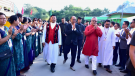
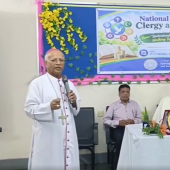
At the opening ceremony, Archbishop Chung blessed the hammers and anvils to be used for the forging of the cross, as well as the individuals who will participate in the project.
The archbishop, together with Bishop Lee Kyung-sang and other officials of the WYD Organizing Committee, did a demonstration of hammering and bending the barbed wires.
The Barbed Wire Cross Project will operate every Sunday at the Myeongdong Cathedral from 1:00PM to 3:00PM.
The archdiocese invites not only parishes and young people to participate, but also religious societies and “figures from all walks of life.”
The completed “Barbed Wire Cross” will be presented to Pope Leo XIV during the World Youth Day in Seoul from August 3 to 8 next year.
Radio Veritas Asia (RVA), a media platform of the Catholic Church, aims to share Christ. RVA started in 1969 as a continental Catholic radio station to serve Asian countries in their respective local language, thus earning the tag “the Voice of Asian Christianity.” Responding to the emerging context, RVA embraced media platforms to connect with the global Asian audience via its 21 language websites and various social media platforms.
Latest News