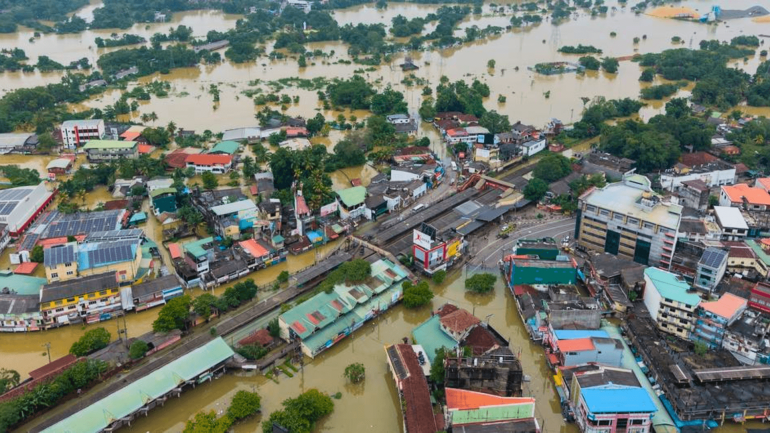
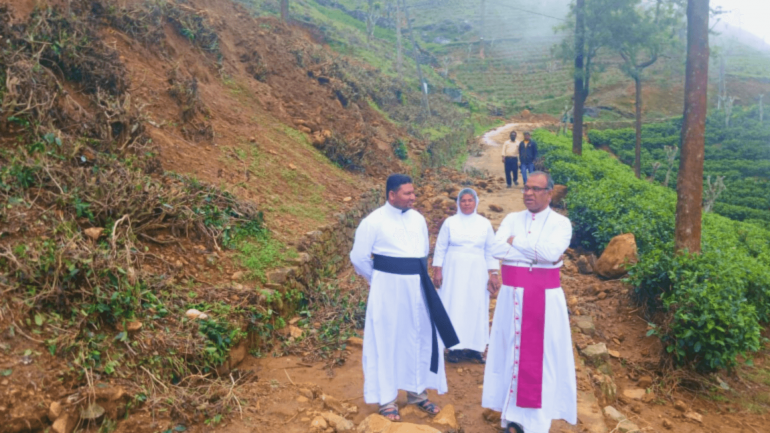
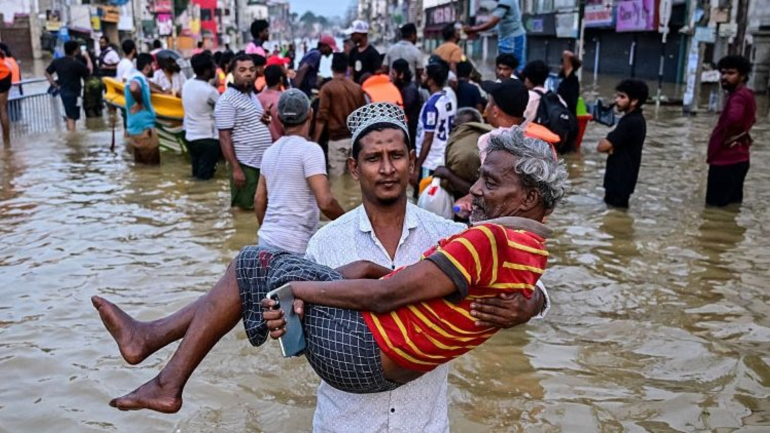
Following the one-and-a-half-month mark since the devastating cyclone hit Sri Lanka, the Bishop Jude Nishanta Silva of Badulla in the south east, has issued an open appeal via video, drawing the attention of the government and all relevant parties to several critical issues.
The Bishop’s own diocese was severely impacted by the disaster, with a large number of residents losing their homes and lands. In his video, he begins by expressing his gratitude to the local and international community, the President and the government, the Maha Sangha, fellow Bishops, nuns, Hindu clergy, and all religious leaders, as well as state officials and foreign nations for their immediate humanitarian assistance during the initial crisis.
Urgent Call for Short-Term Solutions
The Bishop emphasized that the initial wave of attention usually fades as time passes. To prevent this, he stressed the need for immediate intervention through several essential short-term solutions:
Housing Crisis: Many families face severe hardship as their homes were either completely destroyed or are located in areas now declared "high-risk zones," preventing them from returning.
Lack of Alternatives: There is a critical shortage of rental properties. Furthermore, people are unable to comply with government evacuation orders for high-risk areas because they have nowhere else to go.
Impact on Education: Schools destroyed by the storm lack temporary alternatives, while other schools currently used as relief centers cannot be reopened because the displaced persons sheltering there have no permanent housing.
Mental Distress: This prolonged uncertainty has led to significant psychological distress and a sense of hopelessness among the victims.
Bureaucratic Delays
While the cyclone fully destroyed 1,289 houses and damaged approximately 45,000, affecting a total of 719,000 buildings, the Bishop noted that victims are struggling to access promised government aid. Delays are being caused by loss of essential legal documents during the storm, excessive and complicated paperwork and lack of updated government circulars to authorize specific relief measures.
Supporting Reports from International Organizations
The Bishop’s concerns are echoed by a report released by the United Nations Development Programme (UNDP) on January 14. The report highlights:
Lack of Coordination: Poor communication between state agencies is delaying approvals for building repairs, hindering the recovery of affected communities.
Pre-existing Vulnerability: Approximately 1.1 million affected people were already struggling with low income and debt before the cyclone.
Debt Traps: While 45% of the vulnerable population relies on government and international aid, another 40% are turning to informal high-interest loans, which will lead to a long-term debt crisis.
Additionally, a report from the Food and Agriculture Organization (FAO) on January 15 revealed:
227,323 families whose livelihoods depend on farming have been affected.
106,293 hectares of paddy fields were submerged by floods.
The FAO aims to raise $165,000 to provide food security assistance to 256,012 families for one year.
Bishop Jude Nishanta Silva concluded his appeal by stating that the same unity and enthusiasm shown regardless of race, religion, or region during the onset of the disaster must be maintained. He urged the political leadership, bureaucracy, religious leaders, and private institutions to collaborate continuously to resolve the burning issues facing the people today.