Sri Lankan Prison Ministry Shows How Bridge-Building Restores Lives Scarred by Addiction

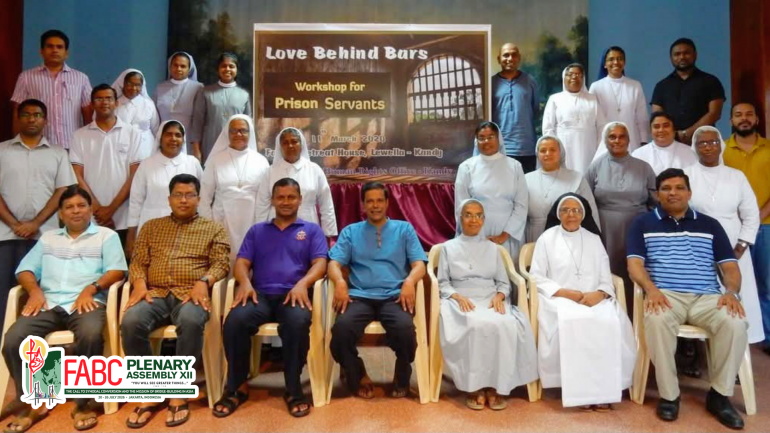
As the Catholic Church in Asia prepares for the XII Plenary Assembly of the Federation of Asian Bishops' Conferences (FABC) in Jakarta, Indonesia, under the theme "Synodal Conversion and the Mission to Be Bridges and Bridge-Builders in Asia," the prison ministry of the Sisters of the Cross of Chavanod in Sri Lanka offers a concrete witness to bridge-building. Amid the country's growing drug addiction crisis, the sisters accompany inmates with compassion, spiritual care, and rehabilitation, helping restore broken relationships, uphold human dignity, and reconnect those affected with their families, communities, and God.
For Sr. Maureen Peiris, SCC, Provincial Councillor of the Sisters of the Cross of Chavanod, bridge-building begins with listening.
Serving in Dumbara Prison in Kandy, central Sri Lanka, Sr. Peiris said the congregation's prison ministry regularly brings the sisters into contact with women imprisoned for drug-related offenses. Many, she noted, come from stable families, and some even attended well-known Catholic schools, demonstrating that addiction cuts across social, economic, and religious boundaries.
Each week, the sisters conduct catechism classes, pray with inmates, and spend time listening to their stories.
"These encounters have become sacred moments of bridge-building," Sr. Peiris said.
Many women speak of broken relationships, emotional wounds, family conflict, loneliness, peer pressure, and poor choices that led them into addiction. Beneath each story, she said, lies a common longing, to be accepted, understood, and loved.
Sr. Peiris said her experience has shown that healing often begins when a person feels genuinely heard.
Through prayer, reflection on Scripture, catechetical instruction, and personal accompaniment, many inmates begin to rediscover that their identity is not defined by addiction or past mistakes but by their dignity as children of God.
The ministry extends beyond prison walls. Sr. Peiris said the sisters visit families, encourage reconciliation, and, whenever possible, assist with the education of inmates' children. In doing so, they seek to rebuild relationships damaged by addiction between mothers and children, daughters and parents, and former prisoners and society.
Yet the challenges continue after release.
Many former inmates return to the same environments that contributed to their addiction. Rejection by family members, limited employment opportunities, and social stigma often make reintegration difficult.
"Recovery cannot depend on personal determination alone," Sr. Peiris said. "It requires communities willing to accompany people on their journey toward healing."
She said the ministry reflects the FABC's call to synodality by walking together through listening, participation, accompaniment, and communion. Prison ministry, she added, is not simply about visiting inmates but about journeying with people who are often forgotten and helping them rediscover hope.
Supporting this mission is Fr. John Stephen, prison chaplain for the Diocese of Kandy, appointed by Bishop Valence Mendis to provide spiritual care for inmates.
Drawing on his pastoral experience, Fr. Stephen said many prisoners carry deep emotional pain but remain remarkably open to God's Word.
Through prayer, the sacraments, and regular pastoral care, he has witnessed inmates experience genuine conversion, seeking forgiveness, inner healing, and a new direction in life.
"No one is beyond the reach of God's mercy," Fr. Stephen said.
He described prison ministry as a mission of restoring hope, affirming human dignity, and preparing inmates to return to society with renewed purpose.
Sr. Peiris said the growing challenge of drug addiction cannot be addressed by any one institution alone. She called for greater collaboration among government agencies, schools, families, religious communities, and civil society to strengthen prevention, rehabilitation, and reintegration efforts.
She also highlighted the Church's role through prison ministry, pastoral accompaniment, family support, and parish communities that welcome recovering addicts as they rebuild their lives.
As Asia's bishops prepare to reflect on becoming "bridges and bridge-builders," Sr. Peiris said the ministry at Dumbara Prison offers a practical expression of that mission.
"Every conversation, every prayer, every act of accompaniment, and every restored relationship becomes a bridge, from addiction to recovery, from rejection to acceptance, and from despair to hope," she said.
Her experience, she added, demonstrates that authentic bridge-building begins not with grand initiatives but with the willingness to walk alongside another person toward healing, reconciliation, and new life.