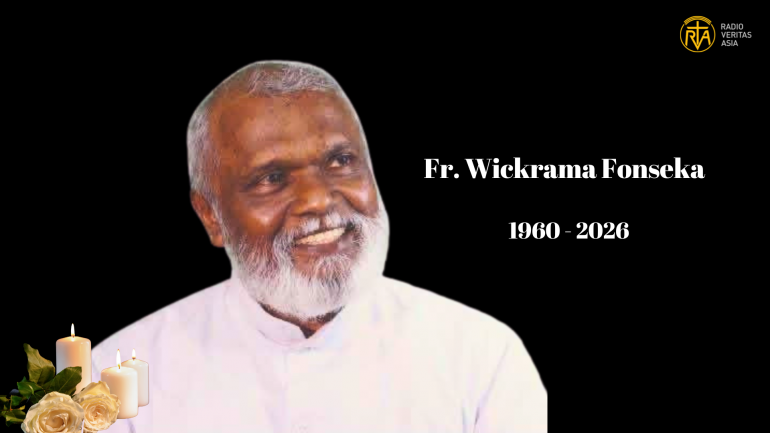
Fr. Wickrama Fonseka, a Catholic priest of the Archdiocese of Colombo, Sri Lanka, known for his social activism and medical service to the poor, passed away on February 24. He was widely recognized as the first Catholic priest in Sri Lanka to practice as a registered Ayurvedic doctor (indigenous medicine) while continuing his priestly ministry.
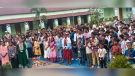
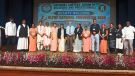
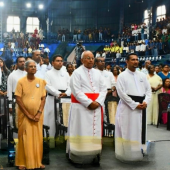
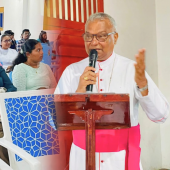
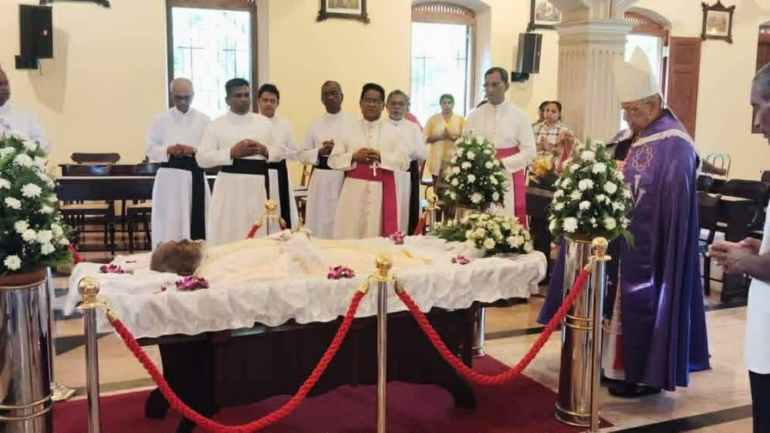
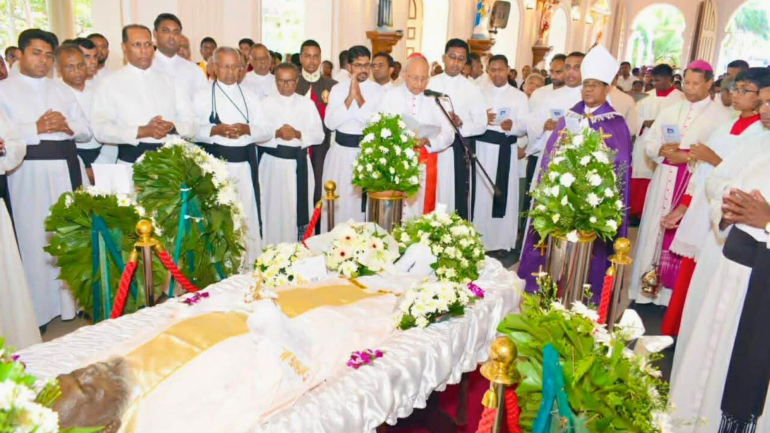
A memorial Mass was held on the evening of February 24 at Sacred Heart Church, Borella. Fr. Freely Muthukumarasamy, Advisor to the Administrative Curia of the Archdiocese of Colombo and a contemporary of the late priest, described Fr. Wickrama as a man whose strong public positions on justice were rooted in personal conviction and simplicity of life.
Fr. Freely recalled their years together at St. Joseph’s College, Maradana, one of Sri Lanka’s leading Catholic institutions run by the archdiocese of Colombo, where Fr. Wickrama served in several capacities. He was remembered as an educator who encouraged critical thinking among students and maintained a simple lifestyle despite his academic and professional achievements.
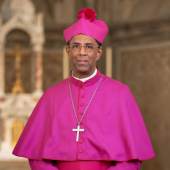
Cardinal Malcolm Ranjith, Archbishop of Colombo, said Fr. Wickrama had dedicated himself to a “special mission of healing,” providing medical assistance to thousands of economically disadvantaged patients.
From Science Graduate to Priest
Fr. Wickrama entered the priesthood after completing a Bachelor of Science degree at a local university. He was ordained for the Archdiocese of Colombo during the period of civil unrest between 1988 and 1990. Even as a seminarian, he was involved in educational initiatives for underprivileged children in Ampitiya, a town in the Kandy District of Sri Lanka’s Central Province, and was associated with clergy who emphasized a pastoral priority for the poor.
Educator and Advocate
From 1991 to 1999, he served on the staff of St. Joseph’s College, Maradana, including roles as Middle School Principal and Prefect of Boarders. Former students have described him as a disciplined administrator and mentor.
His ministry extended beyond education. He promoted economic self-reliance initiatives and used his personal inheritance to support research into alternative economic models aimed at reducing debt burdens among low-income families. He was also involved in housing projects for the homeless and contributed to the printing and production of the alternative Christian publication “Kithusara.”
Medical and Humanitarian Service
Coming from a family known for traditional treatment of rabies, Fr. Wickrama combined his scientific training with formal studies in Sinhala Indigenous Medicine (Ayurveda). He later practiced as a registered Ayurvedic physician, offering treatment free of charge or at minimal cost to poor patients.
During the 2004 Indian Ocean tsunami, while serving as parish priest in Diyalagoda, located in the coastal belt south of Colombo, he converted the parish church into a temporary treatment center for the injured.
He often linked his medical work to the Gospel mandate to care for the sick and the marginalized.
Public Engagement
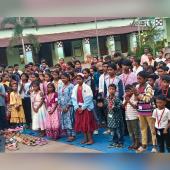
Fr. Wickrama was also active in social issues, expressing support for fishermen’s associations, university students, and Free Trade Zone workers. He engaged with civil society groups and maintained dialogue across political lines, advocating for social and economic justice.
His death marks the end of a ministry that combined priestly service, education, indigenous medicine, and social engagement. Church leaders and lay faithful have described his contribution as significant, particularly among communities that benefited from his medical and pastoral outreach.
Radio Veritas Asia (RVA), a media platform of the Catholic Church, aims to share Christ. RVA started in 1969 as a continental Catholic radio station to serve Asian countries in their respective local language, thus earning the tag “the Voice of Asian Christianity.” Responding to the emerging context, RVA embraced media platforms to connect with the global Asian audience via its 21 language websites and various social media platforms.
Latest News