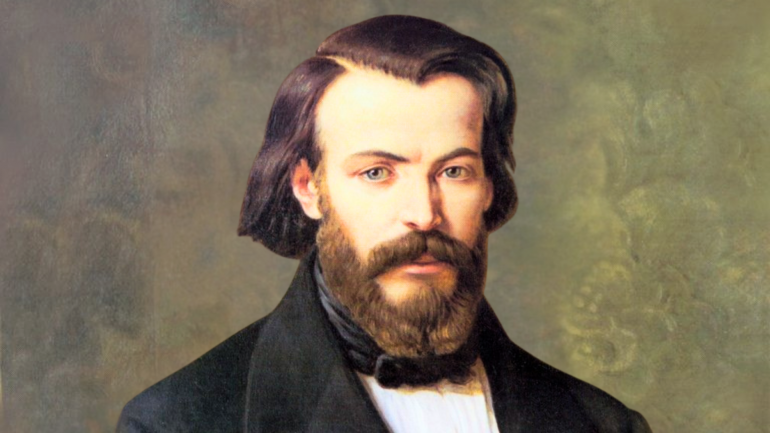
Many people think St. Vincent de Paul founded the Society of St. Vincent de Paul, but he had actually died nearly two hundred years before a young law student in Paris chose his name for a new group. That student, Blessed Frédéric Ozanam, started the Society in response to a challenge, almost by chance. He later became one of the most important, though often overlooked, figures in Catholic social action.
An Italian-Born Frenchman, Fragile from Birth
Ozanam, who is liturgically remembered on September 9, was born in Milan in 1813, while his father worked as a military doctor for Napoleon’s army. He was the fifth of fourteen children, but only three of them lived to adulthood, which shows how hard life was at that time. People rarely mention these losses in stories about him, but they likely influenced his wish to help those who were suffering.
The Crisis of Doubt
Few people realise that Ozanam questioned his faith as a teenager in Lyon. He went through what he called a real "crisis of doubt," struggling with Enlightenment ideas before deciding on Catholicism after much thought. By the time he got to Paris, he was already a talented scholar, fluent in six languages, and had earned two bachelor's degrees and two doctorates. He later taught literature at the Sorbonne, where his lectures on Dante and medieval civilisation were highly regarded.
Born From an Insult
People often hear a simple story about how the Society was founded, but it actually began with a moment of public embarrassment. During a student debate, Ozanam and his Catholic friends were challenged by someone who said Catholicism had done great things in the past but questioned what it was doing now. Instead of arguing, Ozanam asked himself if he was truly living his faith. A few days later, on his twenty-first birthday, he gathered five friends and their mentor, Emmanuel Bailly. They decided to stop debating and start helping by visiting the poor in their homes and delivering firewood, food, and clothing themselves, rather than relying on others. They learned which families to visit, how to judge real need, and how to respect the dignity of the people they helped, rather than just giving charity from a distance. Although this practical guidance was key to the Society’s foundation, most accounts leave it out and give all the credit to Ozanam alone.
A Husband, Father, and Dying Scholar
Ozanam married Amélie Soulacroix, and they had a daughter named Marie. While the Society grew to nearly 2,000 groups in 29 countries during his lifetime, he continued his demanding academic work. He died of tuberculosis in 1853 at age forty, exhausted by years of teaching, writing, and helping the poor. He kept working even as his health got worse.
A Psychological Reading: The Power of the Visit
Ozanam's way of giving to the poor was different from those before him. He believed in visiting people in their homes instead of just sending money from a distance. Modern psychology, especially Gordon Allport's intergroup contact theory, supports this idea: real, ongoing contact between people, especially when they work together as equals, does more to reduce prejudice and dehumanisation than just giving money. By having members visit the poor, learn their names, and return often, Ozanam was ahead of his time. He anticipated ideas that are now central to social psychology's understanding of empathy and reducing stigma.
Relevance for Today
Today, most giving happens through algorithms and one-click donations, with much of charity taking place online. Ozanam’s approach quietly challenges this trend. He believed that dignity comes from real relationships, not just transactions. This idea connects to current worries about 'compassion at a distance' and the loss of real human contact in modern charity. As more people notice loneliness and shallow digital connections, Ozanam’s method offers a timely answer: what matters is not how much you give, but how willing you are to be truly present.
Radio Veritas Asia (RVA), a media platform of the Catholic Church, aims to share Christ. RVA started in 1969 as a continental Catholic radio station to serve Asian countries in their respective local language, thus earning the tag “the Voice of Asian Christianity.” Responding to the emerging context, RVA embraced media platforms to connect with the global Asian audience via its 21 language websites and various social media platforms.
Latest News