

Fr. Shijo Antony, a Vincentian priest based in Mysore, South India, holds doctorates in Canon Law and Positive Psychology. He is also a licensed practitioner of Positive Psychology.
Many people know the image of St Martin of Tours cutting his cloak in half to share with a beggar at the gates of Amiens. While this is a touching scene, it’s just the start of a life that was much more remarkable, challenging, and instructive than the image alone suggests. His feast is celebrated on November 11.
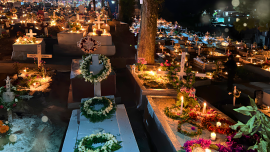
On the 2nd of November (while the rest of the world has long since moved on from the candy and costumes of Halloween) the Catholic Church quietly gathers in churches and cemeteries to pray for the dead. All Souls Day is easily missed but it has a rather interesting history and a fair bit of psychological insight.
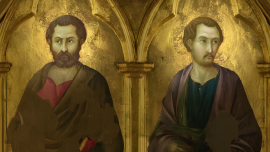
The Church commemorates Saints Simon and Jude on 28 October, two apostles so rarely mentioned that their common feast day may seem like an afterthought.
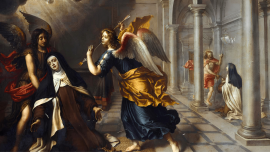
On 15 October the Church commemorates Teresa of Ávila, the sixteenth-century Spanish Carmelite who was named a Doctor of the Church in 1970 and thus became the first woman to receive that title, along with Catherine of Siena.
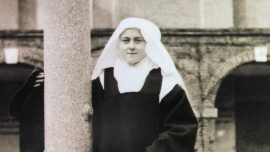
St. Thérèse Martin said she would "spend my heaven doing good on earth". More than 130 years later, her most radical idea remains that one need not be visible to be significant.
St. Vincent's life provides a psychologically credible account of how shame and status anxiety, left unexamined, curdle into avoidance, and how that same emotional material, consciously redirected, can drive a life moving toward what one once fled.
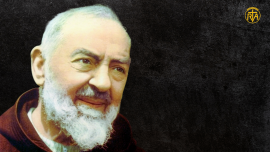
In a society where appointments are booked hurriedly, where patients are sorted by algorithms, and where medical, psychological, and spiritual care is becoming increasingly transactional, Padre Pio provides a clear contrast.
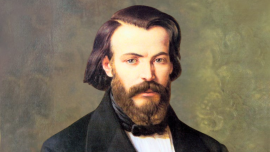
Today, most giving happens through algorithms and one-click donations, with much of charity taking place online. Ozanam’s approach quietly challenges this trend. He believed that dignity comes from real relationships, not just transactions.
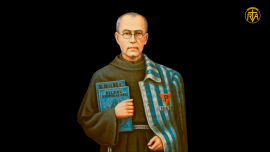
Kolbe is often invoked as a symbol of self-sacrifice, but his more durable relevance may be as a case study in agency. He rebuts a modern anxiety: the sense that structural forces, institutions, illness, and circumstance leave a person with no real choices.
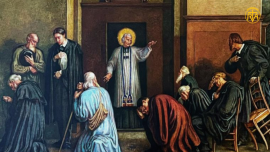
Vianney's relevance today has less to do with confession as a ritual and more with the shape of his interior life. He is a case study in what psychologists call post-traumatic growth: someone whose early instability, self-doubt, and intrusive guilt did not produce cruelty or withdrawal but over decades produced an extraordinary capacity for presence with other people's pain.