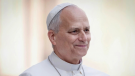



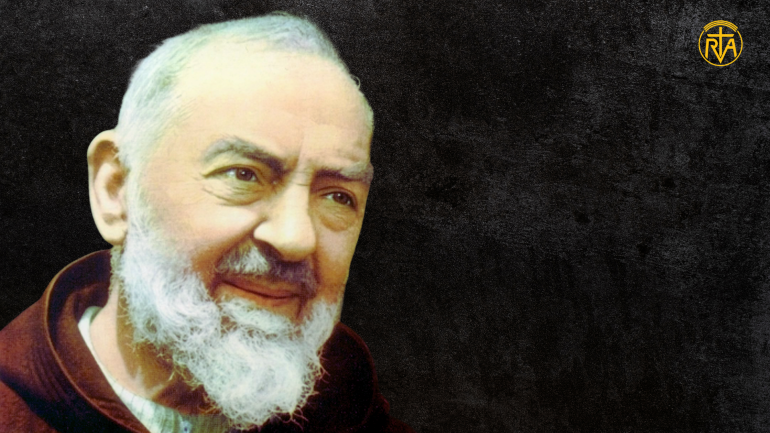
Padre Pio from Pietrelcina is mainly remembered for the wounds in his hands; these stigmata made him one of the most photographed and most doubted religious figures of the twentieth century. However, the common image of a kind and wounded mystic hides a much stranger and more difficult tale: years during which he was officially under suspicion by the Vatican, days spent in marathons listening to the confessions of strangers, and in later life an initiative to establish a modern hospital based on a notion of healing which medicine itself would not achieve until many decades had passed. The feast is celebrated on September 23.
Investigated, Restricted, and Silenced
It is not widely known that during much of his early period of fame, Padre Pio was not supported by the Church authorities but was instead subjected to investigations and restrictions. Once his stigmata had become public in 1919, the Holy Office, having at that time become the Congregation for the Doctrine of the Faith, sent officials to look into him, one of whom was the atheist doctor Amico Bignami, who had been selected because of his supposed lack of religious prejudice. Bignami's report from 1919 was unable to confirm that the wounds had been self-inflicted, but it also could not exclude the possibility of a psychosomatic cause, so the matter remained officially unresolved. In later investigations carried out by the Vatican in the 1920s and 1930s, even more stringent measures were taken: at different times Padre Pio was prohibited from celebrating Mass in public, forbidden from hearing confessions, and restricted from writing to or receiving visits from members of the laity; these penalties lasted for years and were only slowly lifted. He tolerated this lack of trust from the institution largely in silence and without making any public complaint, keeping up his private devotions even though he had been formally removed from his role within the Church he had served.
Ten Hours in a Confessional Box
Even before the stigmata had made him famous and well after the Vatican had relaxed its restrictions, Padre Pio was more renowned for his exceptional, almost inhuman ability to carry out a single routine task: listening to confessions. When he was in his later years at San Giovanni Rotondo, pilgrims often had to wait several days for an appointment, and Padre Pio would stay in the confessional for ten, twelve, or sometimes as long as fifteen hours at a time, taking each penitent through the process one by one rather than dealing with them quickly. Several of his biographers point out that the penitents frequently said he appeared to know details about their lives which they had never actually told anyone; whatever one may regard this as, either as supernatural insight or as the result of an extremely attentive presence, it made a very strong impression that he had truly seen them.
Building a Hospital, Not Just a Shrine
The most straightforward and practical aspect of Padre Pio's legacy is the hospital that he bequeathed: Casa Sollievo della Sofferenza, the 'House for the Relief of Suffering', which opened in 1956 after the saint had spent many years raising funds for it on an international scale. He stressed that the hospital should look after the whole person and would not separate physical illness from spiritual and emotional needs, a belief which influenced both the design and the aims of the hospital from the very beginning. This hospital was not merely an addition to his ministry but rather a purposeful initiative in his later years, one that required a great deal of energy, just as his work in the confessional did.
A Psychological Reading
The stigmata of Padre Pio represent a true point of intersection between theology and psychology, and a careful analysis should avoid the need to draw a definite conclusion in either direction. There is, however, less discussion about how plausible it is that his confessional practice could be seen as an early form of therapeutic interaction. Research in modern psychotherapy continuously shows that the "therapeutic alliance", that is, the feeling of being thoroughly listened to, taken seriously, and not judged, is one of the best predictors of positive results in almost all kinds of treatment, often being more important than the particular technique employed. The fact that Padre Pio was reputed to be able to stay with large numbers of people, hour after hour, without showing any visible impatience, is similar to what today's clinicians describe as sustained, attentive presence, a rare thing in any age and especially so in our own day.
At the same time, his work on the hospital project had anticipated the "biopsychosocial model", which was formally proposed by the psychiatrist George Engel in 1977, and which held that biological, psychological and social factors must be treated together rather than in isolation, an idea that is now fundamental to integrative and holistic medicine.
Relevance for Today
In a society where appointments are booked hurriedly, where patients are sorted by algorithms, and where medical, psychological, and spiritual care is becoming increasingly transactional, Padre Pio provides a clear contrast. His firm belief in giving unhurried, all-round attention, something he continued for hours and years, even in the face of institutional doubt and personal exhaustion, matches a present-day need for true presence that a faster kind of technology or shorter appointments cannot meet. He shows that healing, whether in a medical, psychological, or spiritual context, usually starts with someone willing to remain in the room.