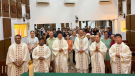




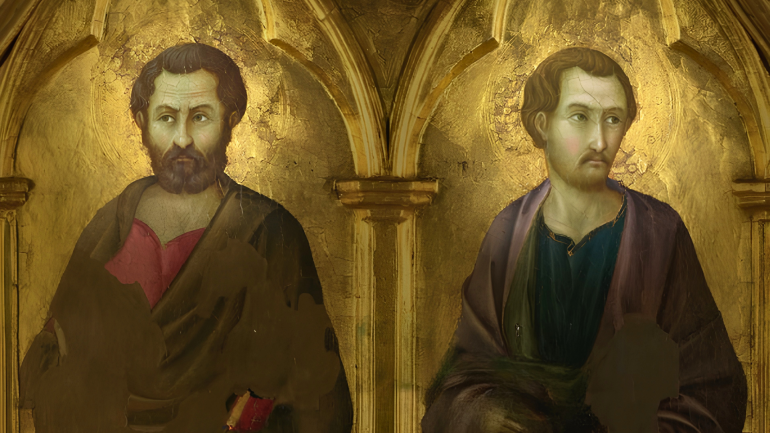
The Church commemorates Saints Simon and Jude on 28 October, two apostles so rarely mentioned that their common feast day may seem like an afterthought. It is precisely because of their obscurity that they are worth studying in detail. Almost nothing can be said with certainty about them, and this uncertainty is significant.
What We Know, and What We Don't
The Gospels contain very little information about Simon, who is mentioned only in the lists of the apostles and is described as "the Zealot" (or "the Cananaean"). In Luke, Jude is listed as "Judas, son of James", while in both Matthew and Mark he is called Thaddaeus. The only time he speaks in the Gospels is at the Last Supper in John, when he asks Jesus why he is going to reveal himself to the disciples and not to the world; this is an honest and slightly anxious question, one that is easy to overlook.
There are three points worth paying attention to.
Men who were not supposed to be sitting at the same table. The term "Zealot" could refer to membership in the revolutionary movement which aimed to drive Rome out by force, or it might just mean a strong dedication to the Law. In either case, Simon was dining with Matthew, a tax collector who had worked for the occupying authority. No matter what his political views were, the group Jesus assembled placed potential enemies side by side.
The names are often confused. Jude, also known as Judas, shared the name of the traitor. It is traditionally believed that this is why he was seldom invoked in prayer, and why he eventually came to be regarded as the patron of lost causes and desperate cases. While the tradition is reasonable, it is difficult to prove. What is certain, however, is that admiration for him increased considerably during the modern period, particularly in the nineteenth and twentieth centuries.
A letter full of vigor. Although the New Testament letter of Jude, traditionally ascribed to him, consists of only twenty-five verses, it is intense and imaginative. It cites apocryphal Jewish works, such as the Book of Enoch, and employs vivid images of false teachers, describing them as "waterless clouds" and "wandering stars". It concludes with one of the most beautiful doxologies in the Scriptures. The author refers to himself as "brother of James", a humble claim for a person who might have been a relative of Jesus.
Later, it is stated that Simon and Jude preached in Persia and died there, but these accounts are based on late, legendary sources. Honest history has to acknowledge how little is left.
A Psychology of the Overlooked
What can the study of psychology tell us regarding individuals for whom their own life story has mostly disappeared?
In the middle of the group, research into group dynamics indicates that attention is drawn to a small number of prominent individuals, with the rest blending into the background. Peter, James, and John take centre stage in the narrative. Simon and Jude serve as an example of the 'quiet member', even though their contribution is genuine but not recorded. Modern workplaces are familiar with this pattern, and numerous studies on recognition have consistently linked the feeling of being unseen to burnout and disengagement.
Across differences, one can belong. The contact hypothesis in social psychology states that sustained cooperation, in particular when directed towards common goals, decreases hostility between groups. A zealot and a collaborator who have a shared mission is an example of this principle in operation. The group did not eliminate the tension by simply ignoring it; instead, it kept the tension within the context of a greater purpose.
The question Jude put to Jesus at the Last Supper is worth considering. It is well known among cognitive scientists that acknowledging confusion is a sign of intellectual security, not of weakness; he asked out loud what other people must have been wondering about internally.
The issue of names, stigma and identity is shown early on in the case of sharing a name with the traitor, an example of what psychologists refer to as stigma by association. Individuals end up with labels which they have not selected. There is then a further story: that of the "forgotten" apostle becoming the one people go to when they are at the end of their rope, a remarkable reversal: what had previously been a disadvantage has become a basis for trust.
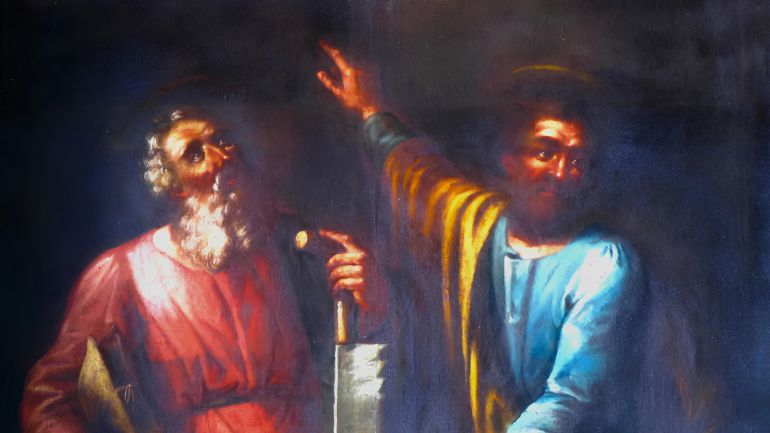
Why They Matter Today
The apostles address a society which is obsessed with being seen. There are many people who carry out useful work which goes unreported: caregivers, teachers, and support staff, for example, as well as volunteers. They imply that importance does not rest on being quoted.
They are also addressing an age that is deeply divided. The fact that a group comprising both a revolutionary and a collaborator says that unity results from a shared commitment rather than from agreement on all issues shows that this is a difficult yet essential lesson.
In the end, they address those who are despairing; Jude's letter concludes with a call for believers to encourage one another, to show mercy to those who doubt, and to remain in love. It considers doubt as something that should be met with compassion rather than with scorn.
Perhaps the apostles, about whom no one remembers, are, in fact, the ones many people need most.