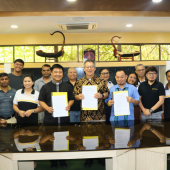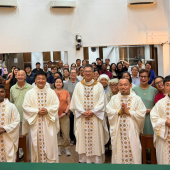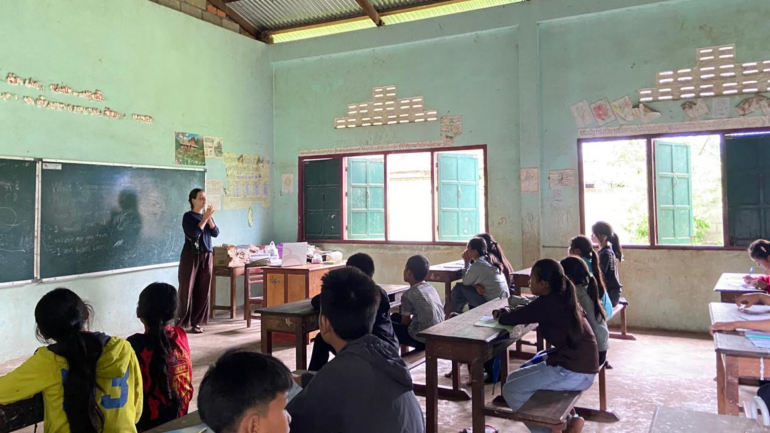
A six-week summer program combining academic learning with personal development has begun for 65 children and young people in Pong Kiew Village, Luang Prabang Province, northern Laos.
The Empowering Young Minds Summer Program, organized by Young Lives Laos, officially opened in July, bringing together participants aged 7 to 18 from Pong Kiew Village and neighboring communities.
To ensure students receive instruction suited to their abilities, organizers conducted oral and written placement tests on July 6 before classes began the following day. Based on the assessments, participants were grouped by age and English proficiency into four classes of 16 to 17 students.
English classes are held from Monday to Thursday, while Fridays are dedicated to human formation sessions, which focus on personal growth, values, and life skills.
The opening formation session, titled "Who Am I," invited students to reflect on their identity, strengths, and personal development, laying the foundation for the program's holistic approach to education.
In addition to English, participants receive instruction in mathematics and the Lao language through interactive lessons, mentoring, and group activities designed to strengthen both academic skills and self-confidence.
Organizers said the program seeks to help young people grow not only in knowledge but also in character, encouraging them to develop a stronger sense of purpose and broaden their aspirations for the future.
The six-week initiative, which runs from July 6 to Aug. 15, is led by the Young Lives Team of Fondacio in partnership with local organizations and community stakeholders.
The program aims to provide educational opportunities for children and youth in rural communities while fostering leadership, resilience, and community engagement through a balanced approach to learning and personal formation.
Radio Veritas Asia (RVA), a media platform of the Catholic Church, aims to share Christ. RVA started in 1969 as a continental Catholic radio station to serve Asian countries in their respective local language, thus earning the tag “the Voice of Asian Christianity.” Responding to the emerging context, RVA embraced media platforms to connect with the global Asian audience via its 21 language websites and various social media platforms.
Latest News