

Indonesia: Catholic Forum Calls for Interfaith Dialogue to Address National Moral Crisis

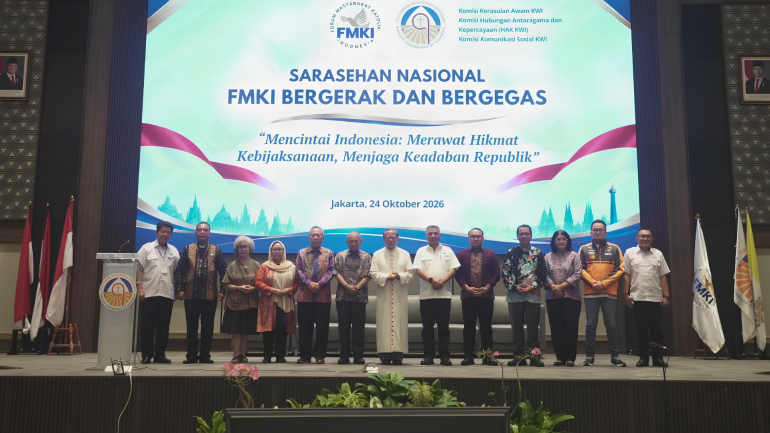
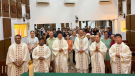
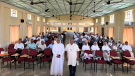
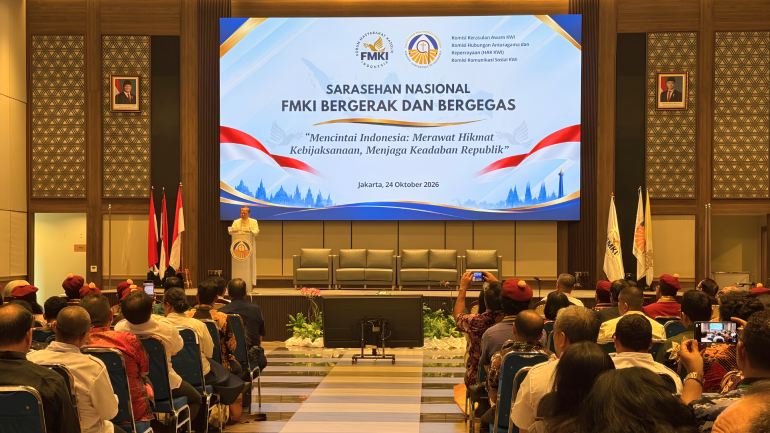
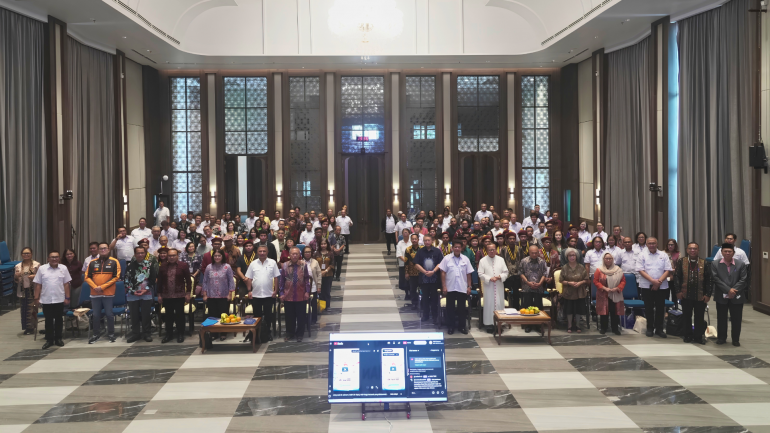
The Indonesian Catholic Community Forum (FMKI) brought together around 100 participants in Jakarta on October 24 for a national symposium calling for stronger interfaith dialogue, public civility, and social solidarity amid the country’s political, economic, and ecological challenges.
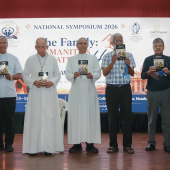
The symposium, held at the Indonesian Bishops’ Conference center in Menteng, Central Jakarta, was part of FMKI’s National Working Meeting. It gathered Catholic community representatives and speakers from religious, government, and civil society sectors to discuss the theme “Loving Indonesia: Nurturing Wisdom, Preserving the Civility of the Republic.”
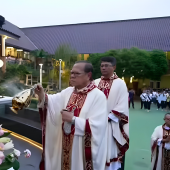
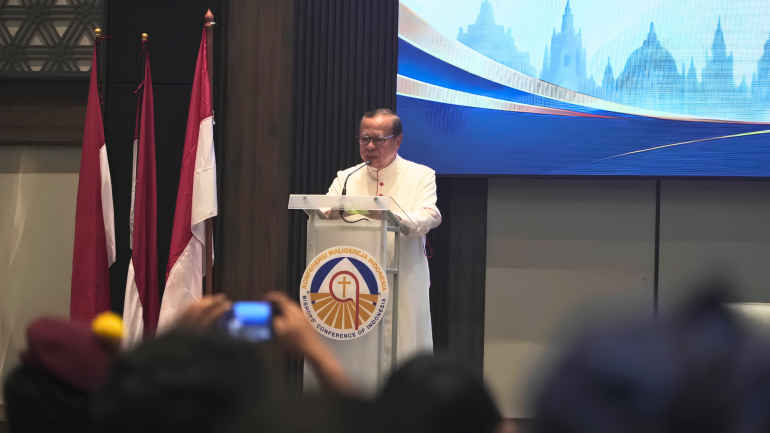
Cardinal Ignatius Suharyo, archbishop of Jakarta, delivered the keynote address, recalling the contribution of early Catholic leaders to Indonesia’s independence and national life.
He cited Bishop Albertus Soegijapranata’s appeal to the Vatican and the legacy of Jesuit missionary Fr. Frans van Lith, who served in Central Java, as examples of the Church’s commitment to standing with the Indonesian people.
“This love shown by the early Catholic leaders has become a precious legacy for the Catholic Church in Indonesia, to be carried on by the current generation,” Cardinal Suharyo said.
Fr. Yohanes Kurnianto Jeharut, executive secretary of the Indonesian Bishops’ Conference Commission for the Lay Apostolate, presented the conference’s 2026 pastoral note, which calls on the Church to strengthen human solidarity and promote civility in public life.
He outlined challenges facing the country, including leadership and democratic crises, economic inequality, environmental degradation, social divisions, and the pressures of the digital age. Proposed responses include expanding interfaith and intercultural dialogue, strengthening safeguarding measures, and improving public services such as Catholic schools and hospitals.
Purnomo Yusgiantoro, a special adviser to the president on energy, discussed Indonesia’s vision of becoming a prosperous nation by 2045. He emphasized collaboration among government, academia, civil society, media, and business to strengthen education, national identity, and public literacy.
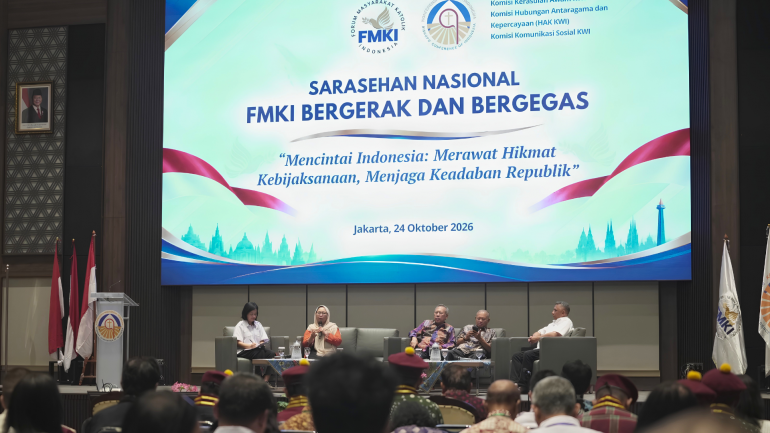
Syafiq A. Mughni, chair of the central leadership of Muhammadiyah, an Indonesian Muslim organization, said the country faces a moral deficit and urged religious leaders to promote tolerance and justice through practical initiatives.
Alissa Wahid, national director of the Indonesian Gusdurian Network, highlighted environmental challenges, inadequate leadership, and intolerance as concerns requiring wise and sustained action to improve human well-being.
The symposium concluded with a call for Catholics to contribute actively to national life through cooperation across religious and professional communities.
Established in 1998, FMKI serves as a platform for Indonesian Catholics to collaborate on social and political issues, drawing on the country’s Pancasila state philosophy and Catholic social teaching to promote human dignity, democracy, and the common good.
Radio Veritas Asia (RVA), a media platform of the Catholic Church, aims to share Christ. RVA started in 1969 as a continental Catholic radio station to serve Asian countries in their respective local language, thus earning the tag “the Voice of Asian Christianity.” Responding to the emerging context, RVA embraced media platforms to connect with the global Asian audience via its 21 language websites and various social media platforms.
Latest News