


"Unity Must Be the Church's Greatest Witness in Asia," Says FABC Associate Secretary Fr. Clarence Devadass

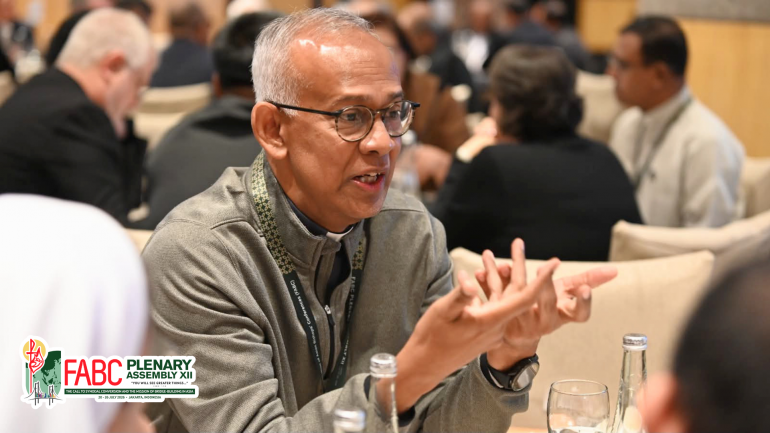
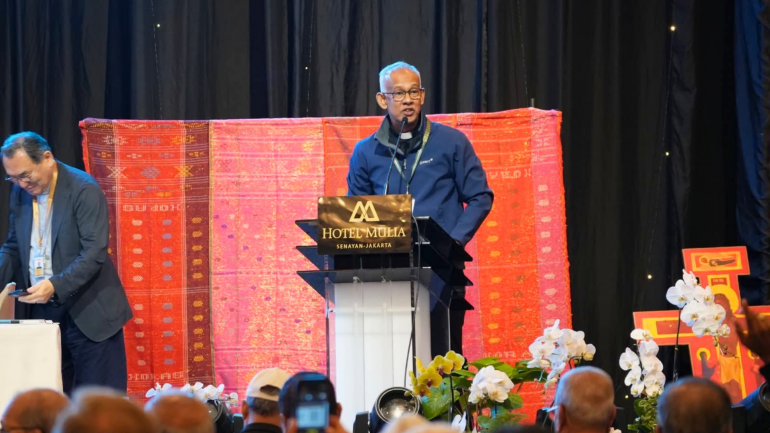
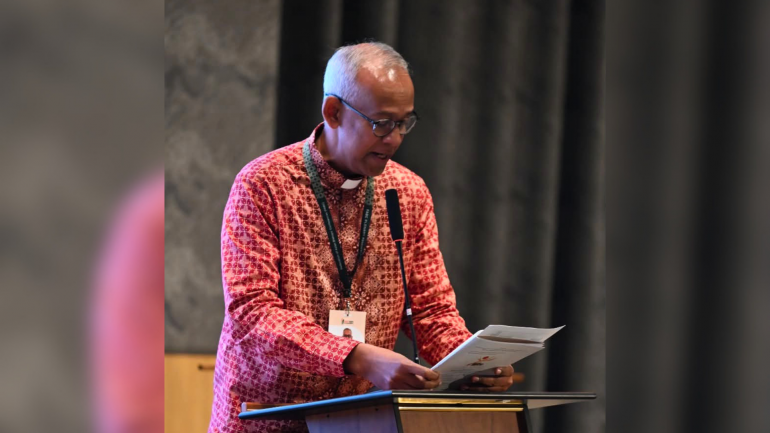
As the 12th Plenary Assembly of the Federation of Asian Bishops' Conferences (FABC) continues in Jakarta, Radio Veritas Asia (RVA) sat down with Fr. Clarence Devadass, Associate Secretary of the FABC and the Executive Secretary of the Commission for Synodality, and one of the principal organizers of the assembly, to discuss the vision behind this year's gathering.
In this interview, he reflects on the hoped-for fruits of the assembly, the Church's mission to become a bridge-builder in Asia, the continent's major pastoral challenges, and the role of the FABC in strengthening communion among the local Churches.
Excerpts:
What is the most important fruit or legacy you hope bishops will bring back to their local Churches after this FABC Plenary Assembly?
One of the greatest fruits we hope to see is synodality becoming a way of life. Synodality is not simply a method of working or making decisions; it is a spirituality.
We hope this synodal spirituality will continue to grow in parishes, dioceses, and throughout the Church in Asia. Through synodality, we learn to become a Church that journeys and grows together.
After this assembly, we hope to see a stronger spirit of communion among bishops, priests, religious, and laypeople. One of the principal aims of this gathering is to deepen the bishops' commitment to living synodally.
The theme of the assembly calls the Church to become "bridges and bridge-builders." What does that mean in the Asian context?
Catholics, and Christians in general are minorities in much of Asia. That gives the Church a unique vocation: to become a bridge within society.
Across the continent, we continue to witness divisions between religions, ethnic communities, and even nations. The Church is called to become an instrument of peace and reconciliation.
This mission applies not only outside the Church but also within it. We also experience differences among bishops, priests, religious, and laypeople. The Church must become a force for unity.
To be a bridge-builder means connecting people, fostering dialogue, and helping communities live in peace. That is the Church's mission.
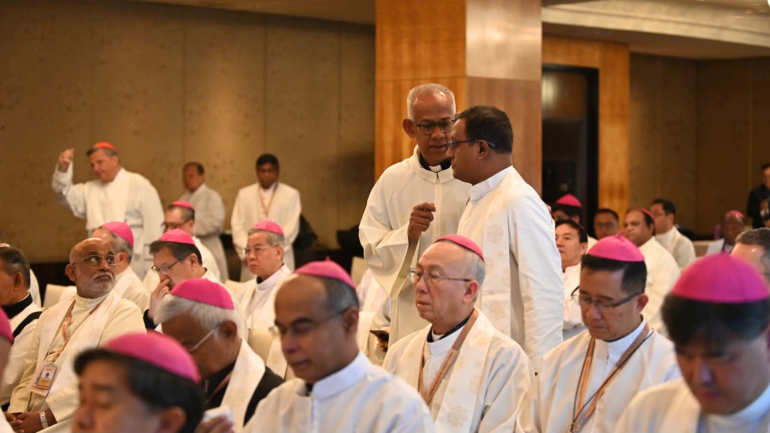
Around 150 participants have taken part in this assembly. We hope each of them will return home carrying the spirit of synodality and become agents of change in their own communities.
Change often begins with one person. When one person changes, that transformation spreads to others. That is our hope for everyone who has participated in this assembly.
What are the greatest challenges facing the Church in Asia as it seeks to realize this vision?
The challenges are many. Beyond social tensions and instability, the Church also faces growing ideological pressures.
Secularism is becoming increasingly influential, and many societies are shaped by consumerism and capitalism. Asia also continues to struggle with poverty, corruption, migration, and environmental degradation.
That is why the Church is called to be an agent of transformation—not only within its own life but also in society. As the Gospel of Matthew reminds us, we are called to be the salt of the earth and the light of the world. The Church must help bring positive change to society.
If you could leave one message for the Church in Asia, what would it be?
Unity!
We have many differences because Asia is diverse. If we focus only on those differences, they become obstacles. But if we focus on what unites us, the Church will continue to grow.
Each person has a unique vocation. Bishops, priests, religious, and laypeople all have different but complementary roles.
One of our greatest challenges today is apathy, thinking that the Church's problems belong to someone else. That attitude has no place in the Church.
Through baptism, we all become the People of God. The Church does not belong only to bishops or priests; it belongs to all the baptized. Everyone shares responsibility for building up the Church.
No Church is perfect because it is made up of human beings. If we focus only on its weaknesses, it cannot grow. But if we recognize what unites us and build on the gifts God has given us, the Church will continue to flourish.
What is the FABC's mission in supporting the local Churches of Asia?
The FABC exists to strengthen communion among the local Churches of Asia.
For example, through the FABC, we are building a network of Catholic research institutions across the continent so they can collaborate, share resources, and undertake stronger research together.
More broadly, the FABC does not exist to direct, oversee, or supervise local Churches. It is not a governing body above the bishops' conferences. Rather, it is a fellowship of collegiality among bishops' conferences of Asia, offering support where needed.
Our role is to accompany, support, and encourage the local Churches as they respond to their own pastoral realities.
Asia is incredibly diverse in its cultures, languages, and societies. The FABC serves as a bridge, bringing the Churches together so they can learn from one another, share experiences, and grow together in communion and mission.