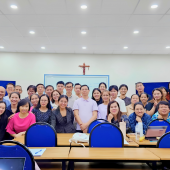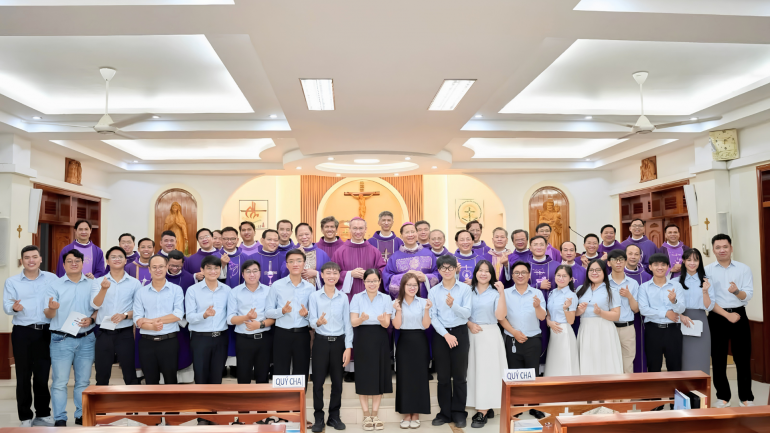
More than 26 young Vietnamese Catholics are putting their information technology skills at the service of the Church, developing websites, apps and digital management tools for dioceses, parishes and Catholic ministries.
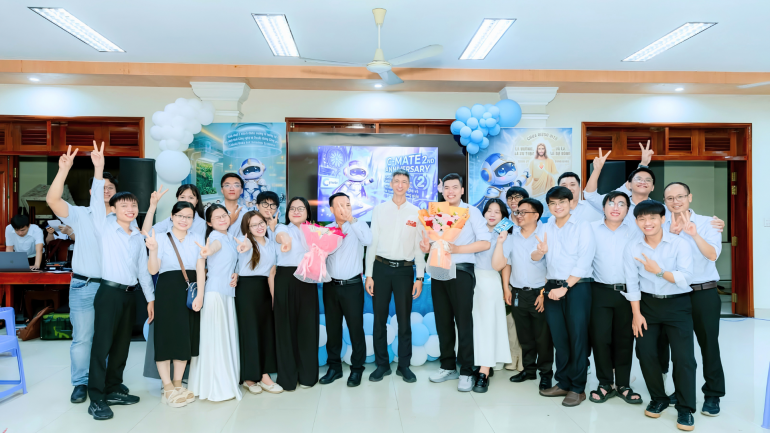
Known as IT Apostles, the group was officially established on October 10, 2023, the feast of Blessed Carlo Acutis, the young Italian Catholic known for using digital technology to share the faith.
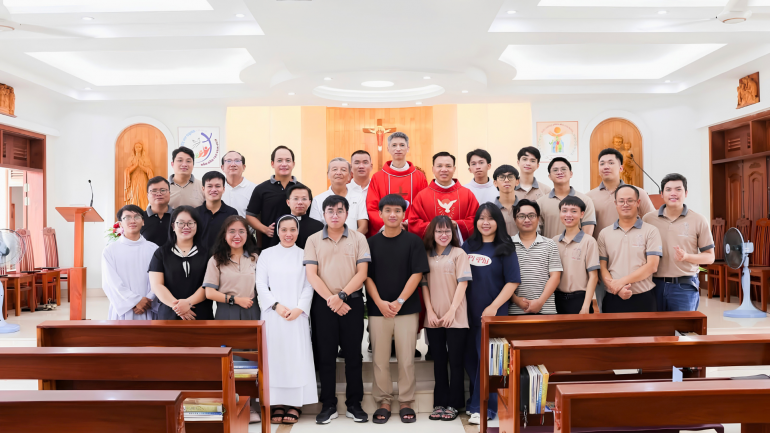
The members come from different parts of Vietnam and have expertise in frontend and backend development, UX/UI design, mobile programming and web development. The group was founded by Fr. Paul Hoang Manh Huy, head of the Communications Office of Phu Cuong Diocese in southern Vietnam. Fr. Anton Ha Xuan Loc, facilities manager of the diocese, serves as the group’s spiritual adviser.
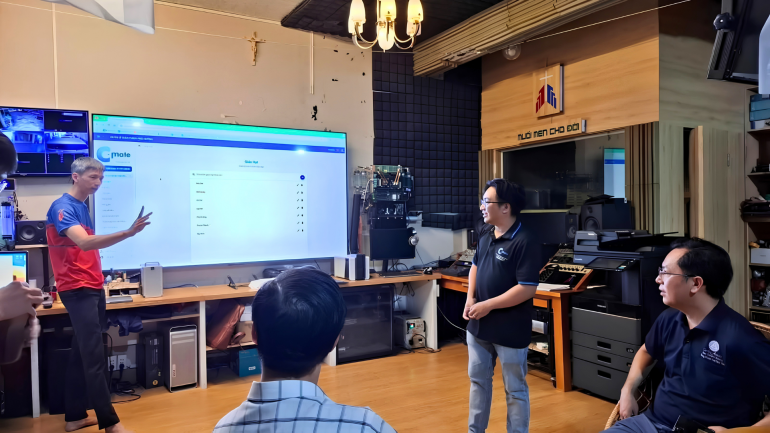
Members work remotely during the week and gather on weekends at the diocesan communications office to develop projects, share technical knowledge and grow together in their vocation and mission.
Their major initiative is C-mate, a Catholic technology and media ecosystem designed to provide practical digital solutions for the Church in Vietnam.
Through C-mate, the young IT professionals have developed diocesan websites and management systems, curia office management tools, priest information systems and personnel management systems for religious institutes. Their projects also include a Catechist Handbook App, a Catholic Audiobooks App, a children's ministry system for attendance, grades and class transfers, and digital maps of dioceses, deaneries and parishes.
Matthew Thạch, leader of IT Apostles, said the group's strength comes from bringing together technical talents already present within the Church.
“Not exceptionally talented, but bringing the best possible to the Church,” he said.
The approach reflects a practical form of youth participation in the Church: members are not simply discussing the possibilities of digital ministry but using their professional training to address concrete pastoral and administrative needs.
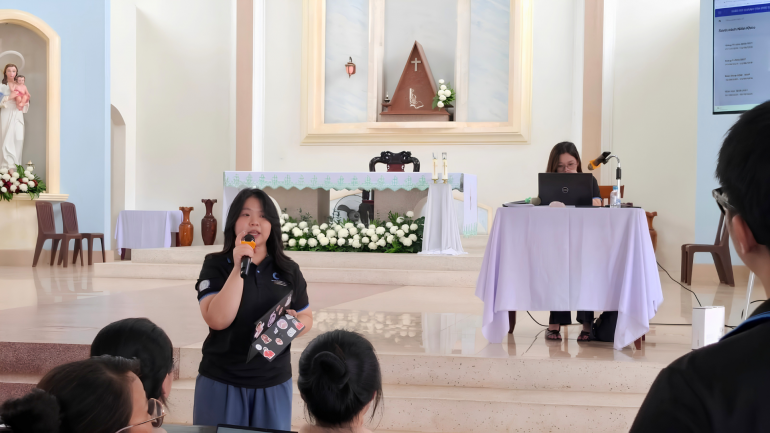
Their work also has a wider Asian dimension. Paul Vinh, a representative of IT Apostles, participated in the First Asian Catholic Digital Synod in Manila, where he encountered Catholic communities from other parts of Asia and heard about their experiences of digital ministry.
The encounter led him to a broader understanding of the group's work. Technology, he realized, is not the destination but a bridge that can help bring people from the digital world back to Christ.
That perspective gives a pastoral purpose to the group's technical projects. A website can make a parish or diocese more accessible; an app can support catechists and Catholic formation; a management system can help Church personnel organize information and pastoral activities; and digital maps can help communities understand the Church's presence across a diocese.
The group draws further inspiration from the biblical account in which Peter hears the command, “Get up, kill and eat” (Acts 10:13). For Matthew Thạch, the passage is an invitation to young people to use the talents entrusted to them rather than leave them unused.
For IT Apostles, those talents include coding, programming, design, systems development and digital communication.
As Catholic communities across Asia continue to explore digital evangelization and new forms of participation, the young members of IT Apostles are contributing in a distinctly practical way. They are building the websites, applications, databases and digital tools that enable dioceses, parishes, catechists, priests, religious communities and families to communicate and carry out their pastoral work.
Their experience shows how young Catholics can bring professional skills directly into the life and mission of the Church, turning lines of code and digital platforms into tools of service.
Radio Veritas Asia (RVA), a media platform of the Catholic Church, aims to share Christ. RVA started in 1969 as a continental Catholic radio station to serve Asian countries in their respective local language, thus earning the tag “the Voice of Asian Christianity.” Responding to the emerging context, RVA embraced media platforms to connect with the global Asian audience via its 21 language websites and various social media platforms.
Latest News