World Day for Consecrated Life: Bangladeshi Cloistered Nun’s 25-Year Journey of Silent Service

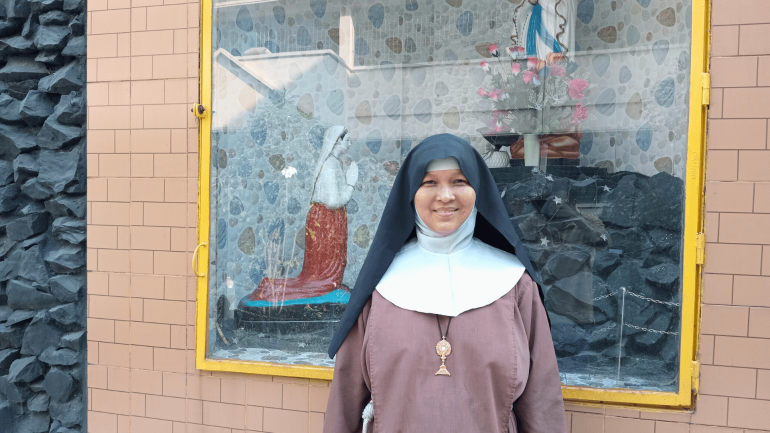
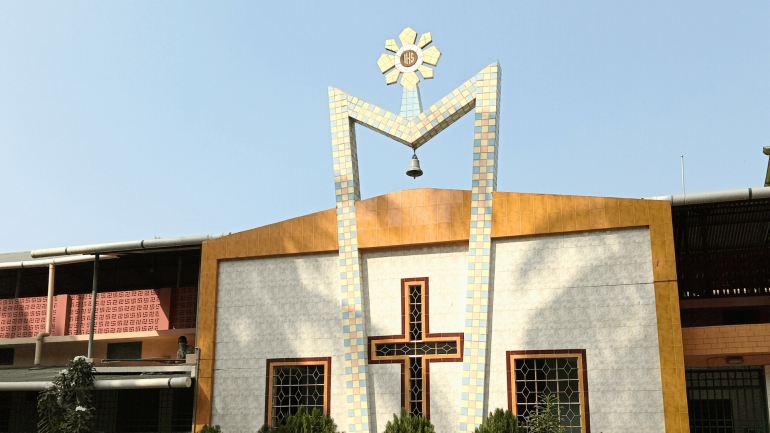
As the Church marks the World Day for Consecrated Life on February 2, the quiet witness of contemplative religious often remains unseen. Yet behind cloistered walls, lives are being poured out daily in prayer, sacrifice, and love for the Church and the world. One such life is that of Sr. Mary Antoinette, a member of the Poor Clares of Perpetual Adoration, popularly known as the Monastery Sisters in Bangladesh.
Now 50, Sr. Mary Antoinette has spent 25 years in contemplative religious life, embracing silence and prayer as her mission. Currently serving as a counselor in her congregation, she earlier played a key role as Novice Mistress, accompanying young women discerning their vocation to religious life.
Born on April 14, 1975, in Dorgachala Parish of the Mymensingh Diocese, her desire to become a Sister began early. “Since childhood, I wanted to become a Sister,” she recalls. After completing her Secondary School Certificate examination, she visited the monastery convent in Mymensingh city. The experience left a deep impression on her.
“I loved the prayers, the songs, and especially the adoration of the Holy Eucharist,” she says to RVA. Reading the biography of St. Francis of Assisi further strengthened her attraction to religious life. But it was the sincerity, care, and simplicity of the Sisters that truly touched her heart.
A week after returning home, she came back to the convent for a ‘Come and See’ program in 1996. “From that moment, my journey with this community began,” she says. In 2000, she made her vows and entered fully into the contemplative life.
For several years, Sr. Mary Antoinette worked in the novitiate, accompanying young aspirants. She acknowledges that in today’s world, religious vocations—especially to contemplative life—are declining. “Many girls come, but later return home,” she explains. For the past 11 years, no new sister entered their convent. Currently, there are 18 sisters, they have only two novices.”
Reflecting on her time as Novice Mistress, she explains the challenges of vocation promotion. “We go to villages, talk to girls, and keep contact through mobile phones,” she says. Family resistance remains a major obstacle. “Many parents do not want to send their daughters to the monastery, especially when families are small. Still, some girls feel a strong call.”
In 2025, Sr. Mary Antoinette celebrated her silver jubilee of religious profession. Looking back, she speaks with gratitude. “I truly enjoyed this journey,” she says. “But there are moments of pain. When my parents or relatives are seriously ill and I cannot go home, I feel upset as a human being. Yet I offer this pain to God as an act of love. This is how we find peace.”
Asked whether there are discussions about relaxing the strict enclosure of monastic life, she responds honestly. “There are discussions, but most sisters are against change. We left our families for Jesus, so it is better to remain fully dedicated.”
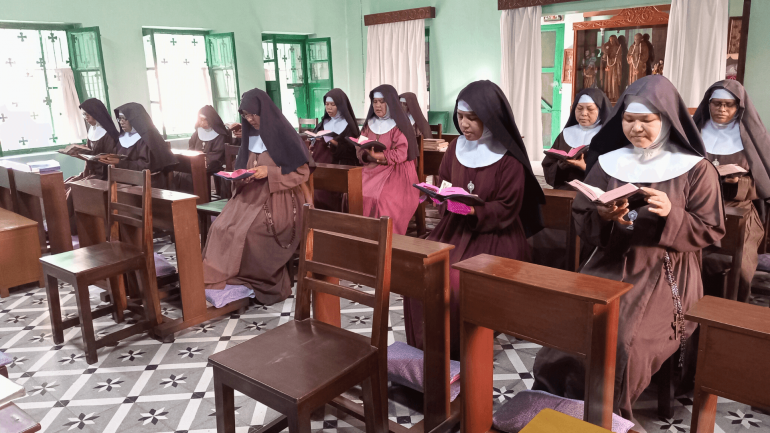
The Poor Clares’ primary mission is unceasing prayer for the Church and the world. “We pray 24 hours a day in shifts,” she explains. The sisters also prepare altar bread (hosts), altar wine, and liturgical vestments for priests.
One particularly memorable moment was the Papal Visit to Bangladesh in 2017. “We prepared 150,000 hosts, of which 50,000 were given free of cost to the Papal Visit Liturgy Committee,” she recalls. “We dedicated this work to Pope Francis. It remains one of the most meaningful experiences of our lives.”
Contrary to common assumptions, Sr. Mary Antoinette says the sisters lack nothing essential. “God provides everything,” she says calmly. “We get enough rest, nutritious food, and medical care. Many friends support us financially. God takes care of us.”
Formal higher education is not a requirement for joining the monastery. “One only needs to complete school,” she explains with a smile. “If someone can pray, sleep, eat, and work, she will be fine.” For ongoing formation, the community occasionally invites skilled trainers from abroad.
For Sr. Mary Antoinette, the beauty of consecrated life lies in community. “We pray together, eat together, and live together,” she says happily. “In today’s society, elderly people are often left alone. But in our community, we lovingly care for our elderly sisters. We listen to them and spend time with them. This is our strength.”
She recalls a deeply emotional moment with her father after she entered the monastery. “He came to see me only once. Seeing me behind the iron grille, he cried all night and wanted to take me home. But I could not leave.” Though he later sent people twice to bring her back, she remained firm. “My father loved me very much,” she says softly. He passed away a few years ago.
On World Day for Consecrated Life, Sr. Mary Antoinette offers a simple wish:
“May all of us in consecrated life remain faithful in word and deed. We did not enter this life to receive anything, but to give ourselves. I wish everyone peace and blessings.”