Food is more than something we consume every day. It is a gift that connects people, families, communities, and even generations. In a world where meals are often rushed and food is taken for granted, we sometimes forget the deeper meaning behind what is placed on our table. Bread, rice, water, fruits, and grains are not merely products to satisfy hunger. They are signs of life, care, work, and love.
Bread, in particular, carries a powerful meaning. Across cultures and religions, bread has always been seen as a symbol of life. People work hard for their daily bread. Farmers prepare the soil, sow seeds, and wait patiently through changing seasons. Workers transport food from one place to another. Families cook and serve meals with affection and sacrifice. Every loaf of bread carries within it the labour of many hands.
When we hold bread in our hands, we are reminded that it comes from the earth. Unlike barren planets, our world produces what is necessary for human life. The soil gives us grain, vegetables, fruits, and everything needed to survive. This reality is easy to overlook because food is available in shops and supermarkets. Yet behind every meal stands the mystery of nature and the generosity of creation.
For believers, food is also a gift from God. The earth itself is a gift entrusted to humanity. The rain, the sunlight, the harvest, and the ability to work are all part of this blessing. This is why many families begin meals with prayer. It is not simply a ritual but a moment of gratitude. People pause to recognize that life does not depend only on human effort. There is something greater that sustains us.
One of the biggest problems in modern society is that many things are reduced to objects. Bread becomes just food. Water becomes only a drink. Fruits become products on shelves. When this happens, gratitude slowly disappears. Life itself can begin to feel mechanical and empty. We stop seeing the beauty hidden in ordinary things.
But food is never “just food.” A simple meal carries stories of human effort, sacrifice, and care. A mother preparing dinner for her children is giving more than nourishment. She is giving love. A farmer working under the hot sun is feeding strangers he may never meet. Even sharing bread with another person creates a bond of friendship and trust.
This understanding is beautifully reflected in the words spoken during the Eucharistic celebration at Mass: “From your goodness we have received this bread, fruit of the earth and work of human hands.” These words are simple yet profound. They express gratitude for the earth and for human labour. They also remind us that goodness means giving oneself for the life of others.
Bread has a special place in Christian faith because Jesus chose it as a sign of His presence. He broke bread with people, fed the hungry, and shared meals with sinners and the poor. At the Last Supper, He offered bread as a sign of His love and sacrifice. In this way, bread became a symbol of God’s closeness to humanity.
People often say that someone is “as good as bread.” The expression points to kindness, simplicity, and generosity. In the same way, Christians believe that God is “good as bread” because He gives Himself so that others may live. This image makes faith something close to daily life. God is not distant from ordinary human experiences. He is present even in the act of sharing a meal.
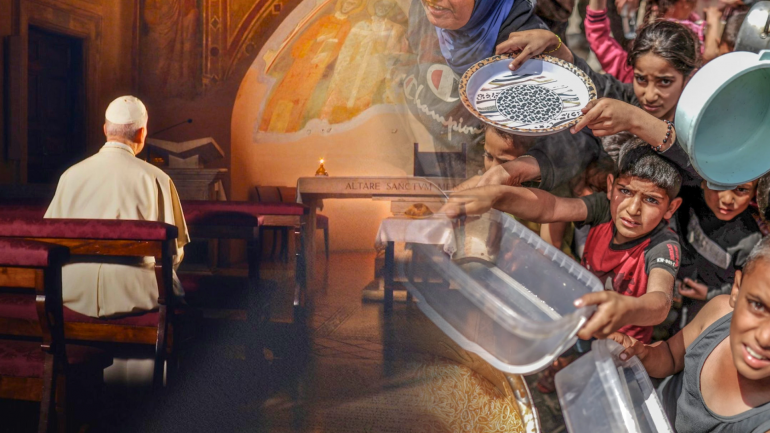
In many parts of the world today, however, food is wasted while millions still suffer from hunger. This contradiction reveals how society has lost the sense of food as a gift. When gratitude disappears, selfishness easily takes its place. Meals become acts of consumption rather than moments of communion. Perhaps this is why eating together remains so important. Around a table, people speak, listen, forgive, and reconnect. Families rebuild relationships through simple conversations during meals. Communities grow stronger when people share food with those in need. Hospitality begins with offering bread and water to another person.
Before eating, even a brief moment of silence can change our attitude. Closing our eyes for a few seconds helps us remember those who worked for our food and those who still go hungry. It reminds us to be grateful not only to God but also to one another. In a society that often forgets the meaning of life as a gift, food can teach us something essential again: we survive not alone, but together. Bread on the table is more than nourishment. It is a sign that life itself is meant to be received with gratitude and shared with love.
In this spirit, Pope Leo XIV’s prayer intention for the month of May invites the whole Church and all people of goodwill to pray “for food for all.” It draws attention to the urgent reality of hunger in the world, while also calling for a deeper change of heart - towards gratitude, sharing, and responsible care for the gifts of creation.