On April 18, a line was crossed in Goa, a bastion of Christianity in India, and it cannot be ignored.
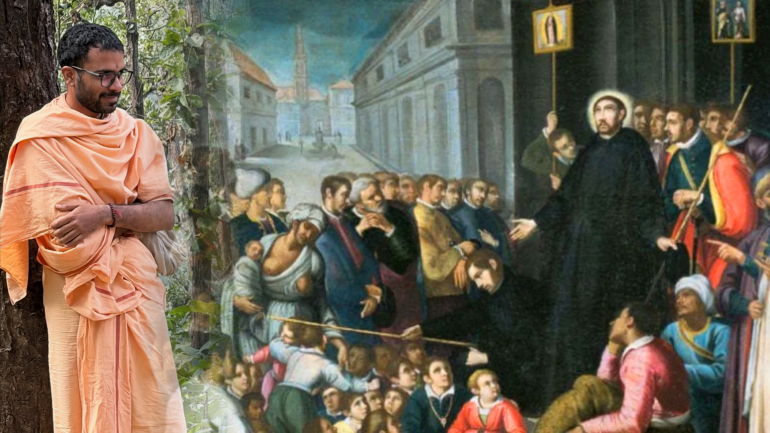
At a Bhagwan Parshuram Janmotsav event in Vasco in South Goa, right-wing YouTube activist Gautam Khattar allegedly referred to St. Francis Xavier as a “terrorist” and accused him of destroying temples. These were not stray remarks. They were delivered from a public stage, before a crowd, and in the presence of political leaders, including a Catholic minister from the ruling right-wing, Hindu nationalist Bharatiya Janata Party ( BJP). That context matters. This was said openly, and it was meant to be heard.
The backlash across Goa has been swift and justified. For many Goans, St. Francis Xavier is not just a figure from history. He remains central to the state’s identity, faith, and memory. To reduce that legacy to a word as loaded as “terrorist” is not criticism. It is an insult.
This is not about stifling debate. History can and should be examined. But there is a clear difference between engaging with the past and distorting it for effect. What was said on April 18 was not an attempt to question; it was an attempt to provoke.
And it does not stand alone.
In October 2024, Subhash Velingkar, former chief of the Goa Rashtriya Swayamsevak Sangh (RSS is a Hindu nationalist group) triggered outrage by demanding a DNA test of the saint’s sacred relics. That episode, widely criticised at the time, was seen as unnecessary and insensitive. The current controversy fits a pattern—make a statement that touches a nerve, provoke outrage, and then question the reaction.
But the reaction is not the problem. It is the consequence.
Goa’s social fabric has long rested on a simple understanding: respect. Not agreement, not uniformity, but a shared line that is not casually crossed. When a revered figure is publicly labelled a “terrorist,” that line is crossed.
The setting makes it worse. These remarks were made in a political space before an audience and in the presence of those in power. When no one on that stage immediately objects, silence begins to carry meaning. It risks suggesting that such language is tolerable.
That is how standards shift, gradually and often quietly.
An FIR has now been filed, and rightly so. But it cannot be reduced to token symbolism that goes nowhere. Filing a case is only the beginning. If it is not pursued with seriousness, it sends a dangerous message: that such remarks may spark outrage but ultimately carry no consequence.
This was not careless wording. It was deliberate. And deliberate attempts to inflame must be treated seriously.
At the same time, Goa must not lose its balance in responding. Anger is justified, but it should not deepen divisions. The state’s strength has always been its ability to hold steady under pressure. That matters now.
But restraint cannot mean silence.
If remarks like these pass without consequence, they set a precedent. Today it is St. Francis Xavier. Tomorrow, it could be another figure, another belief, another community. This is how public discourse erodes, one incident at a time.
Which is why this moment matters.
This is about setting a standard, about insisting that public speech, especially on sensitive issues, carries responsibility. Calling St. Francis Xavier a “terrorist” does not open debate. It shuts it down.
Goa now faces a choice. It can treat this as another controversy that will fade, or it can recognise it for what it is, a warning.
Because if Goa lets this pass, it won’t be the last line that gets crossed.