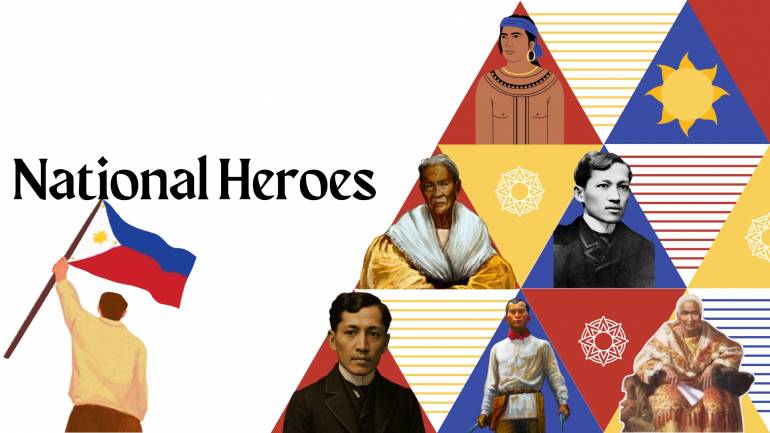
Societies construct monuments for men and women who shaped their nation. Filipinos, for one, build images of José Rizal, Andrés Bonifacio, Melchora Aquino, and other heroes to honor lives marked by courage and sacrifice.
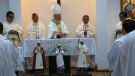
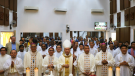
In a similar way, Catholics create images to honor men and women who shaped their faith and conscience, whom they call saints.
Filipinos do not worship Bonifacio; they place him on a pedestal in gratitude for a life offered for his fellow countrymen.
Catholics do not worship Francis of Assisi; they honor him for abandoning wealth and privilege to stand with the poor.
One may ask how the nation today would face a foreign power that threatens its territory and sovereignty if it had lost all memory of the patriotism and courage shown by Rizal and other heroes who fought for this country.
In an age of disinformation, when many Filipinos hesitate even to speak out against threats to territorial and sovereign rights, the absence of such memory would only deepen silence and indifference. Without remembered examples of courage, fewer people may feel compelled to stand.
In the same way, one may ask how the Franciscans would have become known for their deep involvement in social work, shelters, and service to the marginalized if the memory of Francis of Assisi, a life wholly given to the poor, had not been preserved. Perhaps there would be far fewer Franciscans today carrying out ministries among the poor and caring for the environment across the world.
I think of a Franciscan friar from the Philippines, Christopher Villanueva, who once dreamed of becoming a soldier but now uses his art to help children recover from the trauma of war and disaster. Through art therapy workshops in places like Marawi and Basilan, he helps young survivors express pain and hope on paper, and he joins exhibits whose proceeds support calamity survivors. In him, the memory of Francis’ compassion takes a creative and healing form.
Catholics turn to saints for intercession; citizens turn to their heroes for moral direction. One prays; the other remembers, and in remembering, learns how to stand.
I am reminded, too, of an activist I know who openly identifies as an atheist, yet draws inspiration from the life of Bonifacio.
Though he does not share the Catholic faith, he speaks with deep respect for Pope Francis, whose closeness to the poor and insistence on human dignity resonate with his own convictions.
In his case, memory becomes shared moral ground, proof that one need not believe in the same way to be guided by lives marked by courage and compassion.
This instinct to remember extends into ordinary life. When we lose a good friend, someone who touched our lives, we sometimes preserve a painting or image in gratitude for the way he accompanied us on our journey.
Such simple acts of remembering can quietly inspire us as we continue our own pilgrimage, especially at difficult turns.
At home, we keep framed photos of departed loved ones. In trying times, we return to their memory, allowing their lives and words to guide us.
For many Filipinos, this remembering even takes the form of speaking to departed parents: Nanay, gabayan mo po kami. Tatay, bantayan mo po kami.
Some immortalize the memory of their parents through photos, paintings, poems, niches, and mausoleums, in gratitude for love received, sacrifices made, and guidance given. These memories are retold to children not as nostalgia, but as inheritance.
My own grandfather served as a scout after the Second World War. He died of pulmonary disease when my mother was five and my aunt was three. The pension my grandmother received from his service made it possible for my mother and aunt to enter college, an opportunity that shaped our family’s future.
At home, we keep his photograph. Without it, I might remember him less often. With it, his sacrifice remains present, not as nostalgia, but as a quiet reminder of how one life, remembered, continues to give.
When I returned home to Barcelona, Sorsogon this Christmas, I saw that memory again. In his black-and-white, faded photograph, I see not just a face, but a life given, to my grandmother, their two daughters, and, in a way, to me.
That life given did not end with him. My grandmother carried it forward. She raised my mother and aunt after his death, and later raised me as well, quietly holding the family together while others worked far from home. If my grandfather’s photograph reminds me of sacrifice remembered, my grandmother reminds me of sacrifice lived, daily, without monument, but no less enduring.