When a priest mounts the pulpit, he carries more than his own voice. He speaks with the weight of the Church, shaping not just opinions but consciences. This is why recent instances of Filipino priests defending former Philippines President Rodrigo Duterte during homilies are deeply troubling, not because priests cannot speak about politics, but because the pulpit is not meant for partisanship.
A priest does not need to defend anyone accused of a crime from the pulpit. The safest and most responsible course is to let the evidence speak, let the courts investigate, and let justice take its course. Duterte himself never denied his war on drugs, while government records documented thousands of deaths during the campaign. He even spoke openly, in televised addresses, about killing, words that demand scrutiny, not defense.
The Church stands for the sanctity of life and the rule of law. No person, however poor or despised, should be deprived of life without due process.
Scripture itself is clear: “Learn to do good; seek justice, rescue the oppressed” (Isaiah 1:17).
The Church does not exist to shield the powerful from scrutiny. It stands for justice. And a well-formed conscience does not excuse power; it demands accountability.
In January 2026, a priest reportedly joined and signed a pro-Duterte signature campaign.
In another instance in March, a priest reportedly used his homily to denounce Duterte’s arrest.
These soften the line between pastoral care and political advocacy.
The deeper question is this: when does pastoral speech cease to be moral guidance and become partisan defense?
A priest may call for truth, fairness, and due process. But once he begins defending a political figure from the pulpit, he risks using sacred authority to shield worldly power.
Where is conscience when the Church’s voice is used to comfort power more than the wounded? And what becomes of the Church’s witness when justice is at stake?
What is difficult to ignore is that this public urgency now appears far more visible in defense of the accused than it ever did for the thousands who died in the drug war.
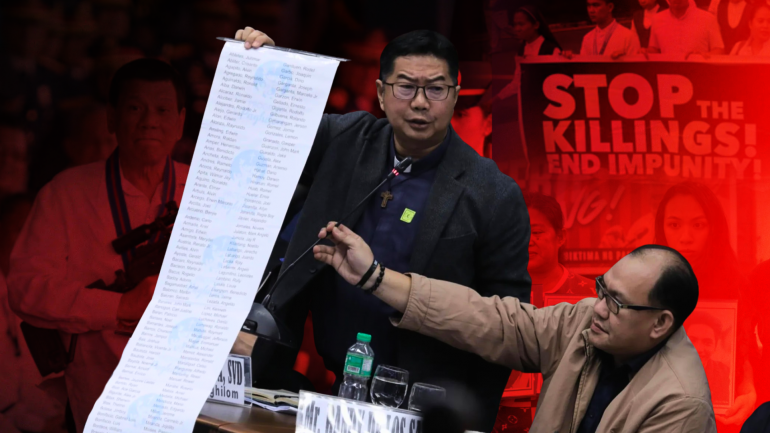
By contrast, priests like Flavie Villanueva chose a different path. Instead of defending power, they stood with its victims, helping provide decent burials for those killed in the anti-drug crackdown and accompanying grieving families in their pain.
That is what moral courage looks like. And that is what the Church is called to be.
The Church’s witness should comfort the wounded, confront injustice, and never be used to shield power.