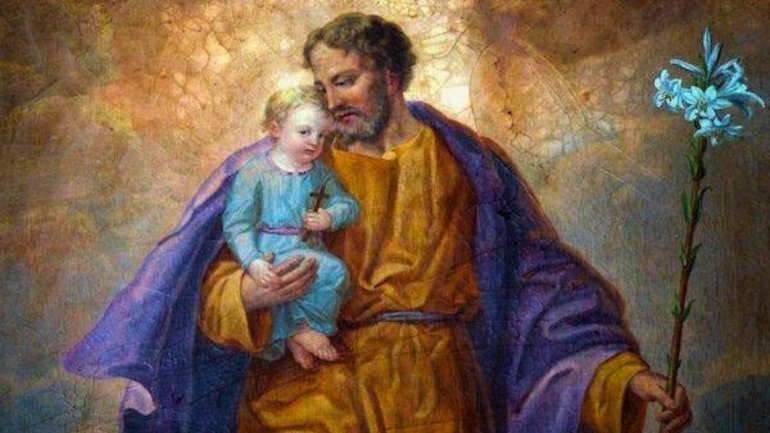
Today, March 19, the Church celebrates a man who never uttered a single recorded word in Scripture, and yet speaks across centuries with disarming clarity, St Joseph, the silent guardian of the Holy Family.
In a world that confuses noise with importance and visibility with virtue, Joseph stands almost hidden in the Gospel landscape. A carpenter from Nazareth, of no political influence or religious authority, he leaves behind no speeches, no writings, no miracles attributed to his name. And yet, entrusted to him was one of the greatest responsibilities in salvation history: to be the earthly father of Jesus and the protector of Mary.
What defines Joseph is not what he says, but what he does, and even more, how he chooses to act when faced with uncertainty.
The Gospel of Matthew describes him as a “just man.” When he discovers that Mary is with child, Joseph is placed in an agonising position. The law, the culture, and public expectation all lean in one direction. Yet Joseph chooses another. He resolves to divorce her quietly, shielding her from humiliation and possible harm.
He teaches us a timeless lesson: to be kind, to never shame anyone for their mistakes, and to avoid causing public scandal. Joseph was a man of deep empathy, showing that true charity and love for our neighbour often speak louder than words or grand gestures. His example challenges us today to respond to others with patience, compassion, and discretion.
Before any angel speaks, Joseph has already chosen compassion. This is justice, in its truest sense, not the cold application of law, but the protection of dignity.
When divine clarity finally comes in a dream, Joseph responds with obedience. He takes Mary into his home and embraces a mystery that will never fully be explained to him. From that point on, his life becomes a series of silent acts of courage: leading his family into exile in Egypt, returning to Nazareth, and working daily to provide for a child who is wholly entrusted to him.
There is no drama in these acts. No audience. No recognition. Only fidelity.
Joseph’s masculinity is striking precisely because it is so unassuming. He protects without controlling, leads without dominating, and loves without possession. His chastity too speaks powerfully: his relationship with Mary is defined by trust, not ownership. He receives her as a gift, not a right. In doing so, he reveals a love that is disciplined, self-giving, and deeply free.
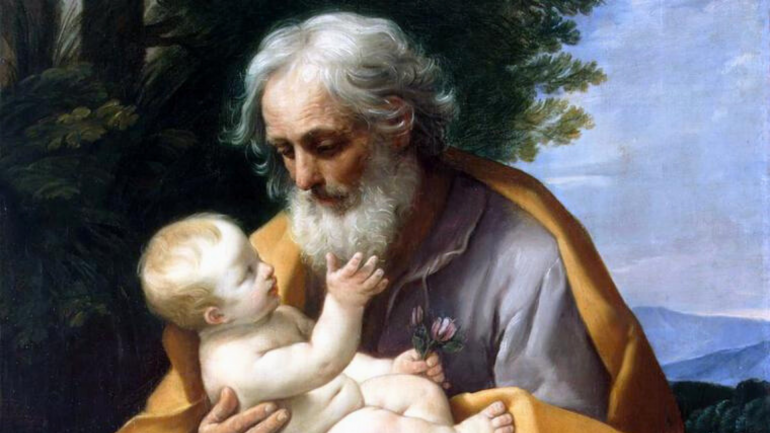
Across Asia, where fathers often carry the quiet burdens of family life, economic strain, unspoken sacrifice, and the daily grind of survival, Joseph’s witness feels deeply familiar. He is, in every sense, a working man’s saint.
Devotion to St Joseph has grown steadily across the global Church. Workers turn to him for dignity. Families seek his protection. The dying invoke him as patron of a peaceful end. Yet, for all his significance, Joseph remains curiously restrained in the Scriptures.
He appears most clearly in the infancy narratives, in Matthew, where he is guided by dreams, takes Mary as his wife, and leads the flight into Egypt (Matthew 1–2), and in Luke, where he journeys to Bethlehem and stands with Mary when the young Jesus is found in the Temple (Luke 2). Beyond these moments, he recedes into the background. When he is mentioned again, it is almost in passing, as in Matthew 13:55, when the people of Nazareth ask: “Is this not the carpenter’s son?” It is a line edged with doubt, yet it reveals something profound: Joseph’s quiet life had become the frame through which others understood Jesus.
There is, for me, a more personal echo to this feast. I bear the name Joseph, as did my late father, a widower who, having lost his spouse early, single-handedly raised 16 children with a quiet endurance that now feels almost biblical. Like the Joseph of the Gospels, he did not live in the spotlight. There were no accolades, no public recognition, no grand declarations. Instead, there was work, constant, demanding, often thankless. There was responsibility that did not rest, and love expressed not in words, but in provision, discipline, and an unwavering presence.
In remembering St Joseph, I find myself remembering him too. A father who stayed. A father who endured. A father who carried more than most, and yet did so without spectacle.
In that sense, the name Joseph is not just a name. It is an inheritance of quiet strength. And perhaps that is Joseph’s enduring lesson to the Church, and to the world: that one need not be seen to be significant.
That faithfulness in ordinary life, in the daily decisions to protect, to forgive, to provide, to remain, carries a weight that eternity itself will recognize.
In Malaysia and across Asia, where families continue to navigate uncertainty, division, and the pressures of modern life, Joseph offers a steady, almost stubborn hope. He reminds us that righteousness is not loud. That courage is often hidden. That love, at its most authentic, is rarely performed.
On this feast day, St Joseph invites us to reconsider what it means to be great. Not in prominence, but in presence. Not in recognition, but in responsibility. Not in words, but in witness.
In a noisy world, St Joseph remains a necessary silence.