




Last year, our family visited Hiroshima and felt the weight of history settle quietly in my heart. This year, we returned to Japan and traveled to Nagasaki, carrying the same reverence but also a new hope, the hope that comes from witnessing not only suffering, but also a faith that refused to break.
Nagasaki, a city on the western coast of Japan’s Kyushu Island, has a long history of Christianity and remains one of the country’s most important centers of Catholic life. Beyond the Peace Park, Atomic Bomb Museum and other reminders of the 1945 bombing, one place drew me closer than I expected: Urakami Cathedral.
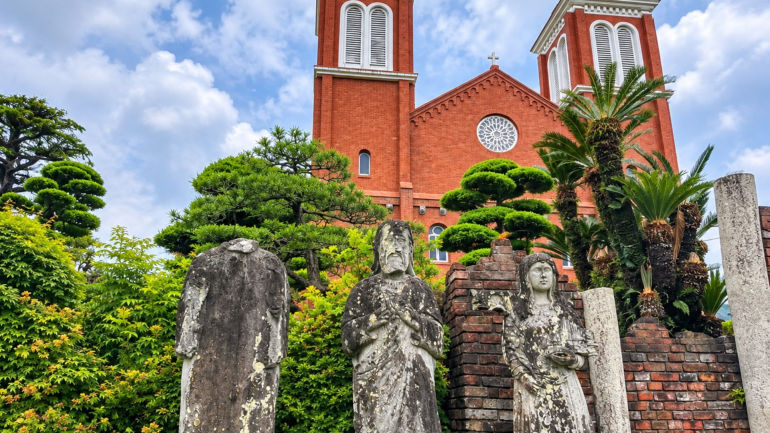
The cathedral stands as more than a building. It is a witness to a people whose faith survived catastrophe, whose courage continued after the smoke cleared, and whose prayer endured when their world seemed to have come to an end.
Urakami: Faith That Endured
Before the bombing, Urakami was a Catholic center in Nagasaki. The cathedral was a beloved place of worship and community life, built to pass the faith from one generation to the next.
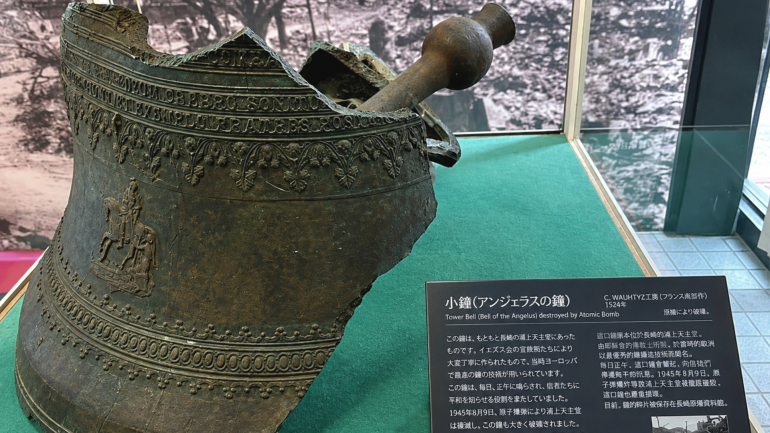
Then, on August 9, 1945, an atomic bomb was dropped on Nagasaki. Urakami was close to the blast's hypocenter, and the cathedral was destroyed. Many Catholics were killed, including people who had gathered there for confession and prayer.
Yet the people did not turn away.
Their steadfastness was not sentimental optimism. It was a choice and a discipline of the heart. The Letter to the Hebrews calls believers to encourage one another and remain connected in faith: “Let us consider how to rouse one another to love and good works … not neglecting to meet together … but encouraging one another” (Hebrews 10:24-25).
In Urakami, survivors gathered again, sometimes amid uncertainty and grief, but with a determination to remain connected to God and to one another. Their faith was not merely private. It was lived through worship, catechesis, care for the wounded and grieving, and the rebuilding of their community.
Building Again
What moved me most was not simply that the cathedral was reconstructed, but how it was reconstructed, as a promise made practical.
Christian resilience does not mean denying pain. It means enduring suffering while allowing it to lead toward renewed purpose. The prophet Isaiah speaks of this renewal: “They who wait for the LORD shall renew their strength” (Isaiah 40:31).
In Urakami, that renewal became visible. Rebuilding the cathedral was a testimony: not that the people had forgotten what happened, but that they refused to let what happened have the last word.
The Atom-Bombed Mary
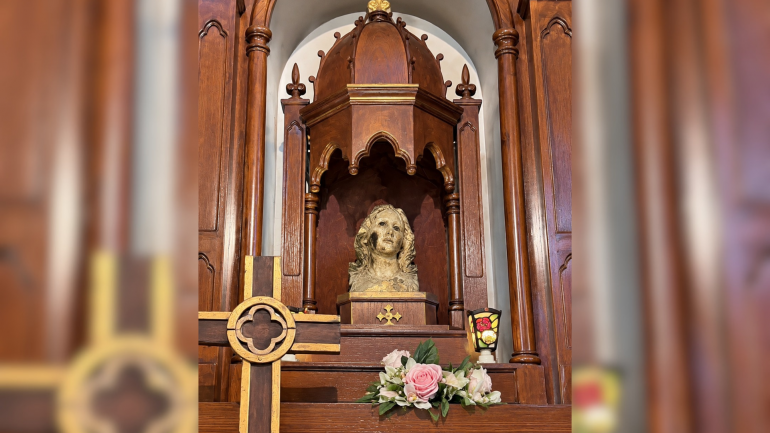
Among the cathedral’s most haunting symbols is the Atom-bombed Mary, or Hibaku no Maria, a statue of the Virgin Mary that survived the bombing. The statue bears the marks of the destruction, yet remained present as a powerful reminder of suffering and faith.
For me, the statue spoke of a faith that remained even amid devastation. It recalled Mary’s own response to suffering and uncertainty: “Mary kept all these things, reflecting on them in her heart” (Luke 2:19).
The Atom-bombed Mary represents not the disappearance of pain, but the decision to hold on to meaning, to trust, and to remain faithful.
Peace as a Choice
Walking near Urakami Cathedral, I realized that peace is more than the absence of war. In places like Nagasaki, peace is the result of difficult work, the decision to rebuild, to worship again, and to treat survival not simply as an ending but as a responsibility.
Jesus says, “Peace I leave with you; my peace I give to you … Do not let your hearts be troubled, and do not be afraid” (John 14:27).
Urakami echoes that promise. The people did not rebuild because the past was painless. They rebuilt because they believed peace was worth pursuing and that God could remain present even in the aftermath.
After Hiroshima, I thought I understood what it meant to witness history. After Nagasaki, especially Urakami, I understood something deeper: the strongest monuments are not always made of stone. Sometimes they are faith carried through ash; sometimes they are prayers rebuilt with human hands.
Urakami Cathedral and the Atom-bombed Mary do not ask visitors simply to remember suffering. They invite us to respond to it, with compassion, humility and a refusal to accept violence as the final word.
Hope, in the Christian understanding, is not denial. It is a decision rooted in God’s presence and expressed in the courage to begin again.
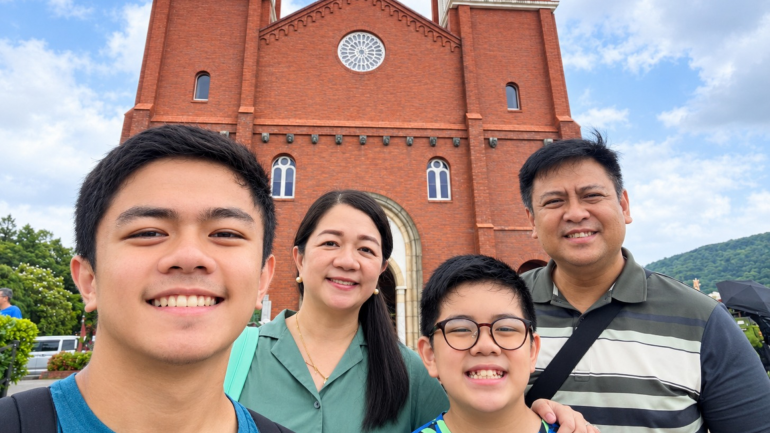
For our family, the journey was deeply meaningful, especially for my two growing sons. Watching them absorb the story with reverence and respond to a faith carried through history made the visit even more sacred.
We left Nagasaki with gratitude and hope, knowing that we would return to this city, a place where history, suffering and faith continue to speak to one another.
Let us know how you feel!
Comments
- Reply
Permalink