For Filipino lay leader Ronilda Co, life has never been random. It has been guided by what she calls her “three inner compasses” — three Latin creeds that shaped her choices, her vocation, and ultimately her response to some of the most difficult humanitarian crises of our time.
“My life has been guided by three inner compasses,” Co reflects. “These creeds have directed my choice of what, where, and how to spend my life.”
The first compass was formed in childhood in the halls of St. Paul schools in Vigan, Ilocos Sur: Caritas Christi, urget nos — “The love of Christ impels us.”
“I was raised in the calling of St. Paul to go out and be a witness to God’s love — for me, my family, and humanity,” she says. “Service was never optional. It was a response to a love already given.”
In college at the University of Santo Tomas, Manila, she encountered another guiding light: Veritas in Caritate — truth in charity.
“‘Veritas in Caritate’ enriched my search for truth to understand the world,” Co recalls. Immersed in student activism, she grappled with social injustice and structural poverty. Yet she learned that truth must always be tempered by love.
Through friends and mentors from the Ateneo, Quezon City, she deepened her spiritual grounding in the Jesuit ideal Ad Majorem Dei Gloriam — for the greater glory of God.
“In the midst of activism, ‘Ad Majorem Dei Gloriam’ purified my motives,” she says. “It reminded me that whatever I do must not be about me. It must be for something greater.”
Together, these three compasses anchored what she calls the “why” of her life: service — especially to the poor, the marginalized, and “the least of our brethren.”
That calling was further illuminated by liberation theology and her encounter with the late Gustavo Gutiérrez during a community organizers’ forum led by the late Dinky Soliman.
“Meeting Gustavo Gutiérrez affirmed what was already stirring in my heart,” Co says. “Faith must take flesh in concrete service. It must stand with the poor.”
Steadfast in Crisis
Over three decades, Co worked in diverse fields — teaching, gender mainstreaming, conflict resolution, natural resource management with Indigenous Peoples, and collaboration with Catholic Church social action centers.
Her studies at the Massachusetts Institute of Technology (2006–2008) led her into disaster risk reduction and climate resilience. In 2015, after regional work across Asia Pacific, she returned to the Philippines to serve as director of the Disaster Risk Reduction and Management Service (DRRMS) of the Department of Education.
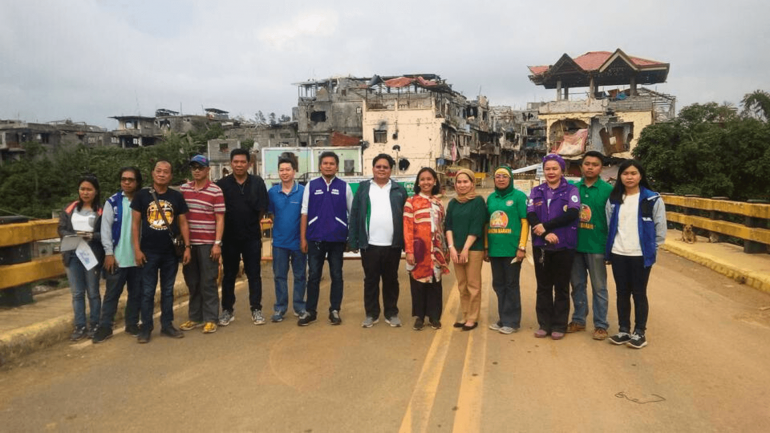
Less than two years later, war broke out in Mindanao. The Marawi Siege would become one of the defining experiences of her life.
“Three days into the siege, we went to Iligan City to visit evacuation sites,” she recounts. “The situation was chaotic. Displaced Maranaos walked from Marawi to Iligan. The streets were full of them, lined up at checkpoints.”
The siege lasted 154 days. Schools were destroyed, teachers displaced, learners scattered across regions.
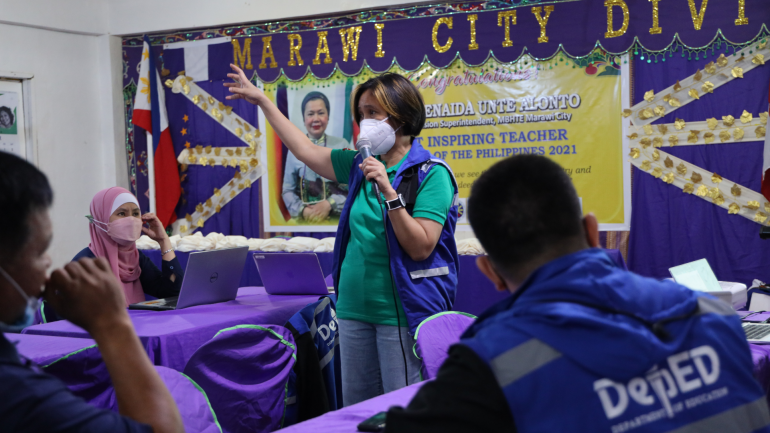
Using DepEd’s Rapid Assessment of Damages Report (RaDaR) tool, Co and her team formed tracking groups nationwide to monitor displaced learners and personnel. A policy directive instructed all schools to accept displaced children immediately.
“We knew education could not wait,” she says. “Even in the middle of war, children deserve continuity.”
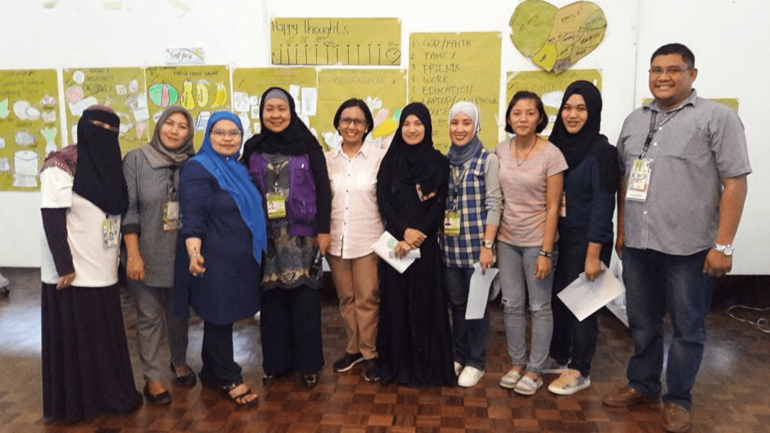
An information management team composed of DRRMS, BARMM, Iligan, and Marawi staff coordinated data and response. Mental health and psychosocial support (MHPSS) quickly became a priority.
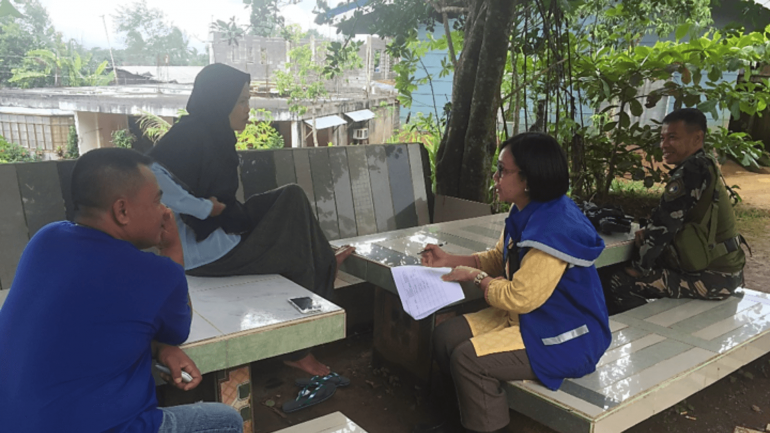
“In the early days, we trained teachers to provide psychosocial support in evacuation centers and host schools,” Co says. “Eventually, we organized MHPSS for teaching and non-teaching personnel. That lasted more than a year.”
Encountering Faith in Suffering
For Co, the Marawi experience was not only administrative — it was deeply spiritual.
“We were engaging up close and personal with our Muslim brothers and sisters,” she says. “I heard from some colleagues their fear of going to Marawi, their biases toward Muslims.”
She reminded her young DRRMS team: “The work we do is a cause bigger than ourselves. This in itself is grace that propels and sustains us.”
Listening to stories during psychosocial sessions pierced her heart.
“They spoke of seeing a relative die and burying him or her in the backyard before escaping,” she recalls. “They left everything behind.”
What struck her most was their faith.
“In unimaginable pain, they cried out to Allah,” she says softly. “I had no words during those days. I was only grateful to see God in the face of their immense suffering and profound faith.”
The tragedy of Marawi became, for her, a lived parable of the Good Samaritan.
“The question is not who we consider our neighbor,” Co reflects. “The question is how we are a neighbor — especially to those of a different faith.”
Courage in Hard Conversations
Recovery required difficult decisions. Inspections of 47 schools outside the most heavily damaged area revealed unsafe conditions. Consolidation of several schools was recommended.
One principal, whose school faced closure, approached Co.
“She said, ‘The parents of our learners are in my house. Explain to them why we have to close the school.’”
Co remembers her reply:
“Ma’am, you know your parents very well. I don’t. You know in your heart why the school has to be closed. I cannot imagine the pain you are going through. But I sense you would not want your children to suffer more. They deserve more.”
“I trust that you will make the right decision — for the Maranao children.”
“These were not conversations born of righteousness,” Co explains, “but of love and trust — and of conviction that, in the midst of their suffering, they longed for healing and transformation.”
For her, authentic recovery meant placing decisions in the hands of the community.
“I was simply an instrument of God,” she says.
Transformation of Hearts
By 2022, an integrated school in the most affected area — once a battleground — was nearing completion.
“When I left DepEd at the end of 2022, I went in peace,” Co shares. “The memories of more than five years of working with our Muslim colleagues were a sufficient source of peace.”
The Marawi Siege, she says, did not only demand infrastructure rebuilding.
“It called for a transformation of minds and hearts,” she reflects. “And that calling was not only for them. It was equally for us.”
A Familiar Spirit in Afghanistan
In 2023, Co accepted a post in Afghanistan with Norwegian Church Aid, working amid the aftermath of the Herat earthquakes under Taliban rule.
“My experience with our Muslim brethren in Marawi prepared me for Afghanistan,” she says. “I felt at home with our Muslim families and communities.”
“The journey to serve started with solidarity,” Co emphasizes. “Listening to their stories — from pain to hope — humbled me.”
Looking back, she sees her life as a continuous response to grace.
“All these experiences underpin my calling stirred in childhood — service,” she says. “Caritas Christi, urget nos. The love of Christ impels us. That love continues to guide me — wherever I am sent.”
For Ronilda Co, the compasses still point forward — toward the margins, toward dialogue across faiths, toward a world where service is not charity alone, but accompaniment in suffering and hope.