Artificial Intelligence (AI) is overwhelming us today! AI, as we all know, is about communication, information, data mining, and much more. It shapes the way we think and even determines our behavioural patterns.
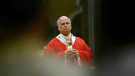
In May, Pope Leo XIV gave the world his first encyclical, Magnifica Humanitas (Magnificent Humanity): On Safeguarding the Human Person in the time of Artificial Intelligence. In it, he makes a passionate plea for safeguarding humanity, the dignity of the human person, and the importance of promoting truth and freedom. His message was unequivocal: “In this age of Artificial Intelligence, be human, stay human!”
Pope Leo cautions about the detrimental effects AI could have on humanity. He says too much AI power is concentrated in too few hands, with a small group of firms controlling vast amounts of data, computing power and digital infrastructure. Such concentration, he warns, risks “new dependencies, exclusions, manipulations and inequalities.” Powerful groups could use AI to shape public opinion, influence democratic systems and steer economies for their own interests.
He also criticised the global race for “ever more powerful algorithms and larger datasets,” arguing that technology should serve humanity rather than corporate or geopolitical dominance. Regarding autonomous weapons, he said machines should never make irreversible life-and-death decisions without human responsibility.
In his encyclical, he highlights “an ecology of communication.” Our task, he says, is “neither to demonise nor idolise technological tools,” but to use them based on the principle that truth is a common good. We must therefore promote an ecology of communication. This approach recognises how people select new, traditional, geo-ethnic and interpersonal modes of communication to understand their communities, health and the world around them. Pope Leo adds that public policy must make “decision-making behind content selection” more transparent and protect personal data.
Pope Leo pays particular attention to journalism, calling for “serious journalism and forums for debate, where reasoned argumentation and verification carry greater weight than immediate reaction.” He also emphasises the role of families, schools and universities.
In highlighting the responsibility of communicators, Pope Leo is particularly severe about Church communications. “Christian communities, too, are called to commit themselves to transparency in communication and to the honest pursuit of facts.” He recalls how journalists have helped bring injustices and abuses to light and insists that vigilance and transparency remain “a grave responsibility for the Church herself.” Strong, direct words which should shake any Christian communicator out of one’s complacency and comfort zone!
Everything that Pope Leo speaks about in Magnifica Humanitas applies to us in India: both to the Church and the country. We have reached an abysmally low level of dehumanisation; democracy is in the doldrums. We have a long way to go in critical issues of transparency, truth and freedom.
He wants the Church to do a serious examination of conscience. The five principles of the social doctrine, common good, universal destination of goods, subsidiarity, solidarity and social justice, should be applied not only to society, but also to the Church. This calls for “purifying ecclesial relationships and structures from distortions that give rise to inequality, lack of transparency and abuse of power,” while listening to victims of different forms of abuse.
Let’s look at the plain truth: The V-Dem Institute’s Democracy Report 2026 says India’s autocratization is “a slow but systematic dismantling of democratic institutions.” India is classified as an electoral autocracy since 2017. India continues to be named among the top 10 autocratising countries in the last 10 years and is placed 105th in the Liberal Democracy Index. India ranks 157 out of 180 countries in the 2026 World Press Freedom Index published by Reporters Without Borders, remaining in the “very serious” category for journalism and media freedom.
In this context, some questions need to be asked: Are we ready to put humanity and the dignity of every person at the centre of our communications? Are we ready to take a visible and vocal stand for transparency, truth and freedom? Are we free enough to address injustices and dehumanising processes? Do we have the prophetic courage to critique the Church when needed? In this AI age, are we prepared to engage in journalism without compromise?
Pope Leo indicates five paths of responsibility: disarming words by speaking the truth; building peace through justice; adopting the perspective of victims, because there are conflicts in which “it is unjust to remain neutral”; cultivating “a healthy realism” that seeks practicable paths of peace; and reviving dialogue.
Towards the end, he gives the world an antidote to “stay human” through the image of Nehemiah, who heard the cry of a devastated city, brought its pain to prayer, organised the work, confronted resistance and rebuilt Jerusalem brick by brick. In this era of digital transformation, Pope Leo sees in Nehemiah a parable of our vocation, not to be passive spectators or mere commentators, but to enter the “construction sites of history” and rebuild what has collapsed and protect what is threatened.
A tall order indeed! Catholic communicators with spine will certainly heed the words of Pope Leo in becoming Nehemiahs today, by ensuring that a meaningful and relevant ecology of communications is always in the context of humanity, dignity, truth, freedom and, above all, journalism without compromise!