Wasn’t Shakespeare right? He made a character in his play ‘As You Like It’ assert that one can find “tongues in trees, books in the running brooks, sermons in stones…” Everything in nature, every event that happens, has lessons. We need to keep looking at them until they reveal the lessons.
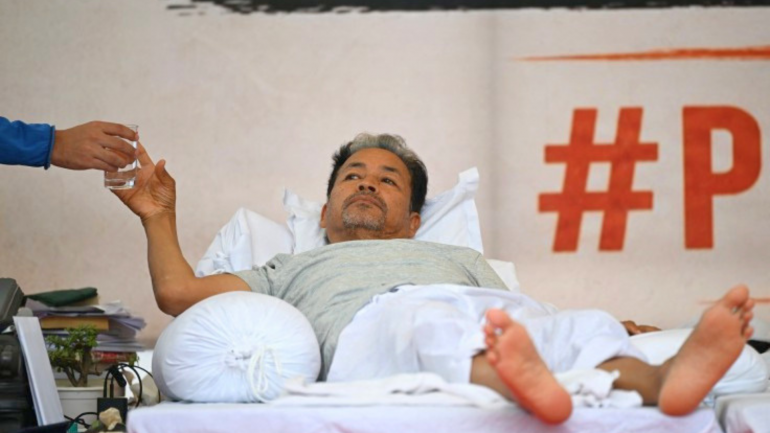
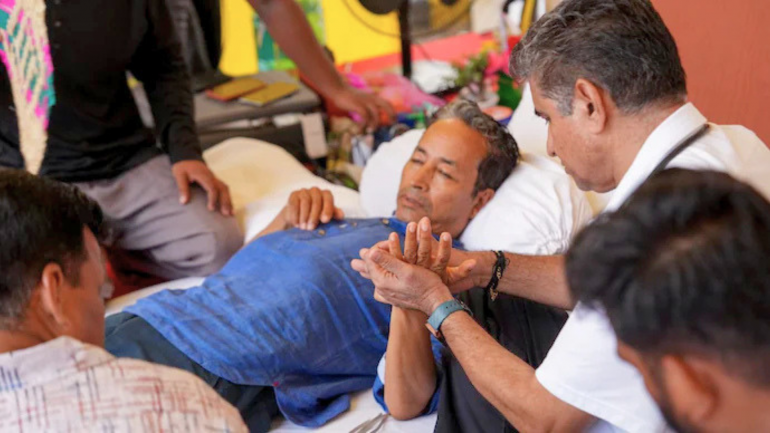
I wouldn’t be surprised if Asians who don’t live in India have heard of Sonam Wangchuk, because many would have read about him when he won the Ramon Magsaysay Award in 2018. In the past few weeks, he has figured prominently in the news here in India because of a hunger strike he launched on 28 June 2026 to support the protests of thousands of students.
It is hard to pin a label on Wangchuk because of his versatility. He is an engineer, innovator, educator, environmentalist and reformer. He hails from Ladakh, a region close to the Himalayas. In order to help Ladakhi students who had a hard time coping with the demands of the public education system, he founded SEMCOL (Students’ Educational, and Cultural Movement of Ladakh) in 1988. He also designed SECMOL Alternative School near Leh. It is an eco-friendly campus, powered by solar energy. Even in cold winters, when temperatures can drop to −30°C (−22 °F), his solar-powered school keeps the students warm. SECMOL won the International Terra Award for the best building at the 12th World Congress on Earthen Architecture in Lyon, France, held in July 2016.
Inspired by artificial glaciers, Wangchuk came up with his own ‘Ice Stupa’ technique. In 2013, Wangchuk built a prototype of the Ice Stupa, a giant ice cone which could store about 150,000 litres of winter stream water. In the crucial months of April and May, when the farmers need water for planting, these stupas start melting and provide the water that farmers need. Such innovative solutions to problems brought him wide recognition. In 2017, he won the Global Award for Sustainable Architecture.
His own experiences helped him understand how primary education should be imparted in order to be effective. He served as a member of the National Governing Council for Elementary Education in the Union Government’s Ministry of Human Resource Development.
Many may not be aware that it was Wangchuk’s experiences and deep convictions about education that made him spontaneously support the youth who came together as the Cockroach Janata Party that led a protest at Jantar Mantar in Delhi from 6 June ‘26. Thousands of youth from all over the country soon joined the protest or began demonstrations in their own cities. Their grievances were real, their demands legitimate. But the government initially ignored it and, when the students tried to march to the parliament, used a heartless, brutal approach to crush it.
Wangchuk’s deteriorating health as days went by focused the nation’s attention on the venue of the students’ protest. He continued his fast for 26 days, and the whole nation began to worry. After a court expressed fear for his life, the police forcibly shifted him to a hospital. It was then that the government sent two Ministers to dialogue with him. They promised to fulfill the demands he raised, and convinced him to end his fast.
It is easy to see what we can learn from Sonam Wangchuk: empathy that made him spontaneously support the students and the moral courage that made him risk his life for a worthy cause. What can we learn from the government? Sacrificing one’s ego for the sake of the common good. Respecting others. And so listening to the other. Choosing dialogue over monologue. Taking responsibility.