



A pastoral gathering in India in the years following the Second Vatican Council helped plant the seed for a regional Catholic movement in the southern Philippines, bringing local Churches together to reflect on their mission and, eventually, creating a space for young people to shape the Church’s future.
The story of the Mindanao-Sulu Pastoral Conference (MSPC) traces its beginnings to Archbishop Lino Gonzaga of Zamboanga, who attended the All-India Pastoral Assembly after the council. Inspired by the experience of bringing Church leaders together to discuss pastoral life and mission, Archbishop Gonzaga envisioned a similar gathering for the Catholic Church in the Philippines.
According to an account in BECs in Mindanao, he brought the proposal to the Catholic Bishops’ Conference of the Philippines (CBCP). The bishops of Mindanao embraced the idea and moved to establish a pastoral conference that would bring together the dioceses and prelatures of Mindanao and the Sulu archipelago.
The first MSPC was held from November 17 to 21, 1971. It established a regional space for Church leaders to discuss pastoral concerns, exchange experiences, and explore how the Church could respond to the particular social, cultural, and religious realities of Mindanao and Sulu.
The spirit of collaboration eventually extended beyond bishops and other pastoral leaders to the young people of Mindanao and Sulu.
In 1985, the idea of an MSPC Youth Congress took shape in the Archdiocese of Cotabato. It carried the original conference’s regional vision into youth ministry, creating opportunities for young Catholics to meet beyond diocesan boundaries, deepen their faith, learn from one another, and share responsibility for the Church’s mission.
The initiative also gave youth ministers a common space to discuss the challenges facing young people and consider how local Churches could accompany them more effectively.
Rather than remaining a periodic meeting, the initiative developed into a tradition of regional encounter, formation, and shared discernment.
A 2026 gathering rooted in love and mission
More than five decades after the first MSPC and over four decades after the Youth Congress began, the initiative continues with the MSPC Youth Congress 2026, hosted by the Archdiocese of Davao from October 21 to 24.
The congress brings together youth ministers from 22 ecclesiastical territories across Mindanao under the theme, “Mindanaoan Youth: Rooted in Love, Rising for Mission.”
The theme places the experience of God’s love at the center of youth ministry and connects personal faith with service to others. It also reflects the gathering’s wider purpose: strengthening relationships among youth ministers and helping them discern how young Catholics can participate more actively in the Church’s mission.
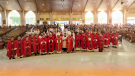
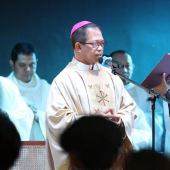
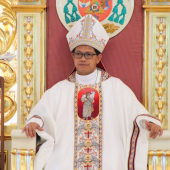
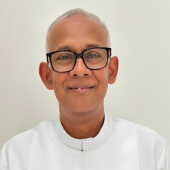
Archbishop Romulo G. Valles of Davao emphasized this connection during the opening Mass on October 21. He urged youth ministers to remain rooted in God’s love as they respond to the Church’s call to proclaim the Good News.
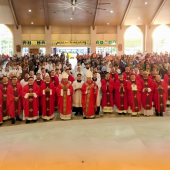
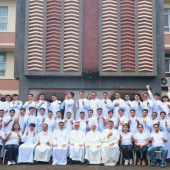
Bishop Abel Apigo of Mati and 23 priests concelebrated the Mass, including directors and heads of youth apostolates from dioceses and archdioceses across the region. After the celebration, delegates proceeded to the Regional Major Seminary of Mindanao for the congress’ opening program and dinner.
The four-day gathering includes opportunities for fellowship, formation, dialogue, and reflection on the role of young people in the Church’s mission, in the context of its continuing synodal journey.
The journey from an Indian pastoral assembly to a regional youth gathering in Mindanao shows how an experience in one local Church can inspire another and how a vision embraced by one generation can continue to bear fruit in the next.
Radio Veritas Asia (RVA), a media platform of the Catholic Church, aims to share Christ. RVA started in 1969 as a continental Catholic radio station to serve Asian countries in their respective local language, thus earning the tag “the Voice of Asian Christianity.” Responding to the emerging context, RVA embraced media platforms to connect with the global Asian audience via its 21 language websites and various social media platforms.
Latest News