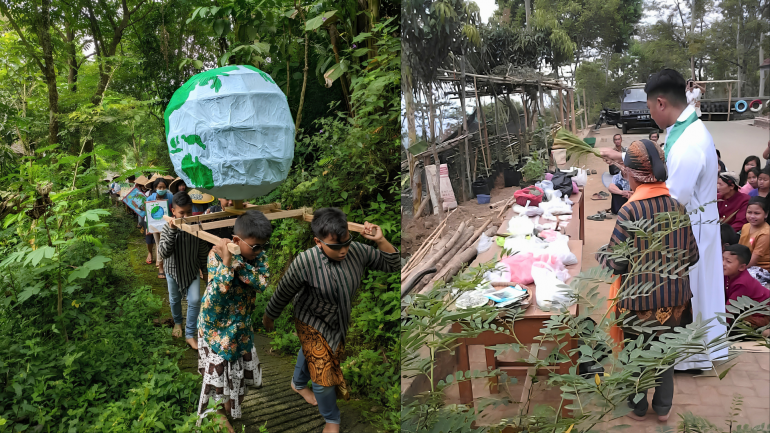
Long before Pope Francis published Laudato Si’ in 2015, SD Kanisius Kenalan, a Catholic primary school in Magelang Regency, Central Java, had been developing an approach to education rooted in children’s daily lives and their natural surroundings.
The school, part of the Kanisius Foundation network of Catholic schools in Central Java and the Special Region of Yogyakarta, began strengthening its environmental identity around 2011. Its approach emerged not from the encyclical but from the needs of a rural community where farming, livestock, water sources, soil and Javanese traditions are closely connected.
Yosef Onesimus Maryono, who served as head of the school from 2016 to 2026, said the initiative also grew from a practical challenge.
Between 2010 and 2011, enrollment had fallen below 75 students, raising concerns about the school’s future.
“A school needs to have something distinctive, something special, not simply be like other schools, but have a particular concern,” Onesimus said.
The school chose care for the environment as one way of developing that identity while making education more relevant to local families.
Learning from everyday life
The school’s approach was based on the conviction that children could learn not only inside classrooms but also from the environment in which they lived.
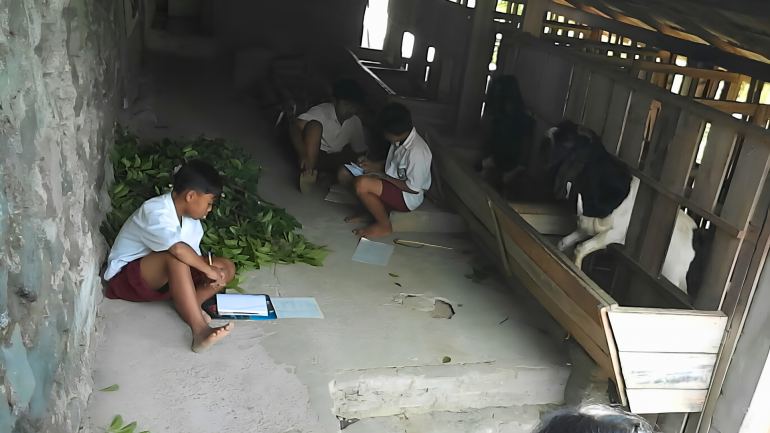
Agriculture, gardening, composting, livestock care and the creative reuse of discarded materials became part of school activities. Some of these initiatives had begun even before 2011.
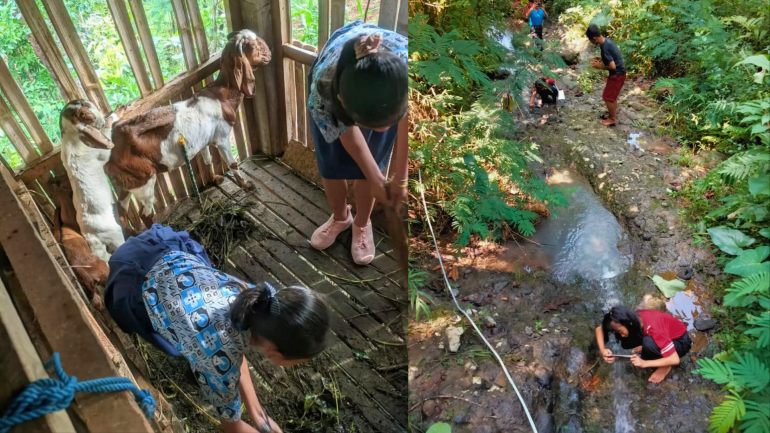
Children, for example, learned to care for goats and use the manure as fertilizer for the school garden. The activity taught them to see the connections between livestock, soil, plants and food rather than treating each as a separate subject.
The school also developed the Republik Anak Kenalan, or Kenalan Children’s Republic, giving students opportunities to develop activities based on their own environment.
Used materials were turned into handicrafts and musical instruments, while agricultural activities eventually became an extracurricular program for children interested in farming.
Water becomes a classroom
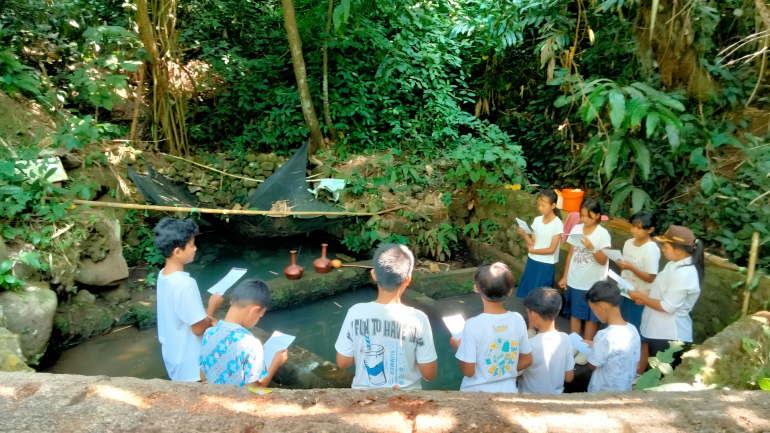
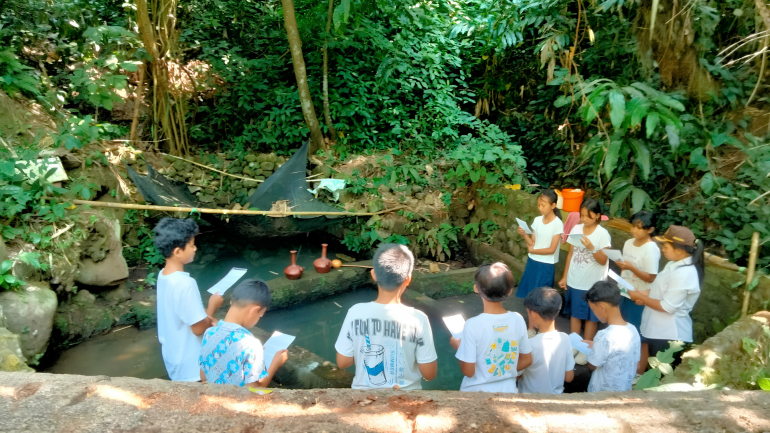
One of the school’s distinctive programs is Tilik Belik, a Javanese expression that can be understood as “visiting the spring.”
Developed around 2012 and linked with World Water Day, the program takes children to springs near the school and turns the sites into outdoor classrooms.
Students observe plants and animals, vegetation around the water source, rocks and the condition of the spring. They can also explore mathematics through measurements such as water discharge and volume.
The experience is then brought back into the classroom, where teachers connect observations from the field with different subjects.
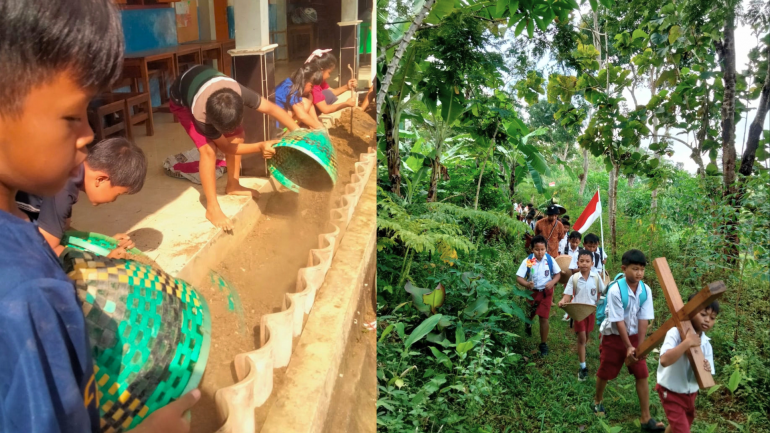
Another program, Sabawana, uses forests, farmland and home gardens as learning spaces. The Javanese word combines saba, meaning to go or travel, and wana, meaning forest.
Children observe soil, crops, farmers, productive plants and agricultural practices. Similar activities are conducted around rivers, where students study water, rocks, aquatic life and surrounding ecosystems.
The emphasis is not simply on taking children outdoors. It is on allowing nature itself to become part of the learning process.
Laudato Si’ gave wider meaning
When Laudato Si’ was published in 2015, many of these practices were already part of school life.
“It was not because we studied Laudato Si’ and then created these programs,” Onesimus said.
The encyclical, however, provided a broader Catholic framework for reflecting on what the school was already doing. Its concern for the care of the common home strengthened the school’s understanding of environmental education as part of human formation.
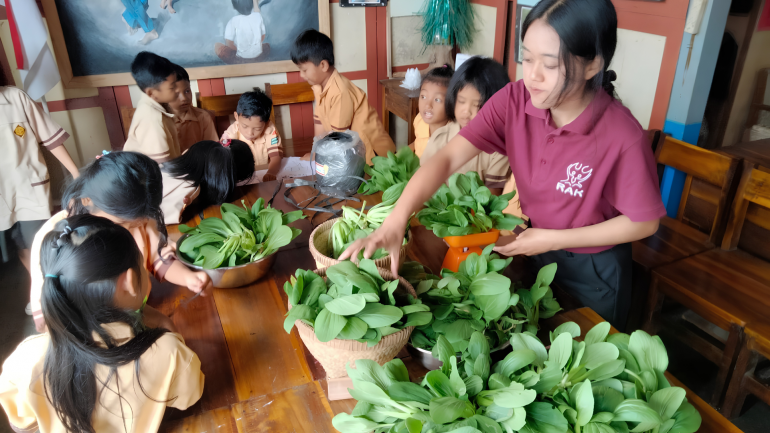
The school later expanded its garden program, including the use of polybags and a small greenhouse. Children experience the entire process of growing food, planting, caring for crops, harvesting and eventually eating what they have produced.
The goal is not primarily economic. It is to help children understand where food comes from and the work and care required to produce it.
The experience has also reached families. Parents have been accompanied by teachers in developing home gardens, producing fertilizer and making productive use of resources around their homes.
Small habits, wider lessons
Environmental education at the school is also expressed through ordinary habits.
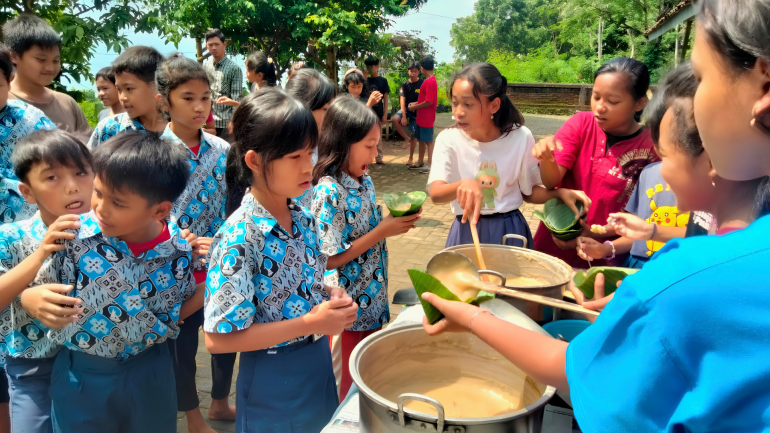
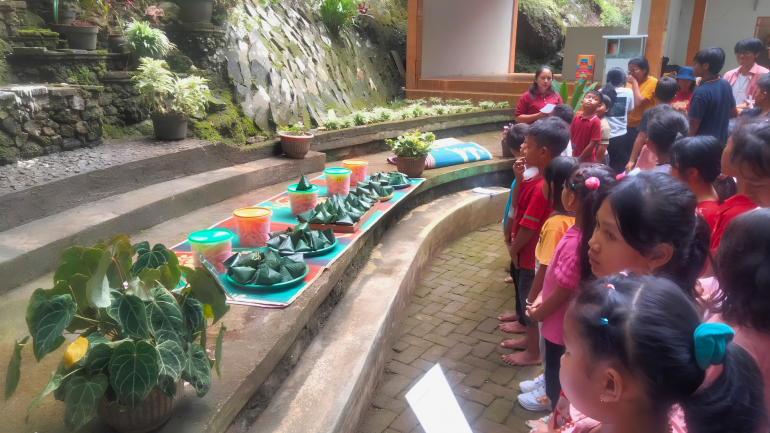
Children are encouraged to avoid unnecessary purchases of packaged snacks at school, reducing both spending and plastic waste. On some occasions, food is brought or served using traditional banana leaves instead of disposable packaging.
The school also incorporates pranata mangsa, a traditional Javanese system for observing seasonal patterns and determining appropriate times for agricultural activities.
By connecting the school calendar and learning activities with the seasons, children learn how weather and seasonal changes affect crops and community life. Traditional knowledge becomes another way of helping students understand their relationship with nature.
From program to way of life
For SD Kanisius Kenalan, environmental education is therefore not limited to a single subject or project.
Gardening, caring for livestock, reusing materials, visiting springs, observing forests and rivers, reducing plastic, growing food and learning from Javanese agricultural traditions all form part of a broader educational experience.
The school’s experience suggests that care for creation can begin with something very close to children: the land they walk on, the water they drink, the food they eat and the people whose livelihoods depend on the environment.
Laudato Si’ later gave this experience a wider Catholic language and vision. But at Kenalan, the lesson had already been taking shape for years, that caring for the environment is not an occasional activity, but a way of learning and living together with nature.