“It was the best of times, it was the worst of times, it was the age of wisdom, it was the age of foolishness, it was the epoch of belief, it was the epoch of incredulity, it was the season of light, it was the season of darkness, it was the spring of hope, it was the winter of despair…”
— A Tale of Two Cities, Charles Dickens
This opening line from Charles Dickens’ classic vividly captures the tension between optimism and despair—a tension that feels strikingly familiar even today.
It is intriguing that the Church commemorates the Feast of St Stephen on December 26, immediately after the joy and celebration of Christmas Day. Why is the first martyr remembered so soon after the birth of Christ?
One cannot reflect on the life of St Stephen without also thinking of Saul. The two are linked in a single moment of Scripture: one is transformed through death, leading to martyrdom; the other is transformed through witness, leading to one of the most dramatic conversions in history, from sinner to saint.
What we know of St Stephen comes primarily from Acts chapters 6 and 7. He is one of the seven men chosen by the apostles to assist in the ministry to the people. Significantly, Stephen is the first name mentioned. Filled with the Holy Spirit and gifted as an eloquent preacher, he nevertheless faithfully attends to the seemingly mundane task entrusted to him, the distribution of food to the widows.
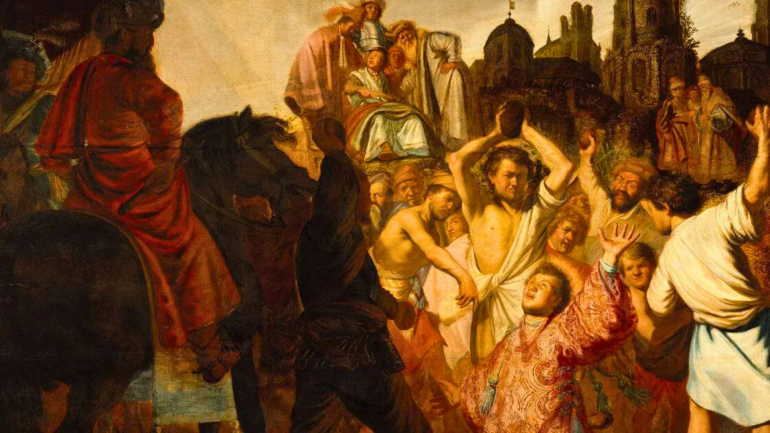
Over time, his powerful preaching provokes opposition among the Jewish leaders. On false and trumped-up charges, strikingly similar to those brought against Christ, Stephen is brought to trial. He speaks the truth boldly, calling his accusers a stiff-necked people. When he declares that he sees the heavens opened and the Son of Man standing at the right hand of God (Acts 7:56), they become enraged. Grinding their teeth (Acts 7:54), refusing to listen any longer (Acts 7:57), they rush to execute him.
Through it all, Stephen’s face remains radiant. Like Jesus, he prays for forgiveness for those who are killing him and entrusts his spirit to the Lord. His cloak is laid at the feet of a young man named Saul, who, we are told, approves of the stoning (Acts 8:1).
The account of Stephen’s martyrdom in Acts bears remarkable similarity to the passion of Jesus as recorded in the Gospel of Luke, no coincidence, since both books share the same author. Notably, Scripture provides no other martyrdom narrative in the early Church with such depth and detail.
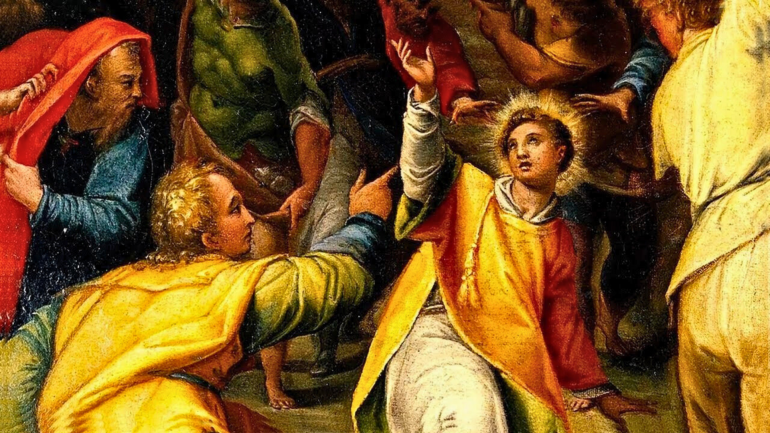
Pope Benedict XVI often referred to St Stephen, saying:
“Letting ourselves be drawn by Christ, as St Stephen did, means opening our own life to the light that calls it, guides it, and enables it to take the path of goodness, the path of a humanity according to God’s plan of love. Lastly, St Stephen is a model for all who wish to put themselves at the service of the new evangelization. He shows that the newness of the proclamation does not consist primarily in the use of original methods or techniques, which, of course, have their usefulness, but rather in being filled with the Holy Spirit and letting ourselves be guided by him.”
Pope Francis, in one of his final Angelus messages on December 26, 2024, reminded the faithful:
“Unfortunately, even today, there are, in various parts of the world, many men and women who are persecuted, at times even to death, because of the Gospel. What we have said about Stephen applies to them too. They do not allow themselves to be killed out of weakness, nor in defense of an ideology, but to make everyone participants in the gift of salvation.”
Modern-day “Stephens” stand before us as living witnesses. In India, the family of Sister Rani Maria forgave her killer. Gladys Staines forgave those who brutally murdered her husband and two young sons. Their lives testify that it is indeed possible to become like Stephen.
In death, Stephen ultimately became an instrument in the conversion of Saul into Paul, one of the greatest apostles and writers of the Church. As Scripture records: “The witnesses laid down their garments at the feet of a young man named Saul… And as they were stoning Stephen, he prayed, ‘Lord Jesus, receive my spirit’” (Acts 7:58–59).
St Augustine famously observed, “The Church owes Paul to the prayer of Stephen.” Beyond the dramatic encounter on the road to Damascus, Saul must have carried with him the memory of Stephen’s radiant face, steadfast spirit, and triumphant faith, qualities Paul himself would later embody.
Stephen’s witness inspired countless martyrs in the early Church, and we are heirs of the faith handed down through their sacrifice. Our Christian faith has been nurtured and preserved through the blood of those who bore witness to Christ across the centuries.
Can I become a Stephen, too? Perhaps even in the final moments of my life, I might inspire someone else to become a Paul. Until then, may I live with a radiant face, steadfast in faith, amid whatever hardships and challenges come with living as a Christian today.
St Stephen, pray for us.