



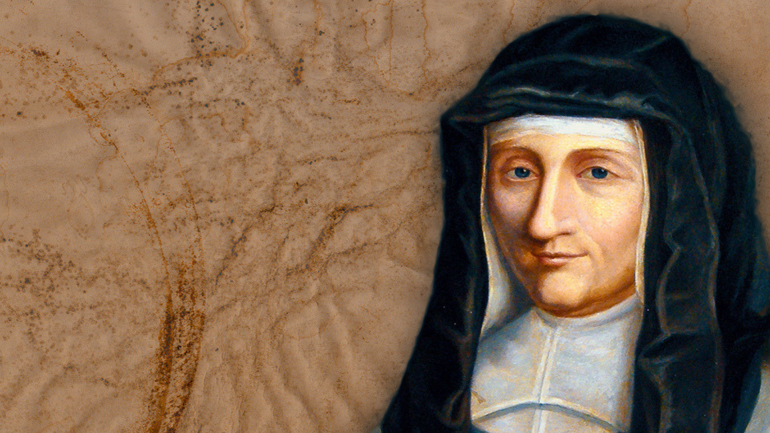
May 9 marks the feast of Saint Louise de Marillac. She is often relegated to a footnote in the biography of Vincent de Paul, the charismatic priest whose name dominates the history of seventeenth-century French charity. Yet Louise de Marillac was no footnote. She was an architect of institutions, of spirituality, and of a radical reimagining of what it means to serve the suffering. To recover her story fully is to encounter a woman whose inner life and outward mission speak with uncanny precision to our own fractured moment.
A Wounded Beginning
Louise was born in 1591. Her mother's identity remains unknown. She was raised in a convent, then in the care of a half-sister, then dispatched to a boarding house for girls of modest means when her father could not afford the convent of her choice. This early experience of social liminality, belonging fully nowhere, is not incidental to her later work. Psychologically, it is foundational.
What Louise carried into adulthood was not bitterness but a finely calibrated sensitivity to those the world discards. Attachment theory would recognise in her an individual who, having known precariousness, developed an extraordinary attunement to others' vulnerability. Her compassion was not the comfortable charity of the well-born; it was the solidarity of someone who had herself stood on the margins.
Her marriage to Antoine Le Gras brought happiness, but also illness, depression, and a prolonged spiritual crisis following Antoine's death in 1625. For several years, Louise wrestled with scruples, anxiety, and what she herself described as an oppressive darkness. She feared she had made the wrong choices in life. She doubted God's presence. Modern psychology would not hesitate to name this: a grief-complicated depressive episode, perhaps with obsessive-compulsive spiritual features.
What is remarkable, and too rarely noted, is that Louise did not suppress or pathologize this suffering. She worked through it, guided by Vincent de Paul, and emerged not with forced serenity but with a hard-won resilience. Her inner struggle became a resource for ministry, enabling her to sit with others in their own darkness without rushing toward false consolation.
The Hidden Founder
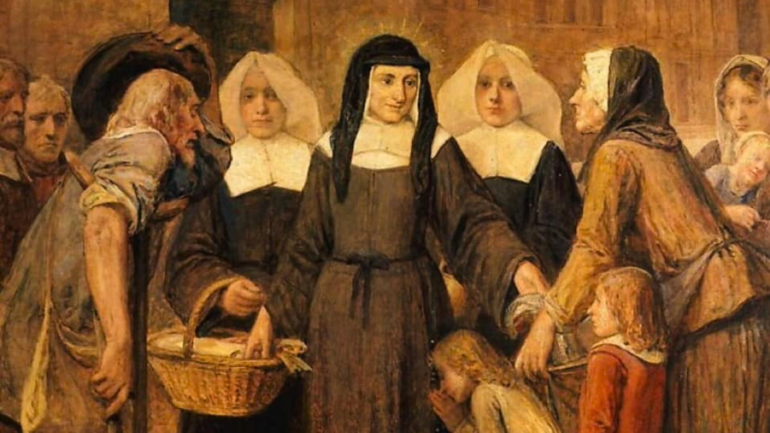
Louise is formally the co-founder of the Daughters of Charity, but "co-founder" understates her role considerably. It was Louise who organised the practical infrastructure of the company: the training programmes, the training of village women as capable nurses and social workers, the negotiations with Paris hospitals, and the administration of multiple works simultaneously. Vincent provided the spiritual vision and clerical legitimacy; Louise built the engine.
This division of labour reflected the gender constraints of the era, but also something more interesting: a genuine complementarity. Vincent was the inspired orator and networker; Louise was the systems thinker, the supervisor, the one who stayed when the enthusiasm faded, and the hard bureaucratic work remained. She wrote thousands of letters, detailed, practical, spiritually warm, that constitute one of the most underread bodies of spiritual correspondence in Catholic history.
A Radically Modern Mission
What Louise pioneered was not charity in the patronising, top-down sense familiar to her contemporaries. She insisted that the Daughters of Charity go into homes, into hospitals, into the streets, meeting people in their own environments rather than requiring them to come to institutions. This is, in contemporary public health language, community-based care. Her insistence that the poor be treated with dignity, not merely fed and moved along, also prefigures what psychologists now call person-centred care. Louise trained her Daughters to see persons, not cases, to know the names, the histories, the relational worlds of those they served. This is not sentimental; it is clinically sound. Research consistently shows that dignified, relational care produces better outcomes than transactional service delivery.
Relevance for Today
We live in an era of burnout among caregivers, of compassion fatigue among social workers, and of systemic failures in healthcare and welfare. Louise de Marillac speaks to this moment with surprising directness. She understood that sustainable service requires interior formation, that a person cannot pour from an empty vessel. Her insistence on prayer, community, and reflective supervision for her Daughters anticipates modern trauma-informed approaches to caregiver wellbeing.
She also modelled something rarer than competence: the willingness to remain in ambiguity. She built institutions while knowing they were imperfect. She served systems she sometimes disagreed with. She held her own wounds alongside her vocation without letting either cancel the other.
In a culture that rewards the dramatic gesture and the viral act of charity, Louise de Marillac is a patron of the unglamorous long haul, of showing up, building structures, writing letters, training people, and trusting that persistent, dignified love is its own form of revolution.
She was canonised in 1934 and named patron of social workers in 1960. Both honours arrived late. The recognition, in a sense, is still catching up.