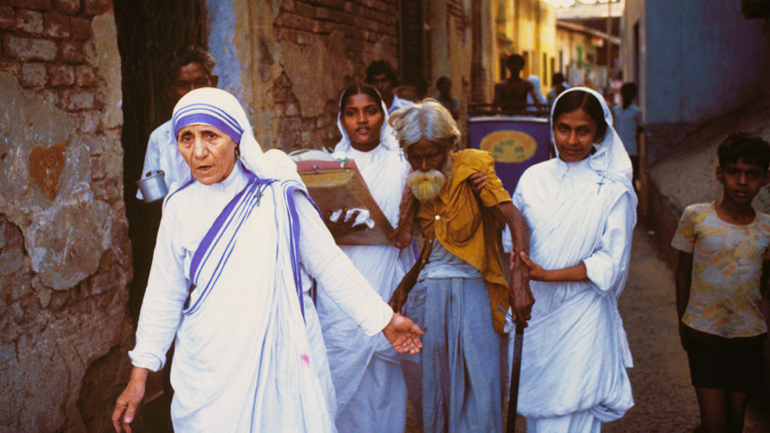
The image of Mother Teresa that comes to mind worldwide is usually a single fixed picture: a hunched-over woman in a white sari with a blue border, holding a dying man in the streets of Kolkata. This image is not incorrect but incomplete. Behind the saint was a woman with remarkable administrative ability, suffering a spiritual crisis that lasted almost fifty years, and possessing a psychological complexity modern researchers are only now beginning to understand.
The Teacher Who Became a Slum Worker
She was born Anjezë Gonxhe Bojaxhiu in 1910 in Skopje, now part of North Macedonia, the daughter of an Albanian grocer and building contractor. Before becoming 'Mother Teresa,' she spent almost twenty years teaching geography and catechism, and later as head teacher, at St. Mary's, a Loreto convent school for girls in Kolkata. She was a capable and well-organised administrator who enjoyed teaching. Her decision to go to the slums was a clear break: on September 10, 1946, while on a train to Darjeeling, she had what she called a 'call within a call', an instruction to leave the convent and serve Christ among 'the poorest of the poor.' After nearly two years of appealing to the Vatican and Loreto authorities, she was allowed to leave the convent alone, without money, and with only basic nursing training from Patna.
Founder and Institution-Builder
Mother Teresa is usually portrayed as tender rather than competent, yet she was a very capable organizational builder. When she died in 1997, the Missionaries of Charity she founded in 1950 had grown to more than 4,000 sisters running hundreds of homes, hospices, and schools in over 100 countries. This growth required financial shrewdness, negotiations with governments of all ideologies, and a disciplined religious rule still observed by novices today. This administrative discipline contrasts with her image as a simple, humble person and is among the most overlooked aspects of her record.
The Fifty-Year Darkness
The most surprising thing about Mother Teresa came to light only after her death, when Mother Teresa: Be My Light was published in 2007. Many letters she had asked to be destroyed revealed she had a strong and lasting sense of God's absence, a state she and her spiritual advisers called the 'night of the soul' in Christian mysticism. In her letters, she expressed a severe sense of God's absence and at times doubted whether God existed. This condition, except for a short relief, lasted about fifty years until her death. Rather than weakening her sanctity, theologians now see this desolation as an intense solidarity with the spiritual poverty of the people she helped, an inner emptiness corresponding to the outer destitution around her.
A Psychological Lens
In modern psychological terms, Mother Teresa's life is a highly interesting example. She experienced profound inner darkness for many decades while maintaining outwardly consistent behaviour. This resembles Viktor Frankl's idea that meaning comes not from emotional satisfaction but from dedicated action and self-transcendence, even in suffering. Her case challenges the idea that long-term altruism depends on positive emotions. Contemporary studies on caregiver burnout and "compassion fatigue" suggest someone would break down under such conditions, yet she continued building institutions for fifty years. Psychologists studying moral exemplars, people who manifest remarkable prosocial behaviour over time, note that these individuals base their identity on values and vocation rather than on emotional rewards. This corresponds with her writings about duty and "faith in action" remaining independent of consolation.
Relevance Today
At a time when emotional authenticity is emphasized, the wellness movement is popular, and meaningful work is expected to be enjoyable, Mother Teresa's example offers a disturbing yet valuable alternative. It shows that it is possible to be committed and find purpose even amid doubt, exhaustion, and despair, not just despite them, but sometimes because of them. Her willingness to serve without the psychological benefit of certainty directly addresses modern problems of burnout, disillusionment, and the search for meaning in a secular, achievement-driven society. She shows that resilience does not mean the absence of darkness but the ability to act faithfully even when darkness is present. This lesson applies as much to a stressed professional today as to a nun in the slums of 1950s Kolkata.