Pope Leo calls for "Media and AI Literacy" to protect human dignity in the age of algorithms

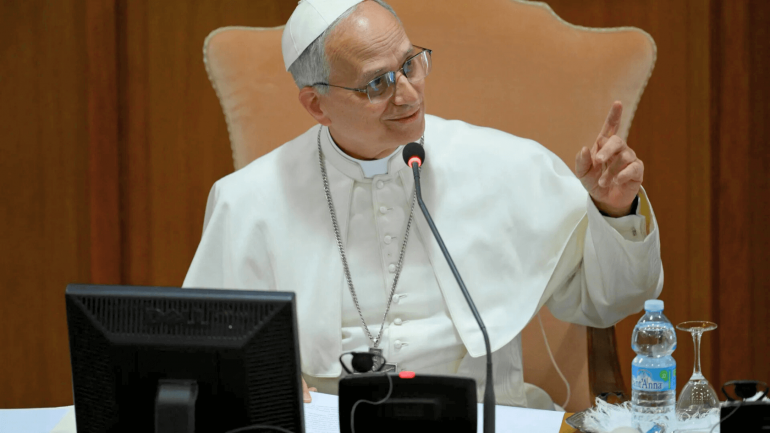
In a pressing appeal to the global community, Pope Leo XIV has warned that the rapid advancement of Artificial Intelligence must not come at the cost of human uniqueness, urging the faithful and civil society to protect "human voices and faces" from digital erosion.
The Holy Father released his message on January 24, 2026, coinciding with the Feast of Saint Francis de Sales, the patron saint of journalists and writers.
A Tradition of Engaging with Technology
The release of this document maintains a long-standing Vatican tradition. While the World Day of Social Communications is celebrated liturgically on the Sunday before Pentecost, the Pope traditionally publishes his message on this feast day to guide the Church’s reflection well in advance.
Since the establishment of this World Day by the Second Vatican Council, pontiffs have used this occasion to address the defining media of their times—from radio and cinema to the internet and social networks.
Marking the 60th World Day of Social Communications, Pope Leo’s message, titled "Preserving human voices and faces," marks a decisive shift from merely using digital tools to confronting the existential questions posed by generative Artificial Intelligence.
Addressing a world where algorithms increasingly curate news and AI authors entire conversations, the Pope emphasized that while technology offers efficiency, it cannot replace human empathy, ethics, and moral responsibility.
The Sacredness of Face and Voice
Drawing on deep theological reflection, the Pope reminded the faithful that the face and voice are not merely biometric data to be harvested, but the "unique, distinctive traits of every person" and the "constitutive element of every encounter."
"To preserve human faces and voices means, ultimately, to preserve ourselves," Pope Leo wrote. "We are not a species made of biochemical algorithms, defined in advance. Each of us has an irreplaceable and inimitable vocation."
He warned that allowing digital tools to simulate these sacred human traits risks modifying the fundamental pillars of civilization, reducing the human person to a data point.
The Dangers of "Being vs. Pretending"
The Holy Father’s message highlighted the growing difficulty in distinguishing between authentic human interaction and automated systems. He expressed grave concern over "chatbots" and "virtual influencers" designed to simulate emotions and relationships.
"This anthropomorphism is at the same time deceptive, especially for the most vulnerable people," the Pope stated. He warned against creating a "world of mirrors" where AI simply reinforces existing biases and isolates individuals from the reality of others. He also addressed the rise of disinformation, deepfakes, and "hallucinations"—errors generated by AI—noting that an over-reliance on these tools weakens the human capacity for critical thinking.
A Call for "MAIL"
In a move to provide concrete solutions, Pope Leo XIV called for the urgent introduction of Media and Artificial Intelligence Literacy (MAIL) into educational systems globally.
"As Catholics, we can and should give our contribution so that people – especially youth – acquire the capacity of critical thinking," the Pope urged.
He outlined that this literacy must go beyond technical skills; it requires a humanistic formation to help people understand how algorithms shape reality, how to validate sources, and how to protect their own privacy and data from unauthorized use in deepfakes or cyberbullying.
An Alliance of Responsibility
The Pontiff concluded his message by proposing a broad societal alliance founded on the three pillars of responsibility, cooperation, and education. He issued specific appeals to key sectors of society, urging leaders of technology platforms to prioritize the common good over profit margins and to guarantee transparency regarding the internal workings of their algorithms.
Simultaneously, the Holy Father called upon national and international legislators to enact regulations that safeguard human dignity against digital manipulation. He also challenged media professionals to uphold truth by clearly distinguishing between human-created journalism and content generated by artificial intelligence.
"The challenge waiting for us is not to stop digital innovation, but to guide it," Pope Leo XIV wrote. "We need the face and the voice to return to speaking of the person."
The 60th World Day of Social Communications will be celebrated globally on the Sunday before Pentecost.
Read Pope Leo XIV’s full World Day of Social Communications message here:https://www.vatican.va/content/leo-xiv/it/messages/communications/documents/20260124-messaggio-comunicazioni-sociali.html