The Catholic Church should confront the structural causes of poverty, exclusion, and environmental degradation, by promoting a vision of “political love,” according to a new report from Study Group No. 2 of the Synod on Synodality, released on March 24.
The report is available on the General Secretariat of the Synod website (synod.va).
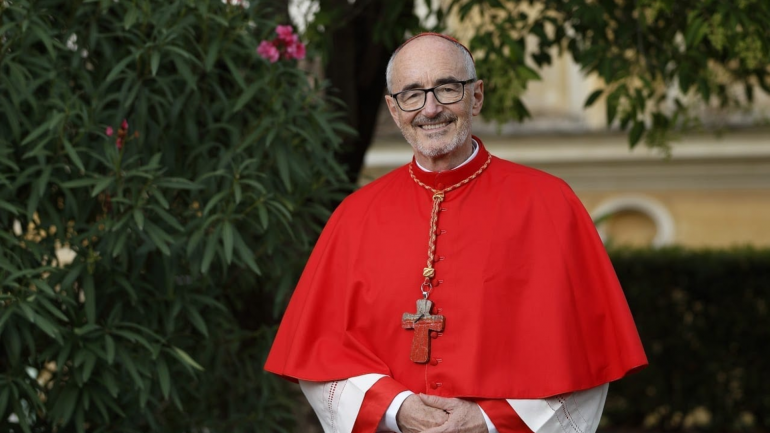
The document is introduced by Cardinal Michael Czerny, Prefect of the Dicastery for Promoting Integral Human Development and a key Vatican official closely associated with the Church’s synodal process. He frames the reflection by emphasizing that listening is not passive, but a dynamic process involving encounter, discernment, action, and spiritual accompaniment. With the submission of the report, the group has completed its mandate and has now been dissolved.
The document situates listening at the heart of the Church’s journey toward becoming more synodal—marked by communion, participation, and mission. It emphasizes that listening is not merely an act of hearing, but a transformative process that leads to encounter, understanding, and concrete action.
The study group highlights that listening must extend to both human suffering and environmental distress. Drawing on Church teaching, particularly Laudato Si’ and Laudate Deum, the report underscores the deep connection between care for people and care for creation.
Across the world, many Church communities are already engaged in listening and responding through parish groups, ecclesial movements, and charitable organizations. The report notes that such initiatives must be strengthened, better connected, and more intentionally supported by Church leadership.
A key insight of the document is the call to move beyond a purely charitable approach. While immediate assistance remains essential, the Church is urged to also confront the structural causes of poverty, exclusion, and environmental degradation. In this light, the report promotes a vision of “political love,” where charity is linked with advocacy for justice and the defense of human dignity.
The study group also challenges the Church to recognize the poor not as passive recipients of aid, but as active participants in shaping both ecclesial life and society. Echoing recent papal teaching, it presents the poor as “bearers of hope” and protagonists of transformation.
Formation emerges as another crucial dimension. The report calls for renewed efforts to train clergy, religious, and lay leaders in the art of listening, including direct encounters with marginalized communities and deeper engagement with Catholic social teaching.
In its conclusion, the document frames listening as a defining expression of the Church’s mission in today’s world. It invites all Christians to ask what it truly means to love God and neighbor in concrete situations marked by suffering and injustice.