



Food is a gift of the earth and of God. Every meal can become an act of gratitude when we remember that all we receive comes from His hands. Leonardo da Vinci’s Last Supper is a powerful reminder of this truth.
I had the opportunity to see this masterpiece in Milan, and it was unforgettable. Many of us are familiar with replicas displayed in dining halls, religious houses, and family homes. We know the scene: Jesus sharing His final meal with His disciples before His suffering. Yet encountering the original painting does something more; it invites deep reflection.
The painting is located in the dining hall of the convent of Santa Maria delle Grazie. Because it is extremely fragile, only small groups are admitted for a limited time, and tickets must be booked well in advance. Standing before it, one is struck by a profound silence. You are not merely viewing a painting; you are entering a moment.
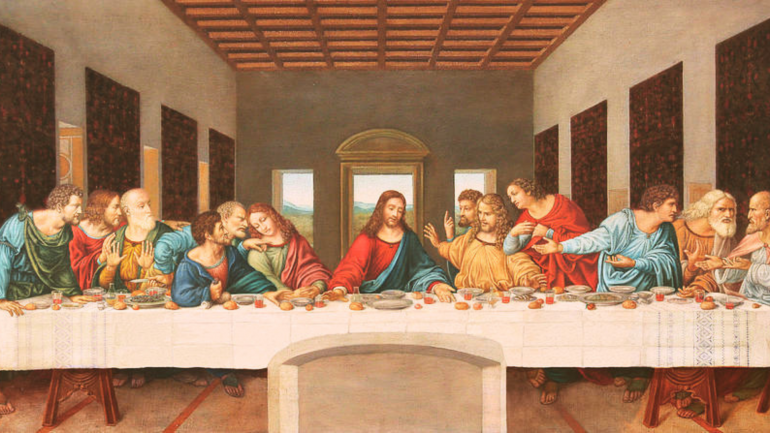
Before Leonardo created this work in the 1490s, many artists had depicted the Last Supper. Traditionally, Judas was shown isolated from the others, emphasizing his betrayal. Leonardo broke from this convention. In his composition, all the apostles sit together on the same side of the table, with Judas among them. This choice makes the scene more human and immediate.
The most striking feature is the emotion. Each apostle reacts differently when Jesus announces that one of them will betray Him. Some are shocked, others are angry or confused. At the center, Jesus remains calm and composed.
A New Way of Painting
Leonardo sought realism in both form and feeling. Instead of using the traditional fresco technique, he painted on dry plaster, allowing for greater detail and subtle use of light and shadow. He even incorporated touches of gold and silver to enhance the lifelike quality. The mural is immense, about 4.6 meters high and 8.8 meters wide.
Over the centuries, it has suffered significant damage due to humidity, poor restoration attempts, and even wartime neglect. At one point, soldiers reportedly used the wall for target practice. During World War II, the roof of the convent was destroyed, yet the painting miraculously survived. A major restoration completed in 1999 helped recover much of its original beauty.
The Apostles as Real People
One of the most compelling aspects of the painting is its humanity. Leonardo’s careful study of the human form and expression brings each apostle to life. Judas appears tense and shadowed. Peter looks agitated. John seems calm and reflective. Thomas raises a finger as if questioning. Philip gestures toward himself in disbelief.
Notably, there are no halos. The apostles are not distant, idealized figures but real people with real emotions. This makes the scene more relatable and accessible.
A Deeper Meaning
Leonardo’s use of perspective draws the viewer into the scene. The arrangement of the table and the room creates a sense of depth, making it feel as though the viewer is part of the gathering, much like the monks who once dined in that very hall.
This is not only a religious image but also a reflection on human nature. Each person responds differently to the same moment. The painting invites us to observe, to reflect, and to understand.
A Message for Today
The Last Supper speaks not only of the past but also to our present lives. It reminds us of love, sacrifice, and human weakness. As we reflect on Good Friday, we recall betrayal and suffering, but we also see in Jesus a quiet strength and peace. Easter brings hope.
Just as the story did not end with that final meal, our lives, too, can rise above pain and disappointment. Seeing The Last Supper in person is more than an artistic experience; it is a spiritual encounter. It reminds us that even simple acts, like sharing a meal, can carry profound meaning.
In the end, every table can become a place where heaven and earth meet.