




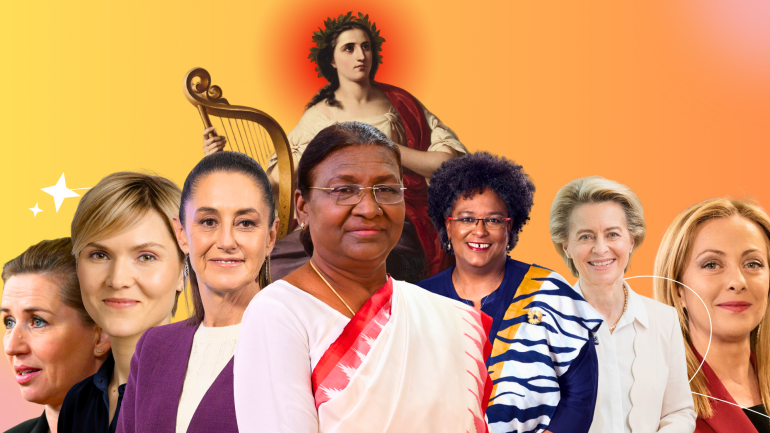
On March 8, the world celebrates International Women’s Day, a moment to honor women’s achievements and renew the call for dignity, equality, and justice. While society often debates women’s leadership as a modern development, Scripture reminds us that God has long entrusted women with extraordinary responsibility.
One such woman is Deborah.
In the Old Testament, when the Israelites forgot their unique covenant identity and demanded conformity with surrounding tribes, God raised up leaders known as Judges (Shofetim in Hebrew). These were not kings. They were charismatic, divinely appointed leaders, local heroes whose authority was neither hereditary nor permanent. They settled disputes in times of peace and led military campaigns in times of war.
Among the twelve Judges of Israel, one stands out: a woman.
For twenty years, Israel suffered oppression under the Canaanites. Fear paralyzed the people. In that climate of despair, God raised Deborah, prophetess, judge, and leader (Judges 4–5). At a time when women were excluded from public authority and denied leadership roles, God placed a woman in charge of an entire nation.
This is revolutionary.
Deborah was not a temporary substitute because no man was available. She was not appointed by popular demand or political maneuvering. She was called and anointed by God. People came to her for wisdom, judgment, and direction. She spoke with authority. She issued commands. She led.
The Bible never declares women weak; culture often does. Deborah’s life challenges that narrative. Leadership, courage, prophecy, and wisdom are not gendered virtues. They are gifts of God.
Salvation history repeatedly shows that God advances His purposes through women of faith and fearless obedience. Deborah did not wage war against patriarchy, she confronted oppression and won. Her story reminds us that when God calls, He equips.
Deborah’s authority flowed not from ambition but from intimacy with God. Before she ever led an army, she sat in prayer. She listened. She discerned. Her strength was rooted not in military skill but in reverence for the Lord. Her availability made her powerful.
She was the only female judge recorded in Scripture and, along with Moses and Samuel, one of the few judges who was also a prophet. Though only two chapters of the Book of Judges are dedicated to her, they portray remarkable events.
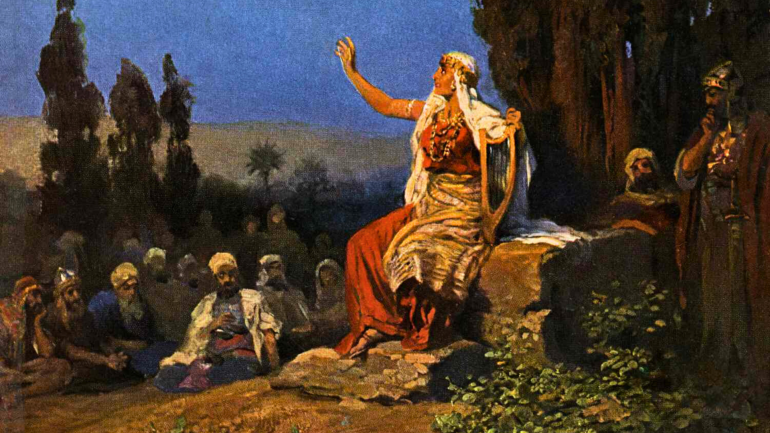
In Judges 4, God delivers Israel through two women, Deborah and Jael, in a male-dominated society that would have considered them unlikely instruments of victory. Deborah summons Barak, the military commander, instructing him to gather troops. Barak agrees to go into battle, but only if Deborah accompanies him. He recognizes that God’s presence rests upon her leadership.
Deborah prophesies that the final victory will belong to a woman. That prophecy is fulfilled when Jael kills Sisera, the Canaanite general, bringing the conflict to an end. Deborah then composes one of the most powerful victory hymns in Scripture (Judges 5), celebrating Yahweh as the true warrior who delivered His people.
Deborah understood a vital truth: she was not alone. The Living God fought for Israel. Her role was obedience.
On this International Women’s Day, Deborah’s story speaks powerfully into our present reality.
Women across the world continue to face systemic inequality. In many societies, leadership opportunities remain limited. Wage gaps persist. Cultural expectations still confine women to narrow roles. Even where legal equality exists, subtle prejudices endure.
Deborah’s life invites women to reexamine internalized limitations. Often, the most powerful barrier is not external opposition but self-doubt, absorbed from generations of conditioning. When society whispers, “You are not enough,” faith answers, “You are called.”
Sometimes God asks women to undertake tasks that seem far beyond their preparation. That moment is not a signal of inadequacy but an invitation to trust. Availability matters more than perfection.
International Women’s Day is not only a celebration, but it is also a challenge. What fears paralyze us? What addictions, insecurities, or social expectations hold us back? What dreams remain dormant because we have accepted someone else’s definition of our limits?
Deborah’s example encourages women to reclaim their identity as children of God, created in His image and likeness. Strength does not mean aggression; authority does not require domination. True leadership flows from faithfulness.
Deborah called herself a “mother in Israel” (Judges 5:7). She was both nurturing and courageous. Her femininity did not diminish her authority; it enriched it. Her victory song reveals gratitude, humility, and praise. She knew that triumph belonged to God.
Today, women continue to shape families, communities, churches, institutions, and nations. Many do so quietly, without recognition. Others break visible barriers in politics, science, education, and ministry. All contribute to the unfolding story of human dignity.
As we mark March 8, may we see ourselves as instruments of Yahweh, available, courageous, and faithful. May we refuse to be defined by cultural diminishment. May we step forward in confidence, trusting that the One who calls also empowers.
Like Deborah, let us rise, not because we are fearless, but because we are faithful.
And may every woman be able to say with conviction: “I am victorious because I am God’s daughter.”
Let us know how you feel!
Comments




- Reply
Permalink