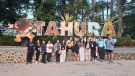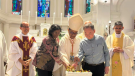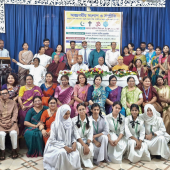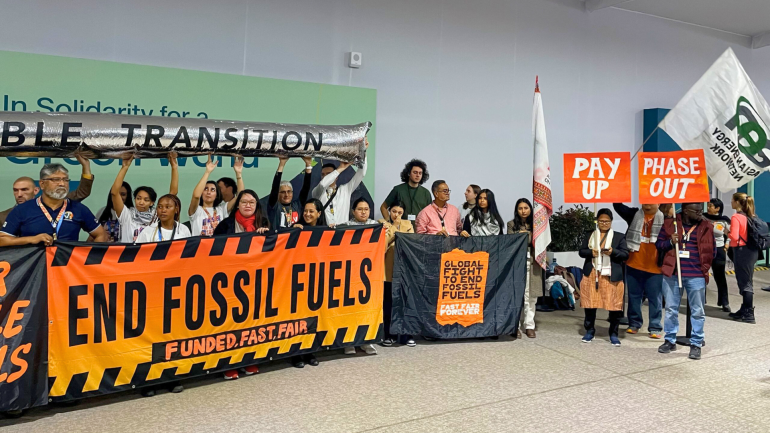
Faith leaders from across Asia have called for an end to fossil fuel expansion and stronger action to protect biodiversity and vulnerable communities, declaring the ecological crisis a moral and spiritual challenge.
The call came in the Bangkok Interfaith Declaration on Biodiversity, Climate Justice, and a Fossil Fuel-Free Future, adopted Aug. 6 during the Asian Faith Leaders’ Roundtable on Biodiversity, Climate, and Energy in Bangkok, Thailand.
The initiative was spearheaded by the Federation of Asian Bishops’ Conferences (FABC) Office of Human Development (OHD), particularly its Climate Change Desk, and the FABC Office of Ecumenical and Interreligious Affairs (OEIA).
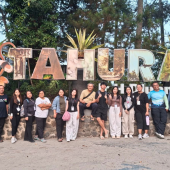
The gathering brought together Catholic, Christian, Buddhist, Muslim, Baha’i, Sikh and Kirat representatives, along with Indigenous representatives and civil society partners.
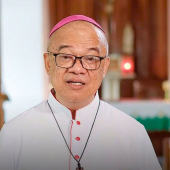
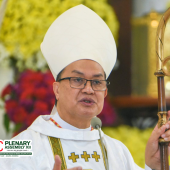
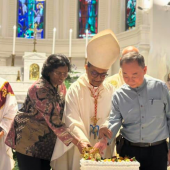
Among the Catholic leaders who signed the declaration were Bishop Allwyn D’Silva, representing the FABC OHD Climate Change Desk; Archbishop Felix Machado, representing the FABC OEIA; and Bishop Gerardo Alminaza of San Carlos, Philippines, representing Caritas Philippines.
The declaration warned that climate change, biodiversity loss, pollution and environmental injustice are converging into an ecological emergency threatening communities and future generations.
Across Asia, forests are disappearing, rivers are being polluted, coral reefs are declining and communities are being displaced by climate-related disasters and destructive development. Poor communities, Indigenous Peoples, fisherfolk, farmers, women and young people often bear the greatest burden despite contributing least to the crisis.
The faith leaders said continued expansion of coal, oil and gas is incompatible with protecting life, meeting the goals of the Paris Agreement and preserving biodiversity.
They called for an immediate halt to new coal, oil, fossil gas and liquefied natural gas projects, as well as destructive extraction of critical minerals. Financial institutions, banks, insurers and investors were urged to end support for fossil fuel expansion and redirect capital toward renewable energy, climate resilience and community-led development.
The declaration urged governments to prioritize the common good, protect biodiversity and environmental and human rights defenders, and ensure meaningful participation by affected communities in environmental decision-making.
The gathering emphasized that different religious traditions share a common responsibility to care for the Earth. Buddhist representatives highlighted compassion for all living beings; Muslim representatives described the Earth as a sacred trust; Sikh representatives recalled the tradition’s reverence for air, water and Earth; and Baha’i and Kirat representatives emphasized humanity’s responsibility to protect nature and regard the Earth as sacred.
The declaration identified young people as key leaders of ecological transformation and called for environmental education, mentoring and opportunities for youth-led interfaith action.
Faith communities were urged to strengthen ecological formation, work with scientists and civil society, and support practical initiatives such as tree planting, shared prayers, Season of Creation observances and public awareness campaigns.
The leaders also pledged solidarity with environmental defenders and communities affected by environmental destruction and committed to using media to amplify stories of environmental justice and hope.
The declaration concluded with a commitment to sustained interfaith dialogue and collective action for biodiversity protection, climate justice and a fossil fuel-free future.
“Many Faiths. One Earth. One Human Family,” the leaders affirmed.
Radio Veritas Asia (RVA), a media platform of the Catholic Church, aims to share Christ. RVA started in 1969 as a continental Catholic radio station to serve Asian countries in their respective local language, thus earning the tag “the Voice of Asian Christianity.” Responding to the emerging context, RVA embraced media platforms to connect with the global Asian audience via its 21 language websites and various social media platforms.
Latest News